







BRICS space agencies meeting in India highlights global space cooperation, remote sensing satellite collaboration, space sustainability initiatives, and the proposed BRICS Space Council. Learn key facts for UPSC, PSC, SSC, Banking, Railway, Defence, and other government exams.
India Hosts Historic BRICS Space Agencies Meeting
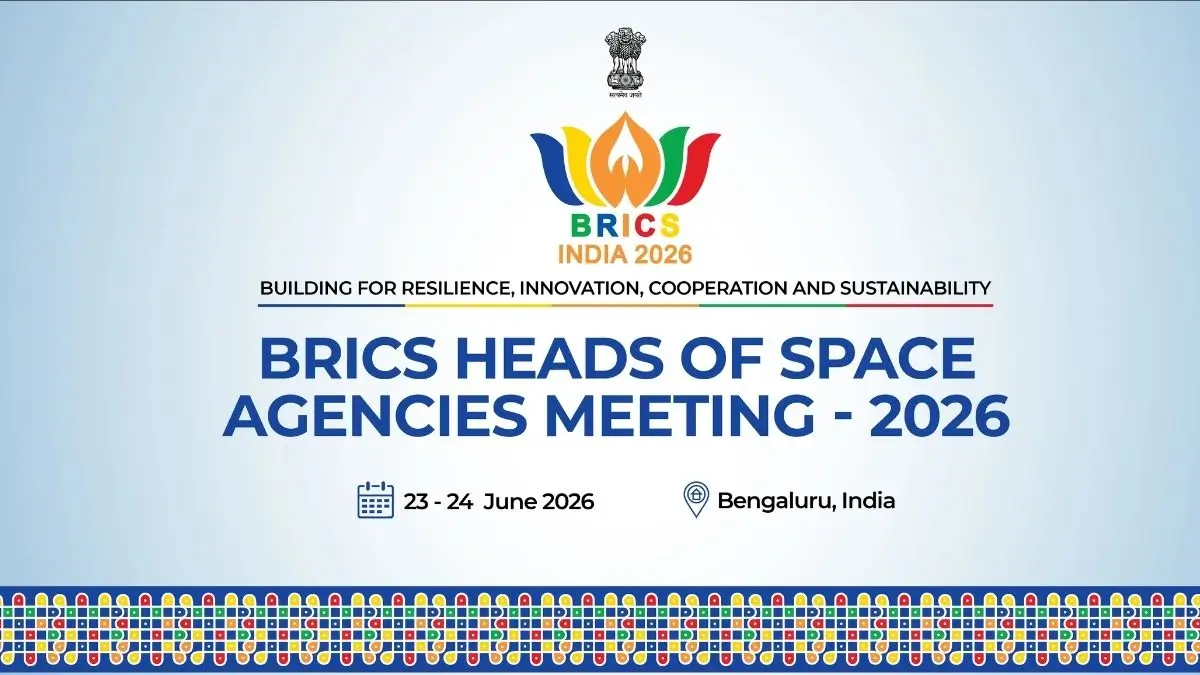
India hosted the BRICS Heads of Space Agencies (HOSA) Meeting in Bengaluru under its BRICS Chairship, bringing together senior representatives and space agency leaders from BRICS member nations. The event marked an important step toward strengthening international cooperation in space exploration, satellite technology, and sustainable space activities. The meeting was organized by the Indian Space Research Organisation (ISRO) and the Department of Space with support from the Ministry of External Affairs.
Focus on Global Space Cooperation
The primary objective of the meeting was to enhance cooperation among BRICS countries in the peaceful use of outer space. Representatives discussed ways to utilize space technology for addressing global challenges such as climate change, disaster management, environmental monitoring, and sustainable development. The discussions highlighted the growing importance of international partnerships in space research and technological advancement.
Expansion of BRICS Space Collaboration
One of the major topics discussed was the expansion of the BRICS Remote Sensing Satellite Constellation (RSSC). Member countries deliberated on amendments to existing agreements so that newer BRICS members can be integrated into the satellite network. The constellation enables participating nations to share satellite imagery and remote sensing data for agriculture, disaster response, weather forecasting, and environmental monitoring.
Emphasis on Space Sustainability
Space sustainability emerged as a key agenda item during the meeting. Delegates exchanged views on debris-free space missions, responsible satellite operations, and regulatory frameworks needed to ensure the long-term sustainability of outer space activities. As the number of satellites in orbit continues to increase, concerns regarding space debris and orbital congestion have become significant issues for all spacefaring nations.
Proposal for a BRICS Space Council
Another important outcome of the discussions was the consideration of a proposed BRICS Space Council. The council is expected to serve as a structured institutional mechanism for coordinating space-related activities among member nations. Discussions focused on defining its terms of reference and strengthening long-term collaboration in research, technology sharing, and policy development.
India’s Vision for a BRICS Space Economy
Union Minister Dr. Jitendra Singh emphasized the concept of a “BRICS Space Economy,” describing space as the next frontier of global economic growth. He called for collective action among member countries to unlock opportunities in innovation, entrepreneurship, investment, and sustainable development. According to him, the future of the global space economy will depend on partnerships rather than isolated national efforts.
Showcasing India’s Growing Space Ecosystem
The meeting also provided an opportunity for India to showcase its rapidly growing space ecosystem. Through IN-SPACe, Indian private space companies and startups presented their capabilities in launch services, satellite manufacturing, geospatial intelligence, and downstream applications. Delegates also visited private space facilities to gain insights into India’s expanding space industry.
Significance for Global South Cooperation
The event reflected the broader BRICS vision of strengthening cooperation among emerging economies. Space technology has become an important tool for socioeconomic development, and BRICS nations aim to leverage their collective scientific and technological strengths to reduce technological disparities and promote inclusive growth.

Why This News is Important
Important for International Cooperation
The BRICS Heads of Space Agencies Meeting demonstrates how countries can collaborate in advanced scientific fields despite geopolitical differences. Such cooperation promotes peaceful uses of outer space and encourages the sharing of knowledge, expertise, and resources. For competitive examinations, this development highlights the increasing role of multilateral institutions in global governance.
Important for India’s Space Diplomacy
India’s role as host and chair of the meeting showcases its growing influence in global space affairs. Through ISRO and its expanding private space sector, India is emerging as a leading space power capable of fostering international partnerships. This strengthens India’s diplomatic standing among developing and emerging economies.
Important for Sustainable Space Activities
The focus on debris-free missions and sustainable space operations reflects one of the most pressing challenges facing the global space sector. As more countries and private companies launch satellites, ensuring safe and sustainable use of space becomes essential. Questions related to space sustainability are increasingly appearing in UPSC and State PSC examinations.
Important for Science and Technology Examinations
The discussions on remote sensing satellites, climate monitoring, disaster management, and satellite constellations are highly relevant for science and technology sections of government examinations. Candidates should understand how satellite technology contributes to agriculture, environmental protection, weather forecasting, and disaster response.
Historical Context
Formation of BRICS
BRICS originally consisted of Brazil, Russia, India, China, and South Africa. Over time, the grouping evolved into a major platform representing emerging economies and advocating for a more inclusive global governance structure. Recent expansions have added new member countries, increasing the organization’s global influence.
Evolution of BRICS Space Cooperation
Space cooperation among BRICS nations has developed steadily over the years. A significant milestone was the agreement on the BRICS Remote Sensing Satellite Constellation, which facilitates data sharing among member countries for environmental monitoring, disaster management, and sustainable development.
Growing Focus on Space Sustainability
As satellite launches increased globally, concerns over space debris and orbital congestion grew. International organizations and space agencies have increasingly emphasized responsible space operations and sustainable use of outer space. The BRICS discussions continue this global effort by promoting debris-free mission management and long-term space governance.
India’s Expanding Space Leadership
India has transformed from a developing space nation into a major global space power through missions such as lunar exploration, Mars missions, satellite launches, and commercial space services. The country’s growing private space ecosystem and international collaborations have further enhanced its leadership role in the global space sector.
Key Takeaways from BRICS Space Agencies Meeting in India
| S.No. | Key Takeaway |
|---|---|
| 1 | India hosted the BRICS Heads of Space Agencies Meeting in Bengaluru under its BRICS Chairship. |
| 2 | Discussions focused on space sustainability, debris-free missions, and responsible space governance. |
| 3 | BRICS nations considered expanding the Remote Sensing Satellite Constellation to include newer members. |
| 4 | A proposed BRICS Space Council was discussed to institutionalize long-term cooperation. |
| 5 | India proposed the concept of a “BRICS Space Economy” to promote innovation, investment, and shared growth in the global space sector. |
Frequently Asked Questions (FAQs)
1. What does BRICS stand for?
BRICS stands for Brazil, Russia, India, China, and South Africa. It is a grouping of major emerging economies that promotes economic, political, and technological cooperation.
2. Where was the BRICS Heads of Space Agencies Meeting held?
The meeting was held in Bengaluru, Karnataka, India, under India’s BRICS Chairship.
3. Which organization hosted the BRICS Space Agencies Meeting in India?
The meeting was hosted by the Indian Space Research Organisation (ISRO) and the Department of Space.
4. What is the BRICS Remote Sensing Satellite Constellation (RSSC)?
The RSSC is a collaborative satellite network that enables BRICS countries to share remote sensing data for disaster management, agriculture, environmental monitoring, and weather forecasting.
5. Why is space sustainability important?
Space sustainability is important because increasing satellite launches have led to concerns regarding space debris, orbital congestion, and long-term safety of space operations.
6. What is the proposed BRICS Space Council?
The BRICS Space Council is a proposed institutional mechanism aimed at coordinating space-related activities, policies, and cooperation among BRICS nations.
7. What is meant by the ‘BRICS Space Economy’?
The BRICS Space Economy refers to collaborative economic opportunities in satellite technology, space research, innovation, commercial launches, and related industries among BRICS nations.
8. How does satellite technology help in disaster management?
Satellites provide real-time data for monitoring floods, cyclones, droughts, forest fires, and other natural disasters, helping governments respond effectively.
9. Why is this news important for UPSC and State PSC examinations?
The news covers important topics such as international relations, space technology, science and technology, multilateral organizations, and India’s space diplomacy.
10. Which Indian city is known as the hub of India’s space activities?
Bengaluru is considered the hub of India’s space activities as it houses ISRO headquarters and several space technology institutions.
Some Important Current Affairs Links