








Railway Electrification in India achieves 99.6% as Indian Railways becomes the world’s second most electrified rail network. Know its significance, benefits, history and exam-important facts for UPSC, SSC, Banking and Railway exams.
India’s Historic Achievement in Railway Electrification
Indian Railways Reaches New Milestone with 99.6% Electrification
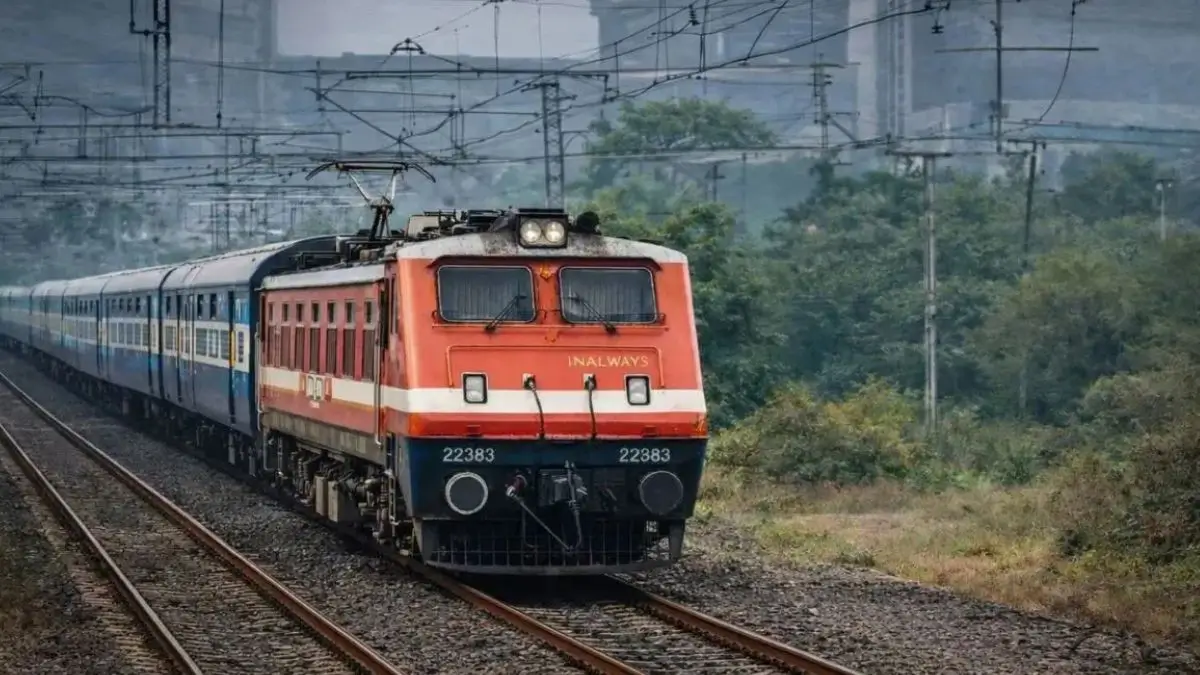
India has achieved a major milestone in transportation infrastructure by completing electrification of 99.6% of its Broad Gauge (BG) railway network, becoming the world’s second most electrified large railway network after Switzerland. This achievement highlights India’s rapid transformation towards sustainable, energy-efficient and environmentally friendly railway operations.
The railway electrification programme has been carried out in mission mode to reduce dependence on fossil fuels, improve operational efficiency and support India’s goal of reducing carbon emissions. Indian Railways has focused on electrifying almost its entire broad gauge network instead of limiting electrification only to high-density passenger and freight corridors.
Rapid Expansion of Railway Electrification After 2014
The progress in railway electrification has accelerated significantly during the last decade. Before 2014, around 21,801 route kilometres of railway lines had been electrified over nearly six decades. However, between 2014 and 2026, approximately 48,072 route kilometres were electrified, reflecting the government’s strong focus on railway modernization.
This large-scale electrification drive has transformed Indian Railways from a diesel-dependent transportation system into a cleaner and more efficient railway network. New railway lines and multi-tracking projects are now being developed with electrification as an integrated component.
India’s Position Among Global Railway Networks
According to railway electrification data, Switzerland leads globally with 100% electrification, while India has achieved 99.6% electrification of its broad gauge network. Other major railway systems such as China, Spain, Japan, France and the United Kingdom have comparatively lower electrification levels.
India’s achievement is significant because it has electrified one of the world’s largest railway networks. Unlike many countries that focus only on selected routes, India has adopted a comprehensive approach covering its broad gauge railway infrastructure.
Environmental Benefits of Railway Electrification
Railway electrification is an important step towards reducing greenhouse gas emissions and promoting green transportation. Electric trains consume less energy compared to diesel locomotives and help decrease dependence on imported crude oil.
The electrification programme has contributed to a major decline in diesel consumption by Indian Railways. Diesel usage for railway traction reduced from around 293 crore litres in 2015-16 to 108 crore litres in 2024-25, resulting in savings in foreign exchange and reduction in carbon emissions.
Renewable Energy Integration in Indian Railways
Along with electrification, Indian Railways is also expanding renewable energy usage. Solar and wind energy projects have been commissioned to support low-carbon railway operations. More than 1,260 MW of renewable energy capacity has been developed to strengthen sustainable railway infrastructure.
The integration of renewable energy with railway electrification supports India’s broader climate commitments and clean energy transition.
Importance for Government Exam Aspirants
The achievement of 99.6% railway electrification is an important current affairs topic for candidates preparing for UPSC, State PCS, SSC, Banking, Railways, Defence and other government examinations.
Questions may be asked regarding Indian Railways’ modernization initiatives, railway electrification statistics, environmental benefits, renewable energy adoption and infrastructure development programmes.

Why this News is Important
Significance for India’s Infrastructure Development
The completion of 99.6% railway electrification represents a major achievement in India’s infrastructure development journey. Railways are considered the backbone of India’s transportation system, connecting cities, villages, industries and markets across the country.
This milestone demonstrates India’s ability to execute large-scale infrastructure projects and modernize critical sectors through technology and innovation.
Contribution Towards Sustainable Transportation
Railway electrification supports India’s environmental objectives by reducing carbon emissions and decreasing dependence on diesel fuel. Since rail transport is more energy-efficient than road transportation, increasing electric railway operations will help India move towards cleaner mobility.
The initiative aligns with India’s commitment to sustainable development and climate action.
Economic and Energy Security Benefits
Reduced diesel consumption helps lower India’s dependence on imported petroleum products. Since India imports a significant portion of its crude oil requirements, railway electrification contributes to saving foreign exchange and improving energy security.
The transition to electric traction also reduces operational costs and improves efficiency.
Importance for Competitive Examinations
For government exam aspirants, this development is important under topics such as Indian Economy, Infrastructure, Environment, Government Schemes and Transport Development.
Questions related to railway electrification, Indian Railways achievements and green transportation initiatives can appear in competitive examinations.
Historical Context: Background of Railway Electrification in India
Beginning of Railway Electrification in India
Railway electrification in India began in 1925 when the first electric train operated between Bombay Victoria Terminus and Kurla. Initially, electrification was limited to suburban railway sections and high-density routes.
Over the decades, Indian Railways gradually expanded electrification to improve efficiency and reduce dependence on steam and diesel locomotives.
Transition from Diesel to Electric Traction
After independence, diesel locomotives became widely used due to their flexibility and lower infrastructure requirements. However, rising fuel costs, environmental concerns and the need for higher-speed operations increased the importance of electrification.
Electric locomotives provide better acceleration, higher hauling capacity and lower operating costs compared to diesel engines.
Acceleration of Electrification Programme
The pace of railway electrification increased significantly after 2014 as the government launched major railway modernization initiatives. Large investments were made in electrification projects, freight corridors, station redevelopment and technological upgrades.
The near-complete electrification of the broad gauge network marks one of the largest railway transformation programmes undertaken globally.
Key Takeaways from India’s Railway Electrification Achievement
| S.No. | Key Takeaway |
|---|---|
| 1 | India has achieved 99.6% electrification of its Broad Gauge railway network and became the world’s second most electrified large railway network after Switzerland. |
| 2 | Around 48,072 route kilometres were electrified between 2014 and 2026, significantly accelerating railway modernization. |
| 3 | Railway electrification has reduced diesel consumption, saving foreign exchange and lowering carbon emissions. |
| 4 | Indian Railways is integrating renewable energy sources like solar and wind power to promote sustainable transportation. |
| 5 | The achievement is an important topic for UPSC, State PCS, SSC, Banking, Railways and Defence examinations under infrastructure and environment sections. |
FAQs Related to India’s Railway Electrification Achievement
1. What percentage of India’s Broad Gauge railway network has been electrified?
India has achieved 99.6% electrification of its Broad Gauge railway network, making it the world’s second most electrified large railway network after Switzerland.
2. Which country has the most electrified railway network in the world?
Switzerland has the highest level of railway electrification with nearly 100% electrification of its railway network.
3. What is the significance of railway electrification in India?
Railway electrification helps reduce dependence on diesel fuel, lowers carbon emissions, improves energy efficiency, reduces operational costs and supports India’s goal of sustainable transportation.
4. When did railway electrification begin in India?
Railway electrification in India began in 1925 with the operation of the first electric train between Bombay Victoria Terminus (now Chhatrapati Shivaji Maharaj Terminus) and Kurla.
5. Which type of railway network has been almost completely electrified in India?
India has achieved almost complete electrification of its Broad Gauge (BG) railway network.
6. Which ministry is responsible for Indian Railways?
The Ministry of Railways, Government of India, is responsible for the administration and development of Indian Railways.
7. What are the environmental benefits of railway electrification?
Railway electrification reduces greenhouse gas emissions, decreases fossil fuel consumption, promotes clean energy usage and supports India’s climate goals.
8. How does railway electrification help India’s economy?
Electrification reduces expenditure on imported diesel, saves foreign exchange, improves freight movement efficiency and strengthens India’s transport infrastructure.
9. Which railway achievement is important for competitive examinations?
India becoming the world’s second most electrified large railway network after achieving 99.6% Broad Gauge electrification is an important current affairs topic for UPSC, State PCS, SSC, Banking and Railway examinations.
10. What renewable energy sources are being promoted by Indian Railways?
Indian Railways is promoting renewable energy through solar power and wind energy projects to support sustainable railway operations.
Some Important Current Affairs Links