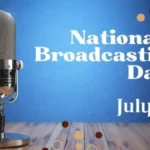








National Broadcasting Day 2026 highlights the history of All India Radio, India’s broadcasting evolution from radio to digital platforms, and important facts for government exam preparation.
National Broadcasting Day 2026 Highlights India’s Broadcasting Evolution
National Broadcasting Day 2026: A Celebration of India’s Communication Legacy
India celebrates National Broadcasting Day on 23 July every year to commemorate the beginning of organised broadcasting in the country. The day marks the historic first broadcast by the Indian Broadcasting Company (IBC) from Bombay Station on 23 July 1927. Over nearly a century, broadcasting in India has transformed from traditional radio services to television networks, satellite communication and modern digital platforms.
Beginning of Radio Broadcasting in India
The journey of broadcasting in India began during the early 20th century when radio emerged as a powerful medium for communication. The first experimental radio transmissions were conducted by the Radio Club of Bombay in 1923. Later, the establishment of the Indian Broadcasting Company in 1927 laid the foundation for organised radio broadcasting in the country.
The introduction of radio changed the way information reached people. It became a medium for news dissemination, educational programmes, cultural preservation and public awareness. Radio played a particularly significant role in connecting people living in remote and rural areas.
Growth of All India Radio and Public Broadcasting
The Indian broadcasting system witnessed a major transformation with the establishment of All India Radio (AIR) in 1936. AIR became the national public broadcaster and gradually expanded its reach across different regions, languages and communities. In 1956, the name “Akashvani” was officially adopted, representing the voice of the nation.
After independence, AIR contributed significantly to nation-building by promoting literacy, agricultural awareness, health campaigns and cultural programmes. Its motto, “Bahujan Hitaya, Bahujan Sukhaya,” reflects its objective of serving public interest through information and education.
Broadcasting During India’s Independence and Development Journey
Radio became an important tool during India’s freedom movement and later played a crucial role in strengthening democracy. Historic announcements, including India’s independence broadcast in 1947, demonstrated the power of radio in uniting citizens across geographical boundaries.
Following independence, broadcasting became a major instrument for government communication, public education and social development. Programmes related to farming techniques, employment, health awareness and government schemes helped improve public participation in national development.
Transition from Radio and Television to Digital Broadcasting
India’s broadcasting sector expanded further with the introduction of television services. Doordarshan became an important source of information and entertainment, especially during the 1980s and 1990s. With technological advancement, broadcasting entered the digital era through satellite television, internet streaming and mobile platforms.
Today, organisations such as Prasar Bharati are adopting new technologies to reach audiences through digital platforms. The evolution from radio to television and digital streaming reflects the changing consumption patterns of Indian audiences.
Role of Broadcasting in Modern India
Broadcasting continues to play a crucial role in public communication, disaster management, education and cultural promotion. Radio remains an accessible medium because it can reach people even in areas with limited internet connectivity. All India Radio continues to provide services in multiple languages and dialects, ensuring communication with diverse communities.
Digital broadcasting has further expanded opportunities by enabling on-demand content, online streaming and wider global access. The integration of technology with broadcasting has helped preserve traditional media while adapting it for modern audiences.
Importance of National Broadcasting Day for Competitive Exams
National Broadcasting Day is important for government exam aspirants because it covers topics related to Indian history, communication technology, information and broadcasting policies, public administration and cultural heritage. Questions related to All India Radio, Prasar Bharati, broadcasting history and important dates can appear in exams such as UPSC, State PCS, SSC, Banking, Railways and Defence examinations.

Why this News is Important
Importance of Broadcasting History for Government Exams
National Broadcasting Day is an important current affairs topic because it connects modern developments with India’s historical communication system. Competitive examinations frequently include questions related to important national days, government organisations and historical milestones.
The beginning of organised broadcasting in 1927, the establishment of All India Radio in 1936 and the formation of Prasar Bharati are significant facts for aspirants preparing for civil services, banking, railway and defence examinations.
Role of Broadcasting in Nation Building
Broadcasting has played a vital role in educating citizens and spreading awareness about government programmes. Radio and television have supported campaigns related to agriculture, healthcare, literacy and social development.
For government employees, understanding the role of public communication systems is important because administration depends heavily on effective information delivery.
Understanding India’s Digital Transformation
The transition from traditional radio broadcasting to digital platforms reflects India’s technological progress. The adoption of digital broadcasting, online streaming and modern communication platforms shows how traditional institutions are adapting to changing times.
This topic is relevant for exams because it combines areas such as science and technology, governance, media studies and digital India initiatives.
Historical Context: Background of Broadcasting in India
Early Development of Radio in India
India’s broadcasting journey started with experimental radio services in the 1920s. The Radio Club of Bombay conducted early transmissions in 1923, followed by the creation of the Indian Broadcasting Company in 1927. This marked the beginning of organised broadcasting in India.
Establishment of All India Radio
In 1936, the Indian State Broadcasting Service was renamed All India Radio. After independence, AIR expanded its network and became one of the world’s largest public broadcasting organisations. It played an important role in connecting India’s diverse population through multiple languages and regional programmes.
Introduction of Television Broadcasting
Television broadcasting started experimentally in India in 1959 and gradually expanded through Doordarshan. Television became a major source of education, entertainment and public information.
Creation of Prasar Bharati
The Prasar Bharati Act was passed in 1990 and implemented in 1997, creating India’s public broadcasting corporation. Prasar Bharati manages All India Radio and Doordarshan, ensuring public service broadcasting.
Digital Era of Broadcasting
The rise of the internet and digital technology has transformed broadcasting. Today, audiences consume content through mobile applications, online platforms and digital streaming services. India’s broadcasting sector continues to evolve while maintaining its public service role.
Key Takeaways from National Broadcasting Day 2026
| S. No. | Key Takeaway |
|---|---|
| 1 | National Broadcasting Day is observed on 23 July to commemorate the first organised radio broadcast by the Indian Broadcasting Company in 1927. |
| 2 | All India Radio was established in 1936 and became India’s major public radio broadcaster. |
| 3 | Akashvani was adopted as the official name of All India Radio in 1956. |
| 4 | Broadcasting has contributed to education, public awareness, cultural preservation and nation-building. |
| 5 | India’s broadcasting sector has evolved from radio and television to modern digital platforms and streaming services. |
FAQs: National Broadcasting Day 2026
1. When is National Broadcasting Day celebrated in India?
National Broadcasting Day is celebrated every year on 23 July in India. The day commemorates the first organised radio broadcast conducted by the Indian Broadcasting Company from Bombay Station on 23 July 1927.
2. Why is National Broadcasting Day observed?
National Broadcasting Day is observed to remember the beginning of organised broadcasting in India and to highlight the contribution of radio, television and digital broadcasting in communication, education and nation-building.
3. When did the first radio broadcast take place in India?
The first organised radio broadcast in India took place on 23 July 1927 from Bombay Station under the Indian Broadcasting Company (IBC).
4. Which organisation started the first organised broadcasting service in India?
The Indian Broadcasting Company (IBC) started the first organised broadcasting service in India in 1927.
5. When was All India Radio established?
All India Radio (AIR) was established in 1936. It became India’s national public radio broadcaster and played an important role in spreading information and awareness.
6. What is the other name of All India Radio?
All India Radio is also known as Akashvani. The name Akashvani was officially adopted in 1956.
7. What is the motto of All India Radio?
The motto of All India Radio is “Bahujan Hitaya, Bahujan Sukhaya”, which means “for the benefit and happiness of the masses.”
8. Which organisation manages All India Radio and Doordarshan?
Prasar Bharati manages All India Radio and Doordarshan. It is India’s public service broadcasting corporation.
9. When was Prasar Bharati established?
Prasar Bharati was established under the Prasar Bharati Act, 1990, and became operational in 1997.
10. Why is broadcasting important for government exams?
Broadcasting-related topics are important for exams like UPSC, State PCS, SSC, Banking, Railways and Defence because questions can be asked from Indian history, government organisations, communication technology and important national days.
Some Important Current Affairs Links