


Vice President Bhawaiya Folk Tradition news: Learn about C.P. Radhakrishnan’s release of the book on Bhawaiya folk music, its cultural significance, key facts, historical background, MCQs, and important points for UPSC, SSC, Banking, Railways, Defence, and State PSC examinations.
Introduction
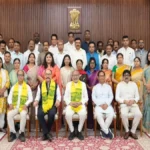
India’s diverse cultural traditions form the foundation of its rich civilizational heritage. In a significant initiative to preserve one of the country’s unique folk traditions, Vice-President C.P. Radhakrishnan released the book “Sanskritir Ratna Bhandar: Bhaowaiyar Itibritto” (Bhawaiya: A Cultural Treasure and Its Historical Journey) at Uprashtrapati Bhavan in New Delhi. The publication highlights the historical evolution and cultural importance of the Bhawaiya folk tradition, which has been an integral part of the lives of people in North Bengal and adjoining regions for centuries. The event also reinforced the importance of protecting India’s intangible cultural heritage for future generations.
Book Highlights
The book has been jointly authored by Lok Sabha Member of Parliament Dr. Jayanta Kumar Roy and Ms. Sangita Roy. It documents the historical journey of Bhawaiya folk music while highlighting the contribution of the Koch Rajbanshi community in preserving this musical tradition. The publication also discusses the influence of agriculture, seasonal festivals, religious customs, and rural life on the evolution of Bhawaiya music.
Vice-President’s Address
During the book release ceremony, Vice-President C.P. Radhakrishnan emphasized that India’s numerous languages, customs, traditions, and folk arts collectively represent the nation’s shared cultural memory. He described Bhawaiya as a musical tradition that beautifully reflects the emotions, struggles, aspirations, and wisdom of ordinary people.
He appreciated the authors and the publisher, Katha-O-Kahini, for documenting an important aspect of India’s cultural heritage and bringing it to mainstream attention.
Importance of Folk Music
The Vice-President observed that folk music serves as a bridge between generations by preserving history, traditions, and community identity. He noted that Bhawaiya originated from the soil of North Bengal and neighbouring regions and has remained relevant despite modernization because of its emotional appeal and close connection with people’s everyday lives.
According to him, preserving folk traditions is equally important as promoting economic development since cultural confidence strengthens national identity.
Link Between Music and Indian Civilization
Highlighting India’s ancient cultural legacy, the Vice-President referred to the Sama Veda, the concept of Nada Brahma, and the traditions of Bhakti and Sufism. He explained that Indian civilization has always considered music as a medium for spiritual realization and emotional expression.
He further stated that India’s cultural practices continue to offer solutions to modern global challenges, citing the worldwide popularity of Yoga and Mission LiFE as examples of India’s soft power.
Call for Youth Participation
The Vice-President encouraged the younger generation to actively participate in preserving India’s cultural traditions. He urged them to utilize modern technology for documenting and safeguarding regional languages, folk music, customs, and traditional knowledge systems.
He stressed that the vision of Viksit Bharat 2047 should combine economic growth with cultural preservation and civilizational awareness.
Bhawaiya Folk Tradition
Bhawaiya is one of eastern India’s oldest folk music traditions and is primarily associated with North Bengal, Assam, and neighbouring regions. The songs generally portray themes of love, separation, longing, rural life, nature, and social relationships. They are traditionally sung by farming and pastoral communities and remain an important symbol of regional identity.
The book provides valuable insights into how Bhawaiya evolved alongside local customs, agricultural practices, and community festivals over several centuries.
Significance for Government Exam Aspirants
The release of this book is important for competitive examinations because questions are frequently asked about India’s cultural heritage, folk traditions, intangible cultural heritage, government initiatives for cultural preservation, constitutional values related to culture, and personalities associated with cultural promotion.
Candidates preparing for UPSC, State PSCs, SSC, Banking, Railways, Defence, Police, and Teaching examinations should remember Bhawaiya as an important folk music tradition of North Bengal and adjoining regions, along with the Vice-President’s emphasis on preserving India’s cultural diversity.

Why This News is Important
Preservation of India’s Intangible Cultural Heritage
The release of this book demonstrates the Government of India’s commitment to preserving regional folk traditions and promoting India’s intangible cultural heritage. Folk music plays an important role in maintaining cultural identity, documenting local history, and strengthening community values.
Important for Competitive Examinations
Questions on folk dances, folk music, cultural heritage, UNESCO-related topics, constitutional provisions regarding culture, and important government initiatives regularly appear in UPSC, State PSC, SSC, Railway, Banking, Defence, and Teaching examinations. Bhawaiya is now likely to receive increased attention because of this high-profile book release.
Promoting Unity in Diversity
The Vice-President emphasized that India’s strength lies in its cultural diversity. By recognizing regional traditions like Bhawaiya, the country reinforces the constitutional principle of “Unity in Diversity” while encouraging cultural confidence among future generations.
Historical Context
Origin of Bhawaiya
Bhawaiya is a traditional folk music genre originating in North Bengal, parts of Assam, and adjoining areas. It developed among rural communities, especially the Koch Rajbanshi people, and reflects everyday life, agriculture, love, migration, and emotional experiences.
India’s Cultural Preservation Efforts
Since Independence, India has undertaken numerous initiatives to preserve folk traditions through institutions such as the Sangeet Natak Akademi, Zonal Cultural Centres, and the Ministry of Culture. Documentation of regional art forms through books, recordings, and research has become increasingly important in protecting intangible cultural heritage for future generations.
Key Takeaways from This News
| S. No. | Key Takeaway |
|---|---|
| 1 | Vice-President C.P. Radhakrishnan released the book Sanskritir Ratna Bhandar: Bhaowaiyar Itibritto. |
| 2 | The book is authored by Dr. Jayanta Kumar Roy and Ms. Sangita Roy. |
| 3 | Bhawaiya is an important folk music tradition of North Bengal, Assam, and adjoining regions. |
| 4 | The Vice-President emphasized preserving India’s cultural heritage alongside national development. |
| 5 | The event highlighted the role of youth and technology in safeguarding India’s folk traditions and intangible cultural heritage. |
FAQs
1. Who released the book on the Bhawaiya folk tradition?
Vice-President C.P. Radhakrishnan released the book Sanskritir Ratna Bhandar: Bhaowaiyar Itibritto at Uprashtrapati Bhavan in New Delhi.
2. What is the name of the book released by Vice-President C.P. Radhakrishnan?
The book is titled Sanskritir Ratna Bhandar: Bhaowaiyar Itibritto, which documents the history and cultural significance of the Bhawaiya folk tradition.
3. Who are the authors of the book?
The book has been jointly authored by Dr. Jayanta Kumar Roy, Member of Parliament (Lok Sabha), and Ms. Sangita Roy.
4. What is Bhawaiya folk music?
Bhawaiya is a traditional folk music genre of North Bengal and adjoining regions. It reflects rural life, love, separation, nature, agriculture, and the emotions of ordinary people.
5. Which community is closely associated with the Bhawaiya tradition?
The Bhawaiya tradition is closely associated with the Koch Rajbanshi community.
6. Which regions are famous for Bhawaiya folk music?
Bhawaiya is mainly popular in North Bengal, parts of Assam, and neighbouring regions of northeastern India.
7. Why is this news important for competitive examinations?
This news is important because questions on Indian culture, folk music, cultural heritage, important books, constitutional values, and personalities frequently appear in UPSC, State PSC, SSC, Banking, Railways, Defence, and Teaching examinations.
8. What message did the Vice-President give during the event?
He emphasized preserving India’s intangible cultural heritage, encouraging youth participation in protecting regional traditions, and using technology to document folk arts.
9. What is meant by India’s intangible cultural heritage?
It includes traditions, performing arts, folk music, oral traditions, rituals, festivals, craftsmanship, and knowledge systems passed from one generation to another.
10. Which constitutional value is reflected through the preservation of folk traditions?
The preservation of folk traditions reflects the constitutional ideals of cultural diversity, national integration, and the spirit of “Unity in Diversity.”
Some Important Current Affairs Links