








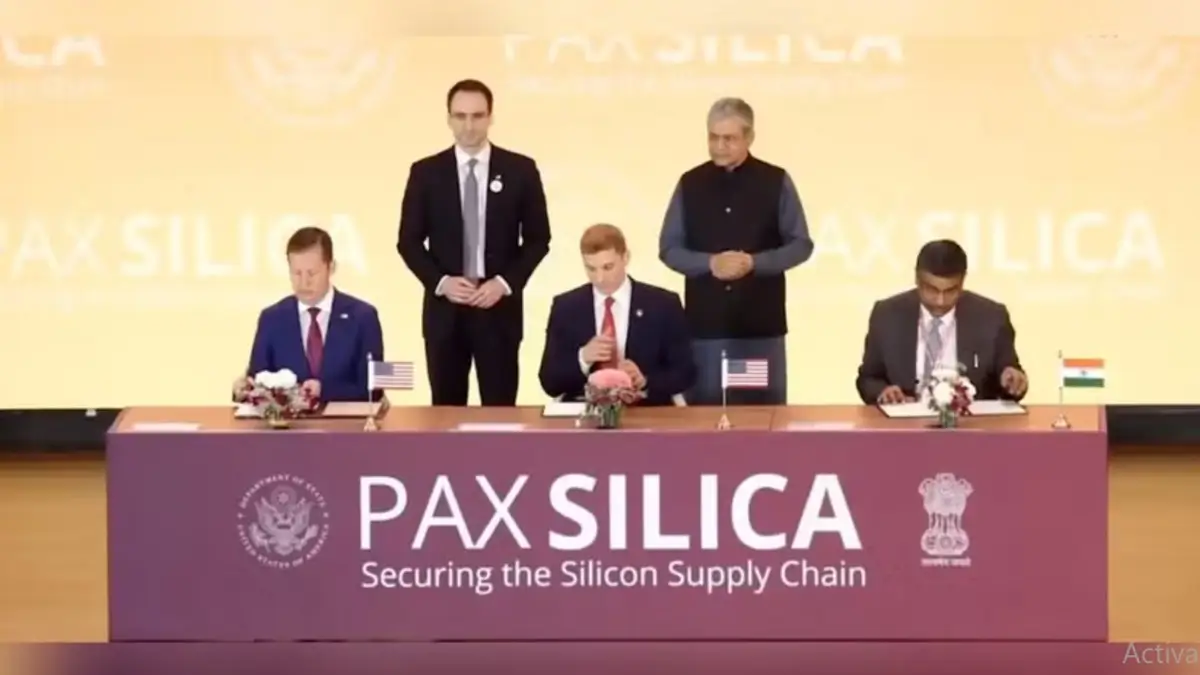
AI Opportunity Statement at Pax Silica Summit 2026 saw 35 nations, including India, sign a landmark agreement on AI governance, semiconductor supply chains, and global technology cooperation. Learn key highlights, exam relevance, historical background, FAQs, and MCQs.
Introduction
In a significant development for global technology governance, 35 countries, including India, signed the Joint Statement on AI Opportunity during the second Pax Silica Summit held in Washington, D.C. The initiative aims to strengthen international cooperation on artificial intelligence (AI), secure semiconductor supply chains, and promote innovation-friendly AI policies. The summit reflects the growing importance of trusted technology partnerships in shaping the future of AI-driven economies.
India’s Participation at the Summit
India played an active role at the summit through representatives from the Ministry of Electronics and Information Technology (MeitY), the Ministry of External Affairs, and industry stakeholders. The Indian delegation participated in discussions on semiconductor manufacturing, AI innovation, and resilient technology supply chains.
India’s participation demonstrates its commitment to becoming a global AI leader while strengthening collaboration with technologically advanced nations. The country had earlier joined the Pax Silica initiative during the AI Impact Summit held in New Delhi in February 2026.
What is the Pax Silica Initiative?
Pax Silica is a United States-led international initiative launched in December 2025 to develop trusted and resilient supply chains for technologies essential to artificial intelligence. These include semiconductors, critical minerals, advanced manufacturing, energy infrastructure, and AI computing resources.
The initiative encourages participating countries to reduce vulnerabilities in global technology supply chains while promoting cooperation among trusted partners. It also seeks to increase private sector investment and strengthen industrial capabilities required for the AI economy.
Key Features of the AI Opportunity Statement
The Joint Statement on AI Opportunity promotes:
- A pro-growth and pro-innovation approach towards AI regulation.
- Development of trusted and resilient AI supply chains.
- International collaboration in semiconductor manufacturing.
- Expansion of AI infrastructure and computing capacity.
- Greater participation of private industry in AI development.
The statement highlights that the future of artificial intelligence depends not only on regulation but also on investments in energy, computing infrastructure, skilled talent, and semiconductor manufacturing.
New Initiatives Announced
Several important initiatives were introduced during the summit:
- Pax Pass: A mechanism designed to facilitate the movement of critical AI-related goods across trusted partner countries.
- Foundry School: A Stanford University-led programme to develop skilled professionals in advanced semiconductor manufacturing.
- US Investment: The United States announced financial support of around 50 million dollars for workforce development and advanced manufacturing training.
Importance for India
India’s growing semiconductor mission and AI ecosystem make participation in Pax Silica strategically important.
The initiative is expected to:
- Improve access to trusted semiconductor supply chains.
- Attract global investments into India’s electronics sector.
- Enhance technology transfer and research collaboration.
- Create employment opportunities in AI and semiconductor industries.
- Strengthen India’s role in international AI governance.
The partnership also aligns with India’s vision of becoming a major global hub for electronics manufacturing and artificial intelligence innovation.
Global Significance
Artificial intelligence has become central to economic growth, national security, healthcare, education, and industrial development. However, AI systems depend heavily on secure semiconductor supply chains and reliable access to computing infrastructure.
The Pax Silica initiative seeks to address these challenges through international cooperation rather than isolated national efforts. By bringing together governments and industries, it aims to build resilient technology ecosystems capable of supporting future AI development.
For competitive examinations, this initiative is important because it combines international relations, technology, economic security, semiconductor policy, and emerging global governance.

Why This News is Important
Importance for Competitive Examinations
This development is highly relevant for UPSC, State PSCs, SSC, Banking, Railways, Defence, Police, and Teaching examinations because artificial intelligence has become a major topic in current affairs. Questions related to AI governance, semiconductor manufacturing, digital diplomacy, and international technology partnerships frequently appear in examinations.
India’s Expanding Global Role
India’s participation demonstrates its increasing influence in shaping international technology policies. The country is no longer only a consumer of technology but is emerging as an important contributor to AI development, semiconductor manufacturing, and digital infrastructure.
Economic and Strategic Relevance
Trusted semiconductor supply chains are essential for national security, economic resilience, and technological independence. Participation in global initiatives like Pax Silica can help India reduce supply chain risks, attract foreign investment, and accelerate domestic manufacturing.
Future Examination Perspective
Students should remember the objectives of Pax Silica, India’s role, the focus on trusted AI supply chains, and the broader significance of semiconductor cooperation. These themes connect with topics such as Artificial Intelligence, Digital India, Semiconductor Mission, international relations, and science & technology.
Historical Context
Evolution of Global AI Cooperation
Artificial intelligence has rapidly evolved over the past decade, creating demand for secure computing infrastructure and semiconductor production. As AI applications expanded across healthcare, finance, defence, education, and governance, countries recognised the importance of reliable supply chains.
Rise of Semiconductor Diplomacy
The COVID-19 pandemic exposed vulnerabilities in global semiconductor supply chains. Since then, several countries have launched initiatives to diversify manufacturing, reduce dependence on limited suppliers, and strengthen technological resilience.
Birth of Pax Silica
The Pax Silica initiative was launched by the United States in December 2025 to promote trusted partnerships in AI infrastructure, semiconductors, critical minerals, and advanced manufacturing. India officially joined the initiative during the AI Impact Summit in New Delhi in February 2026 and has since become an active participant in shaping the initiative’s future.
Key Takeaways from “35 Nations Sign AI Opportunity Statement at Pax Silica Summit”
| S. No. | Key Takeaway |
|---|---|
| 1 | Thirty-five countries, including India, signed the Joint Statement on AI Opportunity at the second Pax Silica Summit in Washington, D.C. |
| 2 | Pax Silica focuses on trusted AI supply chains, semiconductor cooperation, and innovation-friendly AI governance. |
| 3 | India participated through officials from MeitY, the Ministry of External Affairs, and industry representatives. |
| 4 | The summit introduced initiatives such as Pax Pass and the Stanford-led Foundry School to strengthen AI and semiconductor ecosystems. |
| 5 | The initiative supports resilient technology supply chains, international collaboration, and sustainable AI-driven economic growth. |
Frequently Asked Questions (FAQs)
1. What is the AI Opportunity Statement?
The AI Opportunity Statement is a joint declaration signed by 35 countries at the Pax Silica Summit to promote international cooperation in artificial intelligence, trusted semiconductor supply chains, and innovation-friendly AI governance.
2. Where was the second Pax Silica Summit held?
The second Pax Silica Summit was held in Washington, D.C., United States.
3. How many countries signed the AI Opportunity Statement?
A total of 35 countries signed the Joint AI Opportunity Statement.
4. Why is India’s participation in the Pax Silica Summit important?
India’s participation strengthens its role in global AI governance, semiconductor manufacturing, digital innovation, and trusted technology partnerships while supporting the country’s AI and semiconductor ambitions.
5. What is the primary objective of the Pax Silica initiative?
The initiative aims to create resilient AI supply chains, strengthen semiconductor manufacturing, encourage AI innovation, and promote cooperation among trusted partner countries.
6. What are semiconductors and why are they important for AI?
Semiconductors are electronic components used in computer chips. They are essential for AI systems because they power data centres, AI processors, smartphones, defence technologies, and supercomputers.
7. What is the significance of AI governance?
AI governance ensures that artificial intelligence is developed and used responsibly, ethically, securely, and transparently while encouraging innovation and protecting public interests.
8. What is the Pax Pass initiative announced during the summit?
Pax Pass is a proposed mechanism to facilitate the smooth movement of AI-related goods, semiconductor equipment, and critical technology components among trusted partner countries.
9. Which sectors are expected to benefit from the Pax Silica initiative?
The initiative is expected to benefit AI research, semiconductor manufacturing, electronics, telecommunications, defence, healthcare, education, and advanced manufacturing sectors.
10. Why is this topic important for competitive examinations?
The topic is important because it covers Artificial Intelligence, Science & Technology, International Relations, Semiconductor Mission, Global Governance, and Digital Economy, which are frequently asked in UPSC, State PSCs, SSC, Banking, Railways, Defence, and Teaching examinations.
Some Important Current Affairs Links