







Rajolibanda Diversion Scheme history, water allocation, importance, and latest developments explained. Learn about the Tungabhadra River irrigation project, Krishna River water dispute, beneficiary states, and exam-oriented key facts for UPSC, SSC, Banking, Railways, Defence, and State PSC preparation.
Rajolibanda Diversion Scheme Back in Focus Over Interstate Water Sharing
The Rajolibanda Diversion Scheme (RDS), one of South India’s oldest interstate irrigation projects, has once again attracted national attention following renewed discussions among Telangana, Karnataka, and Andhra Pradesh regarding equitable water distribution from the Tungabhadra River. The project has become an important topic for aspirants preparing for UPSC, State PSCs, SSC, Banking, Railways, Defence, Police, and Teaching examinations because it combines issues related to geography, irrigation, interstate river disputes, federalism, agriculture, and water resource management.
What is the Rajolibanda Diversion Scheme?
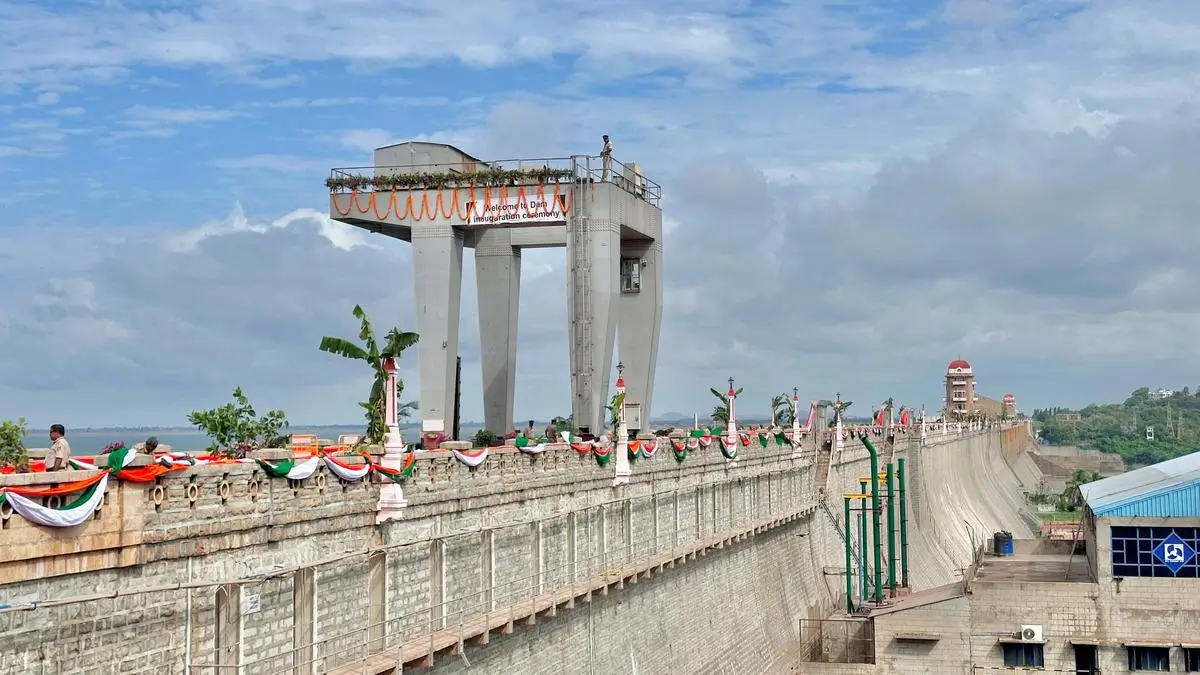
The Rajolibanda Diversion Scheme (RDS) is an interstate irrigation project constructed across the Tungabhadra River, a major tributary of the Krishna River. The project is located near Rajolibanda village and primarily serves drought-prone regions of Telangana while also benefiting parts of Karnataka and Andhra Pradesh.
The project consists of an anicut (barrage) and an extensive canal system designed to divert river water for irrigation. The scheme was originally sanctioned during the erstwhile Hyderabad State under the Nizam’s administration. Construction began in 1946 and was substantially completed by 1958.
Geographical Significance of the Project
The Tungabhadra River originates in Karnataka and flows through Karnataka, Telangana, and Andhra Pradesh before joining the Krishna River. Since multiple states depend on its waters, the Rajolibanda Diversion Scheme plays a significant role in interstate water management.
The canal network irrigates thousands of acres in drought-prone areas, making agriculture possible in regions with limited rainfall.
History of the Rajolibanda Diversion Scheme
The concept behind the project emerged to improve agricultural productivity in semi-arid regions. During the Nizam period, engineers proposed constructing a diversion structure to utilize Tungabhadra waters more efficiently.
After India’s independence, the project continued to receive government support and gradually became one of the important irrigation systems serving farmers in Telangana and Karnataka.
Over the decades, however, sediment accumulation, structural deterioration, upstream water utilisation, and interstate disagreements have affected the scheme’s efficiency.
Water Allocation Under the Scheme
Water sharing under the Rajolibanda Diversion Scheme has been governed by tribunal awards and interstate agreements.
According to the Krishna Water Disputes Tribunal allocation:
- Telangana (erstwhile Andhra Pradesh allocation) was entitled to about 15.9 TMC of water.
- Karnataka received approximately 1.2 TMC.
- Later developments also allowed additional allocations for specific canal projects.
Despite these allocations, Telangana has often received significantly less water because of silt deposition, upstream withdrawals, canal inefficiencies, and changes in river morphology.
Importance of the Rajolibanda Diversion Scheme
The project supports irrigation across tens of thousands of acres in drought-prone districts.
Its importance includes:
- Providing irrigation to farmers in water-scarce regions.
- Supporting food security through agricultural production.
- Promoting rural livelihoods.
- Reducing dependence on erratic monsoon rainfall.
- Strengthening interstate cooperation on river water sharing.
Because agriculture remains the primary occupation in many beneficiary districts, the scheme has considerable socio-economic importance.
Challenges Faced by the Project
Several issues have reduced the effectiveness of the Rajolibanda Diversion Scheme over time.
Heavy Silt Deposition
Large quantities of silt have accumulated near the canal head regulator, reducing water flow into the canal.
Structural Problems
Ageing infrastructure requires modernization and strengthening.
Interstate Water Disputes
Disagreements among Karnataka, Telangana, and Andhra Pradesh over water utilisation continue to create tensions.
Upstream Water Utilisation
Increased utilisation upstream reduces downstream availability during low-flow seasons.
River Morphology Changes
Natural changes in the river channel have affected the efficiency of water diversion.
Recent Developments
The issue returned to public attention after Telangana raised concerns regarding its inability to receive its allocated share of water from the Rajolibanda Diversion Scheme.
Recent discussions involving the three states and the Union government have focused on finding permanent engineering and administrative solutions. These include desilting operations, modernization of canal headworks, strengthening institutional mechanisms, and improving interstate coordination.
Reports indicate that although Telangana is allocated around 17.1–17.9 TMC under various arrangements, actual utilisation has remained significantly lower in recent years due to technical and structural issues. Authorities have also discussed strengthening the Tungabhadra Board and expediting modernization works.
Relevance for Competitive Examinations
The Rajolibanda Diversion Scheme is important from multiple examination perspectives:
- Geography: Tributaries of the Krishna River.
- Polity: Interstate river water disputes.
- Environment: Water resource management.
- Economy: Agricultural irrigation.
- Governance: Cooperative federalism.
- Current Affairs: Recent interstate meetings and modernization initiatives.
Students should remember that the scheme is situated on the Tungabhadra River and benefits Telangana, Karnataka, and Andhra Pradesh.

Why This News is Important
Important for Interstate Water Disputes
The Rajolibanda Diversion Scheme illustrates the challenges involved in sharing river waters among multiple states. Questions on interstate river disputes frequently appear in UPSC, State PSC, and SSC examinations.
Important for Agriculture and Irrigation
The project directly affects irrigation in drought-prone districts. Since agriculture contributes significantly to India’s economy, irrigation projects remain an important examination topic.
Important for Cooperative Federalism
Recent meetings among state governments and the Union Government demonstrate the practical application of cooperative federalism, where different governments work together to resolve common resource issues.
Important for Environment and Water Management
Efficient utilisation of river water, desilting, canal modernization, and sustainable irrigation practices are increasingly relevant due to climate variability and rising water demand.
Historical Context
Origin During the Nizam Era
The Rajolibanda Diversion Scheme was conceived during the rule of the Nizam of Hyderabad to improve irrigation facilities in drought-prone areas.
Construction After Independence
Construction started in 1946 and was largely completed by 1958. It later became an important interstate irrigation project serving Karnataka, Telangana, and Andhra Pradesh.
Krishna Water Disputes
Following the formation of different states and increasing water demand, several tribunals examined Krishna River water allocation. The Rajolibanda Diversion Scheme became one of the projects affected by these decisions, making it an important case study in India’s interstate water governance.
Key Takeaways from This News
| S.No. | Key Takeaway |
|---|---|
| 1 | Rajolibanda Diversion Scheme is an interstate irrigation project built across the Tungabhadra River. |
| 2 | The project benefits Telangana, Karnataka, and Andhra Pradesh. |
| 3 | Construction began in 1946 and was largely completed by 1958. |
| 4 | Telangana has frequently received less than its allocated share due to siltation, structural issues, and upstream utilisation. |
| 5 | Recent discussions focus on modernization, desilting, and strengthening interstate cooperation to improve water distribution. |
Frequently Asked Questions (FAQs)
1. What is the Rajolibanda Diversion Scheme (RDS)?
The Rajolibanda Diversion Scheme (RDS) is an interstate irrigation project constructed across the Tungabhadra River to provide irrigation water to drought-prone regions of Telangana, Karnataka, and Andhra Pradesh.
2. On which river is the Rajolibanda Diversion Scheme built?
The scheme is built across the Tungabhadra River, which is one of the major tributaries of the Krishna River.
3. Which states benefit from the Rajolibanda Diversion Scheme?
The scheme primarily benefits Telangana, Karnataka, and Andhra Pradesh.
4. Why is the Rajolibanda Diversion Scheme in the news?
The scheme is in the news due to renewed discussions regarding interstate water sharing, modernization of the project, desilting works, and ensuring equitable water allocation among the beneficiary states.
5. When was the Rajolibanda Diversion Scheme constructed?
Construction of the project began in 1946 and was substantially completed in 1958.
6. What is the main objective of the Rajolibanda Diversion Scheme?
Its primary objective is to divert water from the Tungabhadra River for irrigation in drought-prone agricultural regions.
7. Why does Telangana often receive less water than its allocated share?
Factors such as silt accumulation, ageing infrastructure, upstream water utilization, canal inefficiencies, and river course changes have reduced the amount of water reaching Telangana.
8. Which tribunal is associated with the allocation of Krishna River water?
The Krishna Water Disputes Tribunal (KWDT) is responsible for adjudicating water-sharing disputes among the basin states.
9. Why is the Rajolibanda Diversion Scheme important for competitive examinations?
It is important because it covers topics related to Indian Geography, Irrigation Projects, Interstate River Water Disputes, Agriculture, Federalism, Environment, and Current Affairs.
10. Which constitutional provision is related to interstate river water disputes?
Article 262 of the Constitution of India empowers Parliament to provide for the adjudication of disputes relating to interstate rivers and river valleys.
Some Important Current Affairs Links