





11th BRICS Energy Ministers Meeting 2026 witnessed India hosting the global energy summit in Gurugram under its BRICS Chairship. Learn about the Joint Communiqué, Energy for All theme, Digital Centre of Excellence, key highlights, MCQs, FAQs, and exam-focused current affairs for UPSC, SSC, Banking, Railways, Defence, and State PSC exams.
India Strengthens Global Energy Leadership
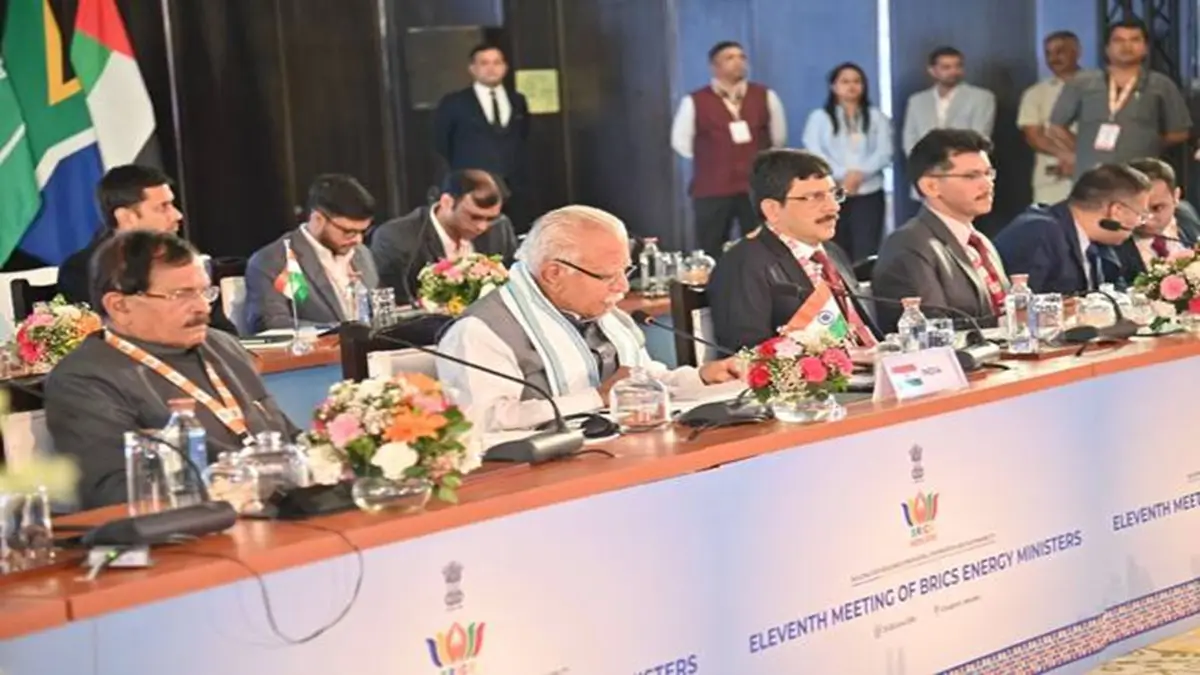
India hosted the 11th BRICS Energy Ministers’ Meeting in Gurugram, Haryana, under its BRICS Chairship 2026, reaffirming its growing leadership in global energy governance. The high-level meeting brought together Energy Ministers, Vice Ministers, senior officials, and representatives from all BRICS member countries to discuss pressing energy challenges and explore collaborative solutions. The event concluded with the adoption of the 11th BRICS Energy Ministers’ Joint Communiqué, which emphasized cooperation in energy security, sustainability, innovation, resilient infrastructure, and capacity building.
Focus on Energy Security and Sustainable Development
One of the primary objectives of the meeting was to strengthen cooperation in ensuring secure, affordable, and sustainable energy supplies. Participating countries acknowledged that rising global energy demand, geopolitical uncertainties, and climate change require coordinated international action.
Union Power Minister Manohar Lal highlighted that energy remains the foundation of economic growth, industrial development, and human welfare. He stressed that developing countries should have adequate policy space, financial resources, and technological support to pursue their own energy transition pathways while ensuring universal energy access.
Theme of India’s BRICS Chairship
India’s BRICS Chairship in 2026 is guided by the overarching theme “Building for Resilience, Innovation, Cooperation and Sustainability (BRICS).” Under the Energy Track, India adopted the Sanskrit theme “सर्वेषां ऊर्जम् (Energy for All)”, reflecting its commitment to equitable and inclusive energy access.
The discussions revolved around three major priorities:
- Energy Security and Sustainability
- Energy Access and Equity
- Technology and Innovation
These priorities align closely with India’s domestic energy transition goals as well as global sustainable development objectives.
Adoption of the Joint Communiqué
The most significant outcome of the meeting was the unanimous adoption of the 11th BRICS Energy Ministers’ Joint Communiqué.
The communiqué reaffirmed collective commitment towards:
- Energy affordability
- Sustainable energy transition
- Renewable energy deployment
- Grid modernization
- Smart energy infrastructure
- Innovation in clean technologies
- Capacity building among member countries
The document also recognized that every nation should be allowed to pursue its own transition based on national priorities and developmental needs.
Digital Centre of Excellence Launched
India also launched the BRICS Digital Centre of Excellence for Smart Grids and Energy Storage, a major initiative aimed at promoting technological collaboration among member countries.
The Centre is expected to:
- Share research on smart grids
- Improve electricity storage technologies
- Promote digitalization of energy systems
- Enhance renewable energy integration
- Support innovation through knowledge exchange
This initiative demonstrates India’s commitment to becoming a global innovation hub in clean energy technologies.
Participation of International Organizations
Besides BRICS member countries, several international organizations participated in the discussions, including:
- International Solar Alliance (ISA)
- Global Biofuels Alliance (GBA)
- New Development Bank (NDB)
Their participation highlighted the growing importance of multilateral cooperation in achieving global climate and energy goals.
Importance for the Global South
India emphasized that developing nations face unique challenges during energy transition. Affordable energy remains essential for poverty reduction, industrialization, healthcare, education, and economic growth.
India advocated for:
- Climate justice
- Common but differentiated responsibilities
- Technology transfer
- Affordable climate finance
- Inclusive global energy governance
These priorities resonate strongly with the interests of the Global South.
BRICS Expands Its Global Influence
BRICS has evolved into one of the world’s most influential economic groupings. The bloc now consists of 11 member countries:
- Brazil
- Russia
- India
- China
- South Africa
- Egypt
- Ethiopia
- Iran
- Indonesia
- Saudi Arabia
- United Arab Emirates
Together, these nations account for nearly half of the world’s population and around 40% of global GDP, making BRICS an increasingly significant platform for shaping global economic and energy policies.

Why This News is Important
Important for UPSC and State PSC Examinations
The BRICS Energy Ministers’ Meeting is highly relevant for aspirants preparing for UPSC, State PSCs, SSC, Banking, Railways, Defence, and other competitive examinations because it highlights India’s growing diplomatic role in global energy governance.
Questions related to BRICS, renewable energy, climate diplomacy, international organizations, and India’s foreign policy frequently appear in General Studies papers.
India’s Leadership in Global Energy Transition
Hosting the meeting under BRICS Chairship 2026 reflects India’s increasing influence in promoting sustainable development and clean energy cooperation.
India has successfully positioned itself as a leader in renewable energy, solar power, biofuels, smart grids, and green hydrogen initiatives. Such developments enhance India’s global image while strengthening partnerships among emerging economies.
Relevance to Current Affairs
The meeting covered several important contemporary topics:
- Energy security
- Renewable energy
- Sustainable development
- Climate change
- Smart grids
- Energy storage
- Digital energy systems
- Global South cooperation
These topics are frequently asked in interviews and descriptive examinations.
Historical Context
Formation of BRICS
BRICS was initially formed as BRIC in 2009 with Brazil, Russia, India, and China. South Africa joined in 2010, transforming the grouping into BRICS.
The organization was created to increase cooperation among emerging economies and promote reforms in global governance.
Expansion of BRICS
In recent years, BRICS expanded significantly by admitting Egypt, Ethiopia, Iran, the United Arab Emirates, Saudi Arabia, and Indonesia, making it an 11-member bloc.
The expansion has enhanced BRICS’ role in global politics, trade, finance, and energy cooperation.
Energy Cooperation within BRICS
Energy cooperation has been one of BRICS’ priority sectors for over a decade. Annual Energy Ministers’ Meetings facilitate collaboration in renewable energy, energy efficiency, clean technologies, electricity markets, smart grids, and sustainable infrastructure.
India has consistently advocated for balancing energy security with climate commitments while ensuring equitable development for emerging economies.
Key Takeaways from This News
| S. No. | Key Takeaway |
|---|---|
| 1 | India hosted the 11th BRICS Energy Ministers’ Meeting in Gurugram under its BRICS Chairship 2026. |
| 2 | The meeting adopted the 11th BRICS Energy Ministers’ Joint Communiqué focusing on energy security, sustainability, innovation, and resilient infrastructure. |
| 3 | India launched the BRICS Digital Centre of Excellence for Smart Grids and Energy Storage to promote technological collaboration. |
| 4 | India’s Energy Track theme was “सर्वेषां ऊर्जम् (Energy for All)”, emphasizing inclusive and equitable energy access. |
| 5 | The meeting reinforced BRICS cooperation in renewable energy, clean technologies, energy transition, and capacity building among member nations. |
Frequently Asked Questions (FAQs)
1. Where was the 11th BRICS Energy Ministers’ Meeting 2026 held?
The 11th BRICS Energy Ministers’ Meeting was held in Gurugram, Haryana, India, under India’s BRICS Chairship 2026.
2. Which country chaired the 11th BRICS Energy Ministers’ Meeting?
India chaired the meeting as part of its BRICS Chairship 2026.
3. What was the theme of India’s BRICS Chairship 2026?
The overall theme was “Building for Resilience, Innovation, Cooperation and Sustainability (BRICS).”
4. What was the Energy Track theme adopted by India?
India adopted the Sanskrit theme “सर्वेषां ऊर्जम् (Energy for All)” for the BRICS Energy Track.
5. What was the major outcome of the 11th BRICS Energy Ministers’ Meeting?
The meeting concluded with the adoption of the 11th BRICS Energy Ministers’ Joint Communiqué, focusing on energy security, sustainability, innovation, and international cooperation.
6. Which important initiative was launched during the meeting?
India launched the BRICS Digital Centre of Excellence for Smart Grids and Energy Storage to promote technological collaboration among BRICS countries.
7. Why is the BRICS Energy Ministers’ Meeting important?
The meeting promotes cooperation among BRICS countries in renewable energy, clean technologies, energy efficiency, smart grids, and sustainable development while enhancing global energy security.
8. Which Union Minister represented India at the meeting?
The meeting was chaired by Union Minister of Power Manohar Lal.
9. What are the major priorities discussed during the meeting?
The major priorities included:
- Energy Security
- Sustainable Energy Transition
- Renewable Energy
- Smart Grids
- Energy Storage
- Innovation
- Universal Energy Access
10. Why is this topic important for competitive examinations?
This topic is important because questions related to BRICS, international organizations, renewable energy, climate change, India’s foreign policy, sustainable development, and global governance are frequently asked in UPSC, State PSC, SSC, Banking, Railways, Defence, and other government examinations.
Some Important Current Affairs Links




