






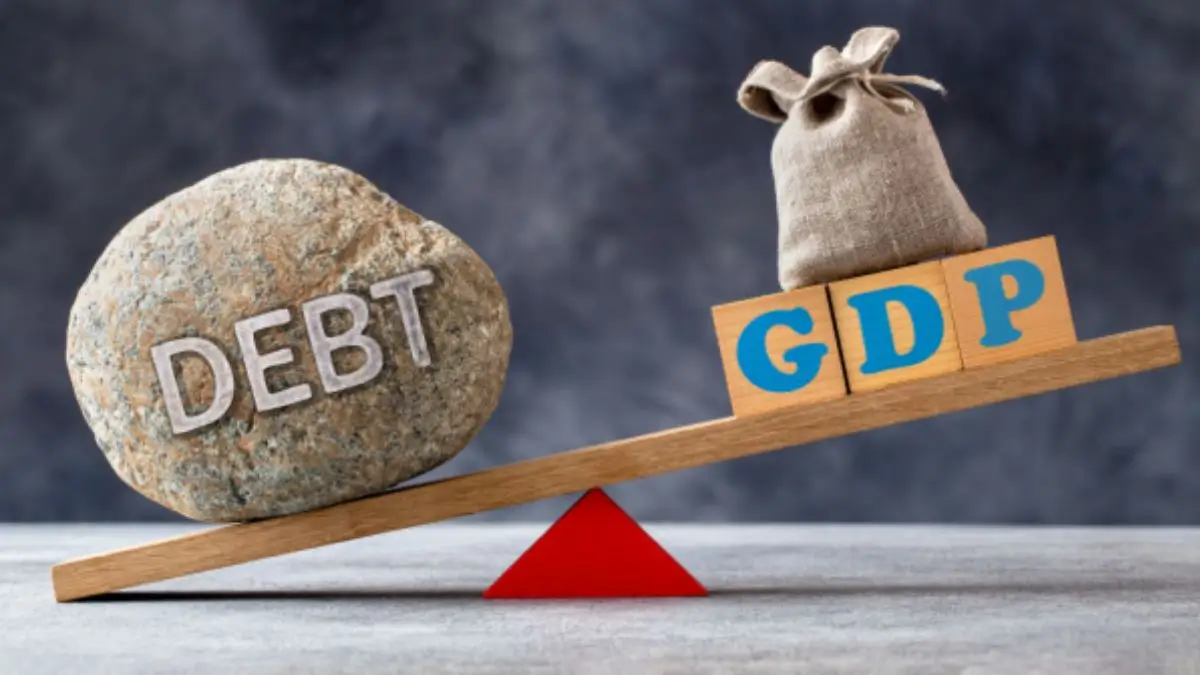
Government debt to GDP ratio reached 58.2% in FY26. Know the key facts, fiscal deficit, fiscal consolidation, FRBM framework and important exam points for UPSC, PCS, SSC and banking exams.
Government Debt-to-GDP Ratio in FY26
The Government of India’s debt-to-GDP ratio stood at 58.2% in FY26, according to information presented by the Ministry of Finance. The figure is important for understanding India’s fiscal position because the debt-to-GDP ratio measures the size of government debt relative to the country’s economic output. A lower ratio generally indicates greater fiscal space, while a higher ratio can increase the burden of interest payments and limit the government’s ability to respond to future economic shocks.
FY26 Debt Ratio and Budget Target
The FY26 figure of 58.2% was higher than the earlier government target of 56.1%, representing a difference of 210 basis points. One basis point equals 0.01 percentage point, making 210 basis points equivalent to 2.1 percentage points. The change is therefore significant from the perspective of fiscal management and is relevant for questions on government borrowing, public debt and fiscal consolidation.
Total Government Liabilities and Fiscal Position
The broader fiscal picture shows that India has continued to pursue fiscal consolidation while maintaining expenditure on development and infrastructure. World Bank data based on government and other official sources placed total liabilities of the Central Government at around 58.2% of GDP in FY26, with a projected decline to about 57.5% in FY27. The same assessment placed the Central Government’s FY26 fiscal deficit at around 4.5% of GDP on the revised basis.
Fiscal Deficit Remains a Major Indicator
The debt ratio should be studied together with the fiscal deficit. The fiscal deficit represents the gap between the government’s total expenditure and its receipts, excluding borrowings. India’s fiscal deficit has been brought down over recent years, reflecting efforts to strengthen fiscal discipline. The Economic Survey 2025-26 noted that the fiscal deficit was budgeted at 4.4% of GDP for FY26, compared with 4.8% in FY25.
Government Focus on Fiscal Consolidation
Fiscal consolidation refers to measures undertaken by the government to improve its fiscal health by controlling deficits and stabilising debt. India has sought to balance fiscal consolidation with continued public investment. Capital expenditure on infrastructure and other productive assets can support economic growth, which in turn can help improve debt sustainability by expanding the GDP base.
Why Debt-to-GDP Ratio Matters
The debt-to-GDP ratio is an important macroeconomic indicator because the absolute amount of government debt does not provide the complete picture. A rapidly growing economy can sustain a larger amount of debt if GDP and government revenues rise sufficiently. Conversely, slow economic growth can make even a relatively moderate debt burden more difficult to manage. Therefore, competitive examinations often connect debt-to-GDP with fiscal deficit, economic growth, government borrowing and fiscal sustainability.
India’s Post-Pandemic Debt Trend
India’s public debt ratio increased sharply during the COVID-19 period because the government had to support the economy while revenues were under pressure. The Central Government debt-to-GDP ratio subsequently declined as economic activity recovered and fiscal consolidation progressed. The Economic Survey 2025-26 reported the debt-to-GDP ratio at 55.7% in FY25 and stated that the government was working towards bringing it to around 50% by FY31.
Outlook for FY27
The government’s fiscal strategy continues to emphasise gradual reduction in debt and deficit while protecting productive expenditure. The FY27 framework envisaged a further reduction in the debt-to-GDP ratio. World Bank estimates put total Central Government liabilities at about 57.5% of GDP in FY27, while the Union Budget framework had earlier set a debt-to-GDP target of 55.6% for FY27 before subsequent revisions and GDP rebasing considerations.
Significance for Government Exam Aspirants
For candidates preparing for UPSC, PCS, SSC, banking, railways, teaching, police and defence examinations, this development is particularly relevant under Indian Economy and Current Affairs. Aspirants should remember the FY26 debt-to-GDP figure of 58.2%, the earlier target of 56.1%, the meaning of basis points, and the relationship between public debt, fiscal deficit, GDP growth and fiscal consolidation. These concepts can be tested through both direct factual questions and analytical questions.

Why This News is Important
Important Indicator of Fiscal Health
The government debt-to-GDP ratio is one of the most important indicators used to assess a country’s fiscal health. The FY26 figure of 58.2% provides an updated picture of India’s public finances and is therefore relevant to current-affairs sections of competitive examinations.
Useful for Indian Economy Questions
Questions related to fiscal deficit, public debt, government borrowing and fiscal consolidation frequently appear in UPSC, State PCS, SSC and banking examinations. Understanding the debt-to-GDP ratio helps candidates connect current developments with basic economic concepts.
Shows the Importance of Fiscal Consolidation
The figure also highlights the government’s challenge of maintaining fiscal discipline while continuing expenditure on infrastructure, welfare and development. Fiscal consolidation requires a careful balance between reducing deficits and supporting economic growth.
Connects Debt with Economic Growth
The ratio is calculated in relation to GDP, meaning that economic growth itself influences debt sustainability. If GDP grows faster than debt, the debt-to-GDP ratio can decline even when the government continues borrowing for productive expenditure.
Relevant for Banking and Financial Exams
Debt levels influence government borrowing requirements, bond markets, interest costs and overall financial conditions. Consequently, the development is especially relevant for candidates preparing for RBI, SBI, IBPS, NABARD, SEBI and other banking and financial-sector examinations.
Historical Context: India’s Government Debt and Fiscal Consolidation
Debt Increase During the COVID-19 Period
India’s fiscal position came under considerable pressure during the COVID-19 pandemic. Government expenditure increased to support households, businesses and the health system, while economic activity and revenue collection were disrupted. This contributed to a substantial rise in the debt-to-GDP ratio.
Gradual Improvement After the Pandemic
As economic activity recovered, government revenues strengthened and fiscal consolidation resumed. The debt ratio subsequently moved downward from the pandemic-era peak. The Economic Survey 2025-26 highlighted the government’s continuing efforts to reduce debt and fiscal deficits while maintaining capital expenditure.
Shift Toward Capital Expenditure
A major feature of recent fiscal policy has been the emphasis on capital expenditure. Investment in infrastructure and productive assets is intended to strengthen long-term economic growth. Higher growth can improve the government’s capacity to manage debt by expanding the economic and revenue base.
Fiscal Responsibility Framework
India’s fiscal policy is also guided by the Fiscal Responsibility and Budget Management (FRBM) framework, which promotes fiscal discipline and responsible management of public finances. Fiscal deficit and debt targets are important components of this broader framework.
Current Fiscal Consolidation Path
The government has continued to reduce the fiscal deficit while seeking to maintain economic momentum. The Economic Survey reported that the fiscal deficit was budgeted to fall from 4.8% of GDP in FY25 to 4.4% in FY26.
Key Takeaways from Government Debt-to-GDP Ratio in FY26
| S. No. | Key Takeaway |
|---|---|
| 1 | FY26 Debt-to-GDP Ratio: India’s government debt-to-GDP ratio stood at 58.2% in FY26. |
| 2 | Earlier Target: The FY26 target was 56.1%, making the reported figure 210 basis points higher. |
| 3 | Fiscal Consolidation: India continues to pursue gradual reduction in fiscal deficits and public debt while supporting economic growth. |
| 4 | Post-COVID Trend: Government debt increased during the pandemic and subsequently moderated as economic growth and fiscal consolidation resumed. |
| 5 | Exam Relevance: Debt-to-GDP, fiscal deficit, FRBM, government borrowing and fiscal consolidation are important topics for UPSC, PCS, SSC, banking, railways and other government examinations. |
Frequently Asked Questions (FAQs)
1. What was India’s government debt-to-GDP ratio in FY26?
India’s government debt-to-GDP ratio stood at 58.2% in FY26.
2. What was the earlier FY26 debt-to-GDP target?
The earlier target was 56.1% of GDP.
3. What does the debt-to-GDP ratio indicate?
The debt-to-GDP ratio compares a government’s outstanding debt with the size of the economy. It is an important indicator of public debt sustainability and fiscal health.
4. What is fiscal consolidation?
Fiscal consolidation refers to measures taken by the government to reduce fiscal deficits and stabilise or lower public debt while maintaining sustainable economic growth.
5. What is a fiscal deficit?
A fiscal deficit is the excess of the government’s total expenditure over its total receipts, excluding borrowings. It indicates the amount the government needs to finance through borrowing and other sources.
6. What is the difference between fiscal deficit and public debt?
The fiscal deficit is a flow measured over a financial year, whereas public debt is a stock representing accumulated government borrowing and liabilities.
7. What is a basis point?
One basis point equals 0.01 percentage point. Therefore, 100 basis points equal 1 percentage point, while 210 basis points equal 2.1 percentage points.
8. Why is the debt-to-GDP ratio important for government exams?
It is an important topic under Indian Economy, Public Finance, Fiscal Policy and Current Affairs and can be asked in UPSC, State PCS, SSC, banking, railways, defence and other competitive examinations.
9. How did the COVID-19 pandemic affect India’s debt position?
Government debt increased significantly during the pandemic because economic activity was disrupted while government expenditure was required to support households, businesses and the healthcare system.
10. What is the FRBM framework?
The Fiscal Responsibility and Budget Management (FRBM) framework is intended to promote fiscal discipline, transparency and responsible management of government finances.
Some Important Current Affairs Links