

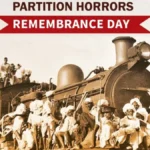


Partition Horrors Remembrance Day 2026: Know the history, significance, August 14 observance, Partition of India 1947, Indian Independence Act and key exam facts.
Partition Horrors Remembrance Day 2026: An Overview
India observes Partition Horrors Remembrance Day (Vibhajan Vibhishika Smriti Diwas) on August 14 every year to remember the suffering, displacement, violence and loss experienced by millions of people during the Partition of India in 1947. The observance provides an opportunity to recall one of the most traumatic episodes in the history of the Indian subcontinent and to recognise the resilience of those who rebuilt their lives after Partition.
Why August 14 Is Observed as Partition Horrors Remembrance Day
August 14 was chosen because it falls on the eve of India’s Independence Day and is also associated with the creation of Pakistan in 1947. On August 14, 2021, Prime Minister Narendra Modi announced that the date would be observed annually as Partition Horrors Remembrance Day. The objective was to keep alive the memory of those who suffered and to remind future generations about the consequences of hatred, violence and social divisions.
Partition of British India in 1947
The Partition accompanied the end of British colonial rule in the Indian subcontinent. British India was divided into the two independent Dominions of India and Pakistan under the framework of the Indian Independence Act, 1947. The provinces of Punjab and Bengal were divided, while the political and administrative systems inherited from British rule also underwent a major reorganisation.
Human Cost of Partition
Partition resulted in one of the largest and most disruptive migrations in modern history. Millions of people crossed newly created borders, often leaving behind their homes, property, livelihoods and communities. The period was also marked by widespread communal violence, family separation and severe humanitarian suffering. Estimates of the number of people displaced and those who died vary considerably among historians and sources, reflecting the enormous scale and complexity of the tragedy.
Impact on Punjab and Bengal
Punjab and Bengal were among the regions most deeply affected because both provinces were divided during Partition. Large populations were forced to migrate across the new borders, while communal violence affected numerous communities. The disruption also affected infrastructure and institutions, including the armed forces, civil services, railways and financial arrangements inherited from British India.
Partition Horrors Remembrance Day and National Memory
The observance seeks to preserve the memories and experiences of Partition survivors and their families. It also encourages younger generations to understand the human consequences of political and communal conflict. Government institutions and educational organisations have used exhibitions, discussions, documentary screenings and other programmes to communicate the historical experiences associated with Partition.
Significance for Social Harmony and National Unity
Partition Horrors Remembrance Day is not only a historical commemoration but also a reminder about the importance of social harmony. The observance encourages citizens to learn from the consequences of communal hatred and division. Its broader message emphasises unity, peaceful coexistence and the importance of preventing the repetition of large-scale violence and displacement.
Partition Horrors Remembrance Day 2026
In 2026, Partition Horrors Remembrance Day is being observed on Friday, August 14. Commemorative activities across the country include programmes aimed at remembering victims and survivors and educating younger generations about the human experiences associated with Partition. For government-exam aspirants, the day is particularly relevant to questions on modern Indian history, the Indian Independence Act, Partition, communal politics, migration and post-independence developments.

Why This News is Important
Importance for Modern Indian History
Partition Horrors Remembrance Day is important for students because the Partition of 1947 is a major topic in modern Indian history. Competitive examinations frequently examine the events surrounding the transfer of power, the Indian Independence Act, the division of Punjab and Bengal, the formation of India and Pakistan, and the consequences of Partition.
Importance for Understanding Independence
India’s independence and Partition were closely connected historical developments. Understanding Partition helps aspirants study the final phase of British rule, constitutional negotiations, communal tensions and the political developments that preceded independence. The observance therefore provides an opportunity to revise an important part of the freedom movement and the transition from colonial rule to independent governance.
Importance of the Humanitarian Dimension
Partition was not simply a political or territorial event. It caused enormous human suffering through migration, violence, family separation and loss of property. Studying this humanitarian dimension helps students develop a more comprehensive understanding of the consequences of political decisions and communal conflict.
Importance for Social Harmony
The remembrance day also has contemporary relevance because it highlights the importance of communal harmony and peaceful coexistence. Remembering the suffering associated with Partition can encourage societies to recognise the dangers of hatred, intolerance and social division.
Importance for Competitive Examinations
The topic can be useful for UPSC, State PCS, SSC, banking and other government examinations through questions related to important dates, modern history, national observances and constitutional developments. Aspirants should remember that August 14 is observed in India as Partition Horrors Remembrance Day and that the observance was announced in 2021.
Historical Context: Partition of India in 1947
British Rule and the Road to Independence
The Partition of India took place at the end of British colonial rule. After decades of political movements, constitutional negotiations and mass mobilisation, Britain decided to transfer power in 1947. However, disagreements over political representation, communal interests and the future constitutional structure of the subcontinent contributed to the eventual decision to divide British India.
Indian Independence Act, 1947
The Indian Independence Act, 1947 provided the legal framework for the creation of two independent Dominions, India and Pakistan. The Act brought an end to British sovereignty over British India and established the constitutional basis for the transfer of power.
Division of Punjab and Bengal
Punjab and Bengal were divided as part of the Partition process. The boundary-making exercise had enormous consequences because communities that had lived together for generations suddenly found themselves on different sides of an international boundary. The resulting uncertainty contributed to mass migration and violence.
Mass Migration and Violence
Partition triggered one of the largest population movements of the twentieth century. Millions migrated in search of safety, while many people lost relatives, homes and livelihoods. The violence and displacement left a lasting psychological and social impact on survivors and their descendants.
Announcement of Partition Horrors Remembrance Day
On August 14, 2021, Prime Minister Narendra Modi announced that August 14 would be observed annually as Partition Horrors Remembrance Day. The purpose was to remember the suffering and sacrifices associated with Partition and to reinforce the message of social harmony and national unity.
Key Takeaways from Partition Horrors Remembrance Day 2026
| S. No. | Key Takeaway |
|---|---|
| 1 | Partition Horrors Remembrance Day is observed annually in India on August 14. |
| 2 | The day commemorates the suffering, displacement, violence and sacrifices associated with the Partition of India in 1947. |
| 3 | Prime Minister Narendra Modi announced the observance in 2021. |
| 4 | The Partition accompanied the end of British rule and resulted in the creation of the independent Dominions of India and Pakistan in 1947. |
| 5 | The observance promotes remembrance of Partition’s human cost while highlighting the importance of social harmony, unity and peaceful coexistence. |
FAQs: Partition Horrors Remembrance Day 2026
1. When is Partition Horrors Remembrance Day observed in India?
Partition Horrors Remembrance Day, also known as Vibhajan Vibhishika Smriti Diwas, is observed every year on August 14.
2. Who announced Partition Horrors Remembrance Day?
Prime Minister Narendra Modi announced the observance of Partition Horrors Remembrance Day on August 14, 2021.
3. Why is August 14 observed as Partition Horrors Remembrance Day?
August 14 is observed to remember the suffering, displacement, violence and loss experienced by people during the Partition of India in 1947.
4. What was the Partition of India?
The Partition of India was the division of British India in 1947, resulting in the creation of the independent Dominions of India and Pakistan.
5. Which two major provinces were divided during Partition?
The provinces of Punjab and Bengal were divided during the Partition of British India.
6. Which Act provided the legal framework for the Partition and independence of India and Pakistan?
The Indian Independence Act, 1947, passed by the British Parliament, provided the legal framework for the creation of India and Pakistan as independent Dominions.
7. What was one of the major consequences of the Partition?
One of the major consequences was mass migration, with millions of people crossing the newly created borders amid widespread communal violence and humanitarian suffering.
8. What is the main objective of Partition Horrors Remembrance Day?
The observance aims to remember the victims and survivors of Partition, preserve their experiences and promote social harmony, unity and peaceful coexistence.
9. Why is Partition Horrors Remembrance Day important for competitive examinations?
The topic is relevant to Modern Indian History, the freedom movement, British rule, the Indian Independence Act, Partition, communal politics and post-independence developments, making it useful for UPSC, State PCS, SSC, railways, banking and other government examinations.
10. What is the official Hindi name associated with Partition Horrors Remembrance Day?
It is known as Vibhajan Vibhishika Smriti Diwas.
Some Important Current Affairs Links