








Colombia earthquake 2026: A 7.4-magnitude earthquake struck western Colombia, prompting a national emergency. Know the epicentre, impact and exam facts.
Powerful 7.4-Magnitude Earthquake Hits Western Colombia
A powerful 7.4-magnitude earthquake struck western Colombia on 10 August 2026, triggering a major humanitarian crisis and prompting the Colombian government to declare a national emergency. The earthquake struck at around 7:34 a.m. local time, with the epicentre near San José del Palmar in the Chocó region. The tremor was also felt in neighbouring countries, including Ecuador and Panama.
Earthquake Causes Widespread Destruction
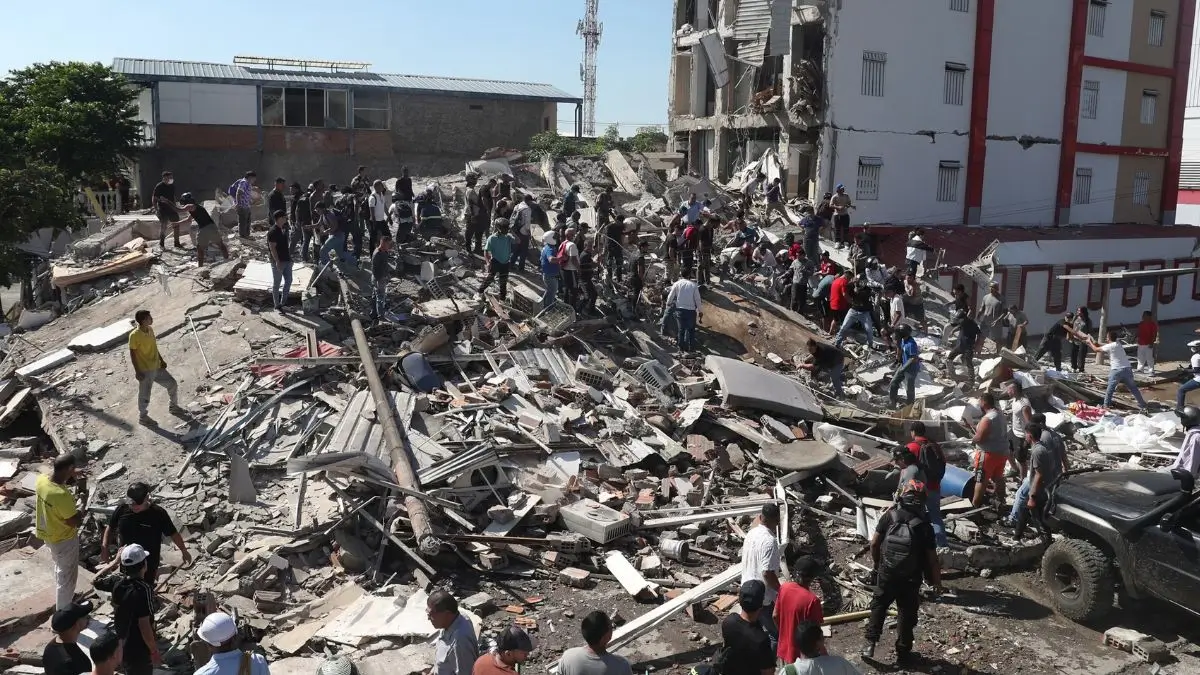
The earthquake caused extensive damage across several western and central-western areas of Colombia. Cities and regions including Cali, Pereira, Quibdó and Manizales reported collapsed or damaged buildings, while communication networks were disrupted in some areas close to the epicentre. Several airports in western Colombia temporarily suspended operations so that authorities could conduct structural inspections.
National Emergency Declared by Colombian Government
Colombian President Abelardo de la Espriella declared a national emergency after the disaster. The government activated emergency response mechanisms and directed resources towards rescue, medical assistance, evacuation and relief operations. The declaration was intended to enable authorities to respond rapidly to the scale of destruction and provide assistance to affected communities.
Heavy Casualties Reported as Rescue Operations Continue
The earthquake resulted in a large number of deaths, injuries and missing persons. By 12 August, Reuters reported 265 confirmed deaths, nearly 500 people missing and more than 3,770 injuries, while more than 9,550 homes had been destroyed. Rescue teams continued searching collapsed structures for survivors during the critical period following the earthquake.
Western Colombia Emerges as the Worst-Affected Area
The earthquake particularly affected Colombia’s western regions, including parts of Chocó, Risaralda and Valle del Cauca. Pereira and Cali experienced significant structural damage. Chocó, located close to the epicentre, also faced communication difficulties, making assessment and relief operations more challenging.
Aftershocks Increase Risks for Rescue Teams
The main earthquake was followed by several aftershocks, creating additional risks for residents, emergency workers and rescue personnel. Damaged structures can become unstable after repeated ground movement, making search-and-rescue operations particularly difficult. Authorities therefore had to balance the urgency of rescuing trapped people with the safety of rescue teams.
International Assistance Supports Colombia’s Relief Efforts
The disaster attracted international assistance. Emergency teams and support from other countries were mobilised as Colombia dealt with the consequences of the earthquake. The United States also announced emergency assistance for shelter, food and earthquake-response activities. International cooperation is an important component of disaster management when a country’s domestic emergency-response capacity is under severe pressure.
Earthquake Highlights Colombia’s Seismic Vulnerability
Colombia is located in a seismically active part of the world and experiences earthquakes relatively frequently. The country’s location near the Pacific Ring of Fire contributes to its exposure to seismic hazards. However, earthquakes of magnitude 6 or greater are comparatively uncommon. The 2026 earthquake was described by the Colombian Geological Service as the country’s strongest recorded earthquake of the 21st century.
Importance for Disaster Management and Government Exams
The Colombia earthquake is important for government-exam preparation because it connects geography, seismology, disaster management, international relations and governance. Candidates should remember the magnitude, date, affected region, emergency declaration and Colombia’s location within a seismically active zone. The event also provides an example of how governments coordinate rescue operations, emergency funding, infrastructure assessment and international assistance following a natural disaster.

Why This News is Important
Relevance to Geography and Environment
The Colombia earthquake is important for competitive examinations because earthquakes are frequently covered under physical geography, environmental studies and disaster management. Questions may ask about the causes of earthquakes, seismic zones, earthquake magnitude, aftershocks and the geographical significance of the Pacific Ring of Fire.
Importance for Disaster Management
The event demonstrates how governments respond to large-scale natural disasters. The declaration of a national emergency, mobilisation of rescue teams, evacuation measures, infrastructure inspections and international assistance are all important components of disaster management. These aspects can be useful for questions relating to disaster preparedness, mitigation, response and recovery.
International and Regional Significance
The earthquake was felt beyond Colombia, including in neighbouring Ecuador and Panama. This highlights the regional consequences that major natural disasters can produce. International cooperation becomes particularly important when affected countries require emergency personnel, medical support, financial assistance or specialised search-and-rescue capabilities.
Importance for Current Affairs Preparation
For aspirants preparing for UPSC, State PCS, SSC, banking, railways, defence and police examinations, the incident is a relevant current-affairs topic. Important facts include the 7.4 magnitude, 10 August 2026, western Colombia, the Chocó region, and the declaration of a national emergency.
Link with Previous Earthquakes
The disaster also provides an opportunity to revise major earthquakes in Colombia’s history. The country has experienced destructive earthquakes before, including the 1999 Armenia earthquake, which killed more than 1,100 people. Comparing historical and recent disasters helps students understand Colombia’s continuing seismic vulnerability and the importance of earthquake-resistant infrastructure.
Historical Context: Colombia and Major Earthquakes
Colombia’s Seismic Setting
Colombia lies in a geologically active region where interactions between tectonic plates generate significant seismic activity. Its western location along the Pacific side of South America makes the country vulnerable to earthquakes and other geological hazards. The broader Pacific Ring of Fire is associated with intense tectonic activity and numerous earthquakes and volcanic eruptions.
1999 Armenia Earthquake
One of the most devastating recent earthquakes in Colombia occurred near Armenia in 1999. The magnitude 6.2 earthquake caused more than 1,100 deaths and substantial destruction. The disaster became an important reference point for discussions about earthquake preparedness, building safety and emergency response in Colombia.
2026 Earthquake Compared with Earlier Events
The August 2026 earthquake was considerably stronger than the 1999 Armenia earthquake in terms of recorded magnitude. The Colombian Geological Service described the 2026 event as the strongest earthquake recorded in the country during the 21st century. Its effects across western Colombia once again highlighted the importance of earthquake-resistant construction and effective disaster-response systems.
Importance of Disaster Preparedness
Past earthquakes have encouraged countries such as Colombia to strengthen emergency-response mechanisms, structural standards and disaster-risk management. The 2026 earthquake demonstrates that even regions with experience of seismic activity can suffer severe losses when a powerful earthquake strikes populated areas.
Key Takeaways from Colombia Earthquake
| S. No. | Key Takeaway |
|---|---|
| 1 | A 7.4-magnitude earthquake struck western Colombia on 10 August 2026. |
| 2 | The epicentre was near San José del Palmar in the Chocó region of Colombia. |
| 3 | The Colombian government declared a national emergency following the devastating earthquake. |
| 4 | The earthquake caused widespread deaths, injuries, building collapses and displacement, with rescue operations continuing across affected areas. |
| 5 | Colombia’s location in a seismically active region associated with the Pacific Ring of Fire makes earthquake preparedness an important national priority. |
FAQs
1. When did the 7.4-magnitude earthquake strike Colombia?
The earthquake struck Colombia on 10 August 2026, affecting several parts of western and central-western Colombia.
2. What was the magnitude of the Colombia earthquake?
The earthquake had a magnitude of 7.4.
3. Where was the epicentre of the earthquake?
The epicentre was reported near San José del Palmar in Colombia’s Chocó region.
4. Which country was affected by the earthquake?
The primary affected country was Colombia. Tremors were also felt in neighbouring countries, including Ecuador and Panama.
5. What action did the Colombian government take after the earthquake?
The Colombian government declared a national emergency and activated emergency-response measures to support rescue, relief and recovery operations.
6. Why is Colombia vulnerable to earthquakes?
Colombia is located in a tectonically active region of South America. Its western region is influenced by interactions between tectonic plates and lies within the broader seismic belt associated with the Pacific Ring of Fire.
7. Which Colombian region was closest to the earthquake’s epicentre?
The Chocó region was closest to the reported epicentre and was among the areas severely affected.
8. Why are aftershocks dangerous after a major earthquake?
Aftershocks can further weaken already damaged buildings and infrastructure. They also create additional risks for people trapped under debris and for search-and-rescue personnel.
9. Which major Colombian earthquake occurred in 1999?
The 1999 Armenia earthquake was one of Colombia’s most destructive recent earthquakes. It had a magnitude of about 6.2 and caused more than 1,100 deaths.
10. Why is the Colombia earthquake important for competitive exams?
The event is relevant to Geography, Environment, Disaster Management and International Affairs. Candidates should remember the earthquake’s magnitude, date, location, emergency declaration and Colombia’s seismic vulnerability.
Some Important Current Affairs Links