







International Linguistics Olympiad 2026: India won 1 gold and 3 bronze medals in Bucharest, Romania. Check winners, key facts and exam-focused current affairs.
India’s Strong Performance at IOL 2026
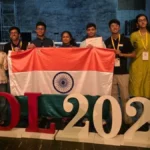
India delivered an impressive performance at the International Linguistics Olympiad (IOL) 2026, held in Bucharest, Romania. The Indian contingent secured one gold medal and three bronze medals, while another participant received an Honourable Mention. The achievement highlights the growing strength of Indian students in analytical reasoning, language analysis and problem-solving.
Indian Students Who Won Medals
Shrilakshmi Venkatraman won the gold medal for India. Three Indian students—Aarav Anil Rao, Nishanth Shankar Lakshmanan and Advay Misra—secured bronze medals. Soham Amit Pednekar received an Honourable Mention. Their performance placed India among the notable-performing countries at the 2026 edition of the competition.
What Is the International Linguistics Olympiad?
The International Linguistics Olympiad is an international academic competition for secondary-school students. Unlike competitions that depend primarily on memorisation, IOL problems require participants to analyse unfamiliar languages, identify patterns and derive linguistic rules from the information provided. Knowledge of a particular foreign language is not a prerequisite for solving the problems.
Skills Tested in the Linguistics Olympiad
The competition can involve areas such as grammar, sentence structure, phonology, word formation and other patterns found in languages. Students are expected to approach unfamiliar linguistic data logically and explain the rules they discover. This makes the Olympiad especially relevant to the development of analytical thinking and structured problem-solving skills.
India’s Training Programme for IOL 2026
Before travelling to Romania, shortlisted Indian students underwent intensive preparation. A 10-day residential training camp was conducted at the International Institute of Information Technology Hyderabad (IIIT-H) from May 31 to June 10, 2026. The programme included lectures, mentoring, practice problems, mock competitions and evaluation tests. A subsequent selection round helped determine the final Indian team.
Indian Delegation and Selection Process
The Indian delegation was headed by Professor Parameswari Krishnamurthy of IIIT Hyderabad. The selection and training process demonstrates the importance of systematic preparation for international academic Olympiads. Students are trained not simply to remember linguistic facts but to recognise structures, analyse evidence and develop logical solutions.
IOL 2026 Held in Romania
The 2026 edition was the 23rd International Linguistics Olympiad and was hosted in Bucharest, Romania. According to the official IOL website, the event concluded on August 2, 2026, with 255 contestants from 65 teams representing 46 countries and territories. The scale of participation demonstrates the growing international reach of the competition.
India’s Longstanding Record in the Competition
India has participated in the International Linguistics Olympiad since 2009. According to the IOL’s official India results, Indian teams have now accumulated 37 medals, consisting of 6 gold, 9 silver and 22 bronze medals. Indian participants have also received Best Solution prizes and Honourable Mentions over the years.
Why the Achievement Matters for Students
The 2026 result is significant because linguistics combines language, logic and analytical reasoning. For government-exam aspirants, the achievement is a useful current-affairs example of India’s performance in international academic competitions. It also reinforces the importance of reasoning ability, pattern recognition and evidence-based analysis—skills that are valuable across competitive examinations.
Key Facts for Competitive Examinations
For examinations such as UPSC, State PCS, SSC, banking, railways, defence and teaching recruitment tests, students should remember the host country, city, medal tally, names of Indian medal winners, the nature of the competition and India’s overall medal record. The International Linguistics Olympiad 2026 was held in Bucharest, Romania, and India won one gold and three bronze medals, with one additional Honourable Mention.

Why This News Is Important
Significance for India’s Academic Achievements
India’s performance at the International Linguistics Olympiad 2026 is important because it showcases the capabilities of Indian school students in a specialised international academic field. Winning one gold and three bronze medals demonstrates that Indian students can compete successfully in disciplines requiring advanced analytical thinking rather than conventional memorisation.
Importance for Competitive Exam Preparation
For government-exam aspirants, international Olympiad achievements are frequently useful as current-affairs questions. The event provides several factual points that can be tested directly, including the name of the competition, host country, host city, medal tally and names of medal winners. Such details can be relevant to UPSC, State PCS, SSC, banking, railways, defence and teaching examinations.
Focus on Logical and Analytical Skills
The IOL is particularly noteworthy because its problems require students to work with unfamiliar linguistic data and identify patterns logically. The competition does not depend on simply knowing many languages. Instead, participants are expected to think like language analysts and derive rules from the information provided.
Importance for India’s Global Academic Presence
India’s cumulative record at the IOL also demonstrates sustained participation in international academic competitions. The official IOL records show that Indian teams have earned 37 medals through the 2026 competition, including six gold medals. This places the latest result within a broader history of Indian achievement in linguistics.
Link with Emerging Language and Technology Fields
Linguistics has relevance beyond traditional language studies. Understanding language structures, patterns and communication can contribute to areas such as computational linguistics, natural-language processing and language technology. Therefore, achievements in linguistic problem-solving also highlight skills relevant to India’s increasingly technology-oriented academic environment.
Historical Context of the International Linguistics Olympiad
Origins of Linguistics Olympiads
Linguistics Olympiads have a longer history than the modern International Linguistics Olympiad. The first linguistics Olympiad for secondary-school students was organised in Moscow in 1965, under the initiative of Alfred Zhurinsky and the guidance of mathematician Vladimir Uspensky. The competition later resumed after a break and became part of a wider tradition of linguistic problem-solving contests.
Creation of the International Competition
The idea of an International Linguistics Olympiad emerged from cooperation among linguistic competitions in countries including Russia, Bulgaria, the Netherlands and the United States. The concept was proposed in 2002, and the first International Linguistics Olympiad was subsequently held in 2003.
First International Linguistics Olympiad
The first IOL took place in Borovets, Bulgaria, in September 2003. It had only 33 participants from six countries. Since then, the competition has expanded considerably in both participation and geographical reach.
Growth of the IOL
The International Linguistics Olympiad has developed into a major international competition for secondary-school students. The 2026 edition in Bucharest had 255 contestants representing 46 countries and territories, showing the substantial growth from the 33 participants at the inaugural event in 2003.
India’s Participation and Progress
India first participated in the IOL in 2009 and has since developed a strong record. The official results page records 37 Indian medals through 2026: six gold, nine silver and 22 bronze. India’s latest success therefore adds to a growing history of achievement in international linguistics competitions.
Key Takeaways from India’s IOL 2026 Achievement
| S. No. | Key Takeaway |
|---|---|
| 1 | Event: International Linguistics Olympiad (IOL) 2026 was the 23rd edition of the competition. |
| 2 | Host: The 2026 Olympiad was held in Bucharest, Romania, and concluded on August 2, 2026. |
| 3 | India’s Medal Tally: India won 1 gold and 3 bronze medals, along with an Honourable Mention. |
| 4 | Indian Medal Winners: Shrilakshmi Venkatraman won gold; Aarav Anil Rao, Nishanth Shankar Lakshmanan and Advay Misra won bronze. |
| 5 | India’s Overall Record: Indian participants have won 37 IOL medals through 2026—6 gold, 9 silver and 22 bronze. |
FAQs
1. What is the International Linguistics Olympiad 2026?
The International Linguistics Olympiad (IOL) 2026 was the 23rd edition of the international academic competition for secondary-school students. It was held in Bucharest, Romania.
2. How many medals did India win at the International Linguistics Olympiad 2026?
India won one gold medal and three bronze medals at the 2026 International Linguistics Olympiad.
3. Who won the gold medal for India at IOL 2026?
Shrilakshmi Venkatraman won the gold medal for India.
4. Who were the Indian bronze medal winners at IOL 2026?
The three Indian students who won bronze medals were Aarav Anil Rao, Nishanth Shankar Lakshmanan and Advay Misra.
5. Who received an Honourable Mention from India?
Soham Amit Pednekar received an Honourable Mention at the International Linguistics Olympiad 2026.
6. Where was the International Linguistics Olympiad 2026 held?
The 2026 International Linguistics Olympiad was held in Bucharest, Romania.
7. How many contestants participated in IOL 2026?
The 2026 edition featured 255 contestants from 65 teams representing 46 countries and territories.
8. When did India begin participating in the International Linguistics Olympiad?
India first participated in the International Linguistics Olympiad in 2009.
9. How many IOL medals has India won through 2026?
Through the 2026 competition, India had won 37 medals, comprising 6 gold, 9 silver and 22 bronze medals.
10. What skills are tested in the International Linguistics Olympiad?
The competition primarily tests logical reasoning, pattern recognition, analytical thinking and the ability to analyse unfamiliar linguistic data.
Some Important Current Affairs Links