







President’s Rule in Manipur extended till February 2026 under Article 356. Know key facts, political implications, and exam-relevant analysis for IAS, PSC, and other government exams.
Lok Sabha Approves Six‑Month Extension of President’s Rule in Manipur
Overview of the Resolution
On July 30, 2025, the Lok Sabha passed a statutory resolution extending President’s Rule in Manipur for another six months beyond August 13, 2025, thereby keeping the state under central rule until February 13, 2026
Initially imposed on February 13, 2025, after the resignation of Chief Minister N. Biren Singh due to escalating ethnic violence, the President’s Rule required parliamentary approval twice: first in April, and now again in July
Debates in Parliament
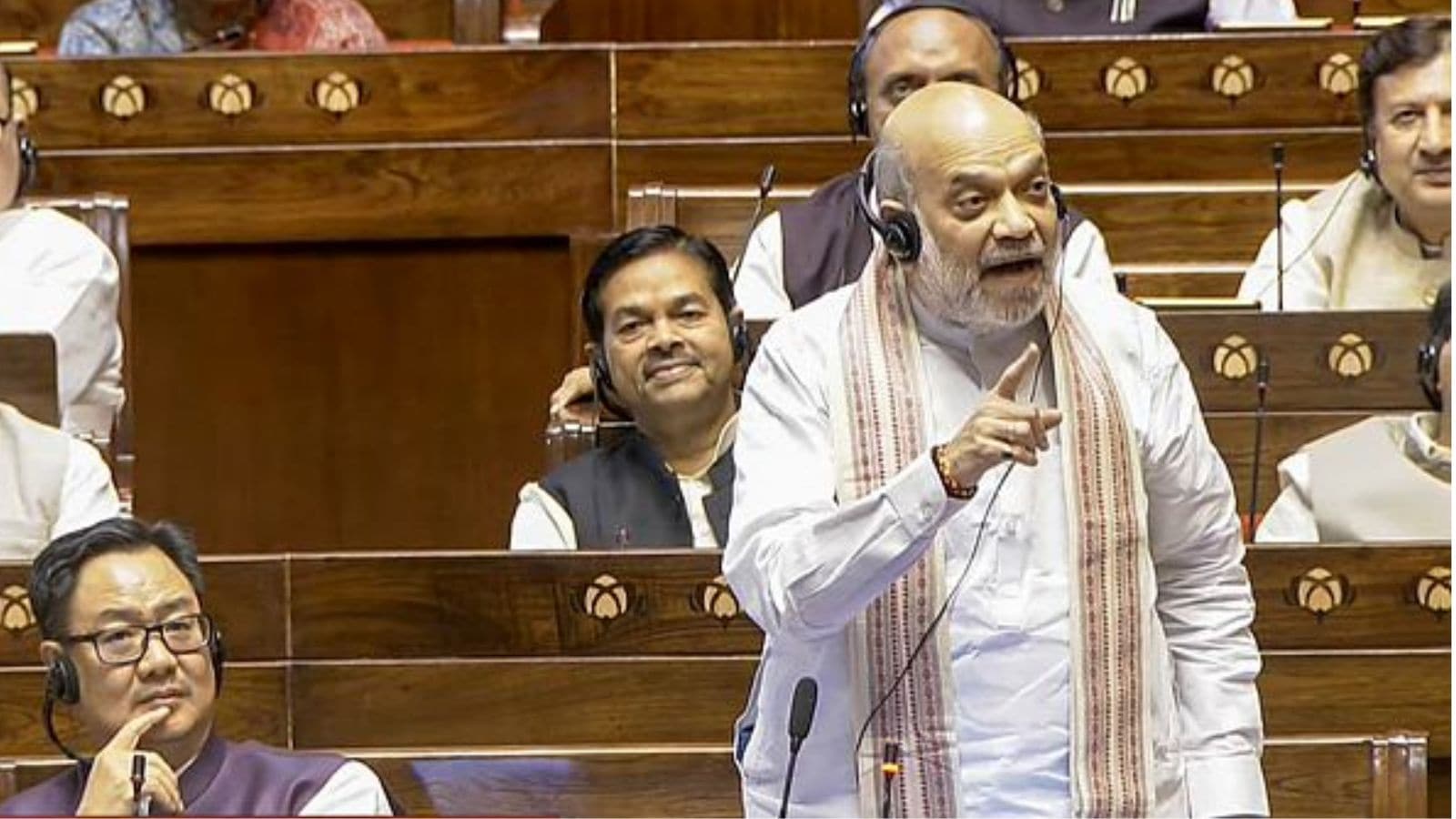
During the debate, MoS for Home Affairs Nityanand Rai argued that Manipur has seen only one fatality since the imposition of President’s Rule, with four months of incident‑free period following that event. He claimed the law-and-order situation is improving and central rule is essential to sustaining peace
Opposition MPs, including Dr Angomcha Bimol Akoijam (Congress), voiced strong criticism. They called for early elections, argued the extension bypasses the democratic mandate, and warned that Article 356 should be invoked only in the “rarest of rare” scenarios
Local and Political Responses
Criticism also came from local leaders and community representatives, including those from the Kuki community, who argued that state leaders were neither consulted nor involved. They see the application of central rule as undermining federal values and delaying resolution via elected government Wikipedia+2The Wire+2The Times of India+2.
Security and Administrative Rationale
The central government cited progress in recovering weapons, explosives, and ammunition, the declining violence, and ongoing dialogue efforts between communities as justification for continuing President’s Rule
Constitutional and Legal Dimensions
Under Article 356, once President’s Rule is imposed, Parliament must approve it within two months, and it remains valid for six months at a time. Extensions beyond a year are permitted only under additional conditions, such as a national emergency or Election Commission certification. Total duration cannot exceed three years without these safeguards
📌 Why This News Is Important
Relevance for Examination Aspirants
This extension of President’s Rule in Manipur is crucial for students preparing for government exams in Polity & Governance (GS Paper II) and State Administration. It underscores the practical application of Article 356, illustrates how constitutional safeguards function, and offers a real-time case study of centre‑state tension and federalism.
Strategic Insights for Different Services
- Civil Services (PSCs, IAS, UPSC Prelims/Mains): Ideal to examine invocation criteria, parliamentary review process, and judicial checks such as the S.R. Bommai precedent.
- Defence and Police: Highlights security challenges in internal conflict zones and the role of federal forces versus local administration.
- Banking, Railways, Defence Recruitment: Useful to understand background governance context for interviews and essay writing.
Broader Lessons on Federal Dynamics
The recent controversy reflects the balance between democracy and administrative necessity. The debate also exposes fault lines in federal governance—when and how the Union should intervene, and how local voices and politics must be respected during such interventions.
🏛️ Historical Context
Origins and Constitutional Basis
The concept of President’s Rule stems from Article 356 of the Indian Constitution, derived from the Government of India Act of 1935. It empowers the Union government to assume control if a state government collapses or fails to function constitutionally, typically based on a governor’s report
Important Judicial and Constitutional Safeguards
The S.R. Bommai v. Union of India (1994) judgement reinforced that Article 356 is subject to judicial review, and set out norms such as mandatory floor tests for state governments to prevent misuse Additionally, constitutional amendments (especially the 44th Amendment, 1978) imposed limits on duration and required special conditions for extension beyond one year
Manipur’s Past Experience with President’s Rule
Manipur has faced President’s Rule 11 times, including the current instance, owing to frequent instability and ethnic violence. The state’s most prolonged imposition occurred between 1969–1972 (over two years in continuous central rule)
📋 Key Takeaways from This News
| S. No. | Key Takeaway |
|---|---|
| 1 | The Lok Sabha approved extension of President’s Rule in Manipur for six months beyond August 13, 2025, keeping central control until February 13, 2026. |
| 2 | President’s Rule was originally imposed on February 13, 2025 after the resignation of Chief Minister N. Biren Singh, due to escalating ethnic conflict in the state. |
| 3 | Justification by the Centre: only one casualty since imposition, improved law and order, weapons recovery, and dialogue efforts. |
| 4 | Opposition and local leaders criticized the move, demanding fresh elections and calling the extension undemocratic and bypassing local mandate. |
| 5 | Constitutionally, such measures fall under Article 356, must be approved every six months, and can extend up to three years under specific conditions—also subject to judicial review post S.R. Bommai. |
Frequently Asked Questions (FAQs)
1. What is President’s Rule under Article 356?
President’s Rule refers to the suspension of a state government and the imposition of direct central government rule in a state, under Article 356 of the Indian Constitution. It is generally applied when the state government is unable to function as per constitutional norms.
2. Why was President’s Rule imposed in Manipur in February 2025?
President’s Rule was imposed in Manipur following the resignation of Chief Minister N. Biren Singh amid worsening ethnic violence and administrative breakdown.
3. How long can President’s Rule remain in effect?
Initially imposed for six months, it can be extended for up to three years under certain constitutional safeguards, including a national emergency or Election Commission recommendation.
4. What are the criticisms of extending President’s Rule in Manipur?
Opposition leaders and local communities argue that the extension circumvents democratic processes, delays elections, and violates the spirit of federalism.
5. What is the significance of the S.R. Bommai case in this context?
The 1994 S.R. Bommai v. Union of India judgment mandated judicial review of President’s Rule and set restrictions to prevent its misuse for political reasons.
6. Who presented the resolution in the Lok Sabha?
Minister of State for Home Affairs, Nityanand Rai, presented the statutory resolution to extend President’s Rule in the Lok Sabha on July 30, 2025.
7. How often does the Parliament need to approve President’s Rule?
Every six months, a fresh parliamentary approval is required through both Lok Sabha and Rajya Sabha for continued validity.
8. Has Manipur witnessed President’s Rule before?
Yes. Manipur has experienced President’s Rule 11 times since attaining statehood due to frequent political instability and ethnic tensions.
9. What are the major security concerns in Manipur?
Ethnic clashes, cross-border insurgency, and armed groups with stockpiled weapons have been major security concerns in the region.
10. How is this development relevant for competitive exams?
It’s a practical case study in Indian Polity, Centre-State relations, Constitutional Law, and Internal Security, often appearing in GS-II and Current Affairs sections of exams like IAS, PSC, SSC, CDS, and Banking.
Some Important Current Affairs Links