




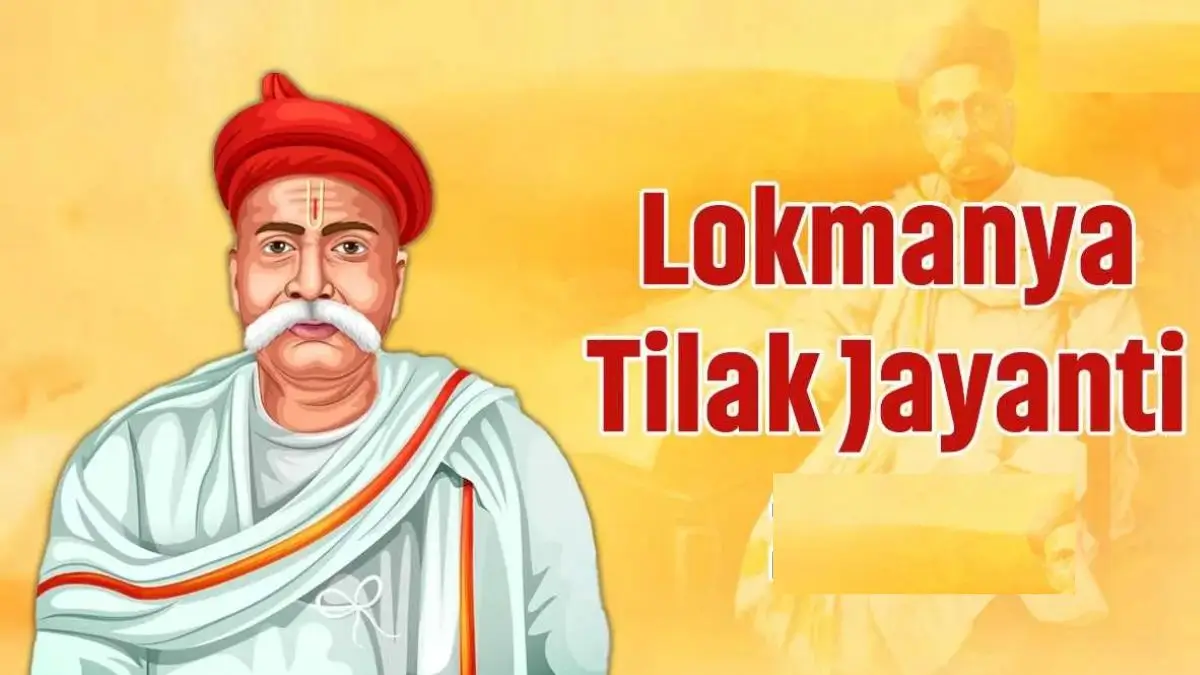
Lokmanya Tilak Jayanti 2026: Learn about Bal Gangadhar Tilak biography, history, freedom movement contribution, famous slogan, achievements and important facts for UPSC, SSC, Banking, Railways and other government exams.
Introduction
Lokmanya Tilak Jayanti is observed every year on 23 July to commemorate the birth anniversary of Lokmanya Bal Gangadhar Tilak (1856–1920), one of the greatest leaders of India’s freedom struggle. In 2026, India celebrates Tilak’s 170th birth anniversary, remembering his immense contribution to nationalism, education, journalism, and the demand for self-rule. His famous declaration, “Swaraj is my birthright and I shall have it,” became the rallying cry of the Indian independence movement. Governments, educational institutions, and social organizations across the country organize seminars, cultural programmes, and tribute ceremonies to honour his legacy.
The Early Life of Lokmanya Tilak
Born on 23 July 1856 in Ratnagiri, Maharashtra, Tilak was originally named Keshav Gangadhar Tilak. He excelled in Mathematics and Sanskrit and later earned a law degree. Instead of pursuing a lucrative legal career, he dedicated his life to educating society and awakening national consciousness.
Tilak co-founded the New English School in Pune and later established educational institutions that promoted nationalist values. He believed that education was the strongest weapon against colonial rule and social backwardness.
Role in India’s Freedom Movement
Lokmanya Tilak transformed the Indian freedom movement from elite political discussions into a mass nationalist campaign. Along with Lala Lajpat Rai and Bipin Chandra Pal, he formed the famous Lal-Bal-Pal trio that advocated assertive nationalism.
He strongly opposed British colonial policies and promoted the ideas of Swadeshi, Boycott, National Education, and Self-Government. His demand for Swaraj inspired millions of Indians to actively participate in the struggle for independence.
Tilak also played a significant role in the Home Rule Movement alongside Annie Besant in 1916, demanding greater self-governance for Indians.
Journalism as a Tool of National Awakening
Tilak recognized the power of journalism in mobilizing public opinion. He founded the Marathi newspaper Kesari and the English newspaper The Mahratta, which criticized British policies and spread nationalist ideas.
His fearless writings led to several sedition charges and imprisonment by the British government. However, these punishments only strengthened his popularity among the masses.
Social and Cultural Contributions
One of Tilak’s most enduring contributions was transforming Ganesh Chaturthi into a public festival (Sarvajanik Ganeshotsav) in 1893. This initiative united people across caste and class divisions while creating a platform for nationalist discussions under colonial rule.
Similarly, he popularized Shivaji Jayanti celebrations to instill pride in India’s historical heritage and inspire resistance against colonial rule.
Why Lokmanya Tilak Jayanti is Celebrated
Lokmanya Tilak Jayanti serves as an opportunity to remember one of India’s earliest mass leaders who transformed the freedom movement into a people’s movement. Educational institutions organize essay competitions, lectures, debates, and cultural programmes highlighting his ideals of patriotism, education, and self-reliance.
The day also inspires citizens, especially young students, to understand the values of nationalism, democracy, and civic responsibility.

Why this News is Important
Important for Competitive Examinations
Lokmanya Tilak Jayanti is highly relevant for candidates preparing for UPSC, State PSCs, SSC, Banking, Railways, Defence, and Teaching examinations. Questions related to India’s freedom movement, important personalities, famous slogans, nationalist organizations, and social reformers frequently appear in competitive exams.
Candidates should remember important facts such as Tilak’s birth date (23 July 1856), his famous slogan, his newspapers Kesari and The Mahratta, the Lal-Bal-Pal trio, the Home Rule Movement, and his role in popularizing Ganesh Utsav and Shivaji Jayanti.
Relevance in Modern India
Tilak’s emphasis on education, national unity, self-reliance, and public participation continues to remain relevant today. His innovative use of cultural festivals for social awareness demonstrates how traditions can strengthen national integration.
The observance of his birth anniversary reminds citizens of the sacrifices made by freedom fighters and reinforces democratic values. It also encourages students to appreciate India’s constitutional journey from colonial rule to an independent democratic republic.
Historical Context
Rise of Assertive Nationalism
During the late nineteenth century, many Indian leaders followed moderate methods of constitutional reforms. Lokmanya Tilak believed stronger public participation and political activism were necessary to achieve freedom.
He emerged as the leader of the nationalist faction within the Indian National Congress and advocated direct political action. His leadership inspired an entire generation of revolutionaries and freedom fighters.
The establishment of public Ganesh festivals, Shivaji celebrations, nationalist journalism, and the Home Rule Movement significantly strengthened India’s independence movement. Tilak passed away on 1 August 1920, but his ideas continued to inspire Mahatma Gandhi and subsequent generations of freedom fighters.
Key Takeaways from Lokmanya Tilak Jayanti 2026
| S. No. | Key Takeaway |
|---|---|
| 1 | Lokmanya Bal Gangadhar Tilak was born on 23 July 1856 in Ratnagiri, Maharashtra. |
| 2 | His famous slogan was “Swaraj is my birthright and I shall have it.” |
| 3 | He founded the newspapers Kesari (Marathi) and The Mahratta (English) to spread nationalist ideas. |
| 4 | Tilak popularized Sarvajanik Ganesh Utsav and Shivaji Jayanti to unite Indians against British rule. |
| 5 | He was a prominent leader of the Lal-Bal-Pal trio and played a key role in the Home Rule Movement. |
FAQs: Lokmanya Tilak Jayanti 2026
1. When is Lokmanya Tilak Jayanti celebrated?
Lokmanya Tilak Jayanti is celebrated every year on 23 July to mark the birth anniversary of Bal Gangadhar Tilak, one of India’s most prominent freedom fighters and nationalist leaders.
2. Who was Lokmanya Bal Gangadhar Tilak?
Lokmanya Bal Gangadhar Tilak was an Indian freedom fighter, social reformer, educator, journalist, and nationalist leader who played a major role in India’s struggle against British colonial rule.
3. What was the famous slogan of Lokmanya Tilak?
The famous slogan of Lokmanya Tilak was “Swaraj is my birthright and I shall have it.” This slogan became a powerful symbol of India’s demand for self-rule.
4. When and where was Bal Gangadhar Tilak born?
Bal Gangadhar Tilak was born on 23 July 1856 in Ratnagiri, Maharashtra. His original name was Keshav Gangadhar Tilak.
5. Which newspapers were started by Lokmanya Tilak?
Lokmanya Tilak founded two important newspapers:
- Kesari – Marathi newspaper
- The Mahratta – English newspaper
These newspapers played a significant role in spreading nationalist ideas among Indians.
6. What was the role of Tilak in the Indian freedom movement?
Tilak transformed India’s freedom struggle into a mass movement by promoting nationalism, self-rule, Swadeshi, boycott of foreign goods, and national education.
7. Who were the members of the Lal-Bal-Pal trio?
The Lal-Bal-Pal trio consisted of:
- Lala Lajpat Rai
- Bal Gangadhar Tilak
- Bipin Chandra Pal
They represented the assertive nationalist movement during India’s freedom struggle.
8. Which movement was started by Tilak and Annie Besant?
Lokmanya Tilak and Annie Besant played leading roles in the Home Rule Movement (1916), which demanded self-government for India.
9. Who gave Lokmanya Tilak the title “Lokmanya”?
The title “Lokmanya”, meaning “accepted by the people” or “beloved leader”, was given to Tilak by the people of India due to his immense popularity and contribution to nationalism.
10. When did Lokmanya Tilak die?
Lokmanya Bal Gangadhar Tilak died on 1 August 1920 in Mumbai, Maharashtra.
Some Important Current Affairs Links