
Kamarajar Port 18 metre draft achievement makes it India’s second major port with deep draft capability. Learn its significance, Capesize vessels, Maritime India Vision 2030, key facts, MCQs, FAQs, and exam relevance for UPSC, SSC, Banking, Railways, Defence, and State PSC exams.
Kamarajar Port Achieves a Significant Maritime Milestone
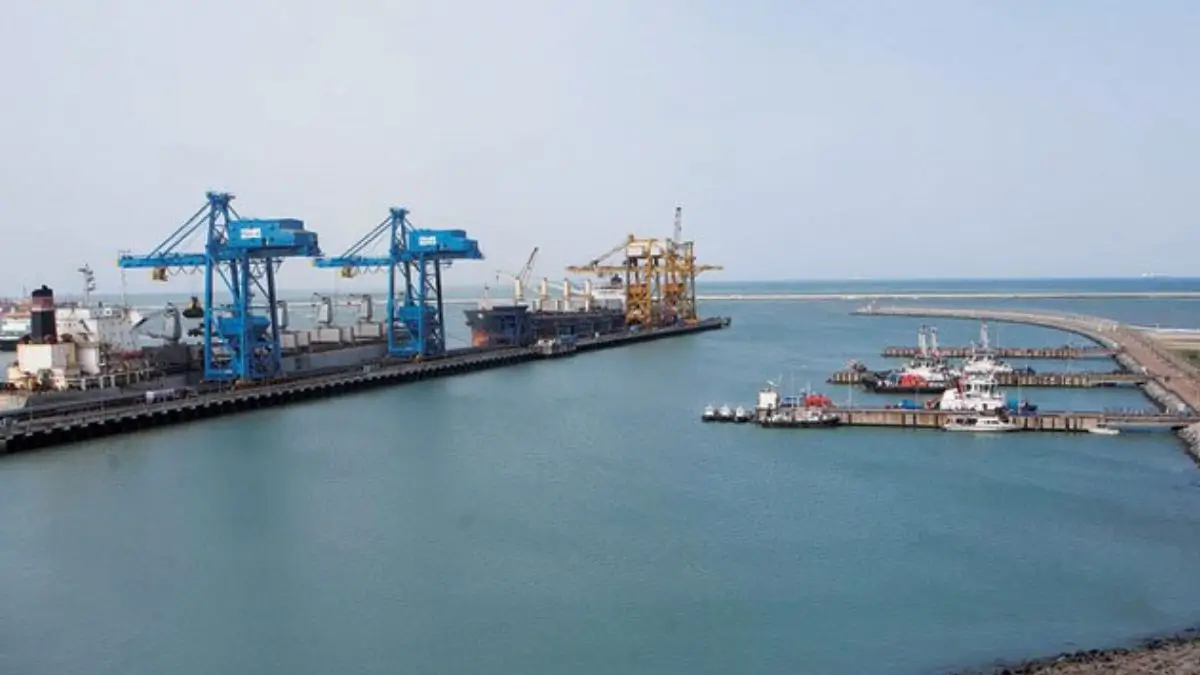
India’s maritime infrastructure has achieved another major milestone as Kamarajar Port Limited (KPL) in Tamil Nadu has become the country’s second major port, after Visakhapatnam Port, to attain an 18-metre operational draft capability. This achievement enables the port to receive fully laden Capesize vessels carrying cargo of up to 1,70,000 Deadweight Tonnage (DWT), significantly enhancing India’s shipping efficiency and global trade competitiveness.
Capital Dredging Project Makes the Achievement Possible
The milestone was achieved after the successful completion of Capital Dredging Phase VI, a project involving an investment of approximately ₹440 crore. The dredging deepened the approach channel, harbour basin, and berths to an operational depth of 18 metres, allowing the port to accommodate larger vessels without partial unloading. This development improves turnaround time, lowers logistics costs, and increases cargo handling efficiency.
What is an 18-Metre Draft?
In maritime terminology, draft refers to the vertical distance between a ship’s waterline and the lowest point of its hull. A deeper draft allows ports to handle larger ships carrying greater quantities of cargo.
With an 18-metre draft, Kamarajar Port is now capable of handling fully loaded Capesize bulk carriers, which are among the world’s largest cargo vessels. These ships are widely used for transporting coal, iron ore, and other bulk commodities essential for industrial growth.
Importance for India’s Maritime Sector
The enhanced draft capability strengthens India’s ambition to become a global maritime hub under initiatives such as Maritime India Vision 2030 and the PM Gati Shakti National Master Plan. Larger ships reduce transportation costs per tonne of cargo, making Indian exports more competitive in international markets.
The development also enhances India’s port infrastructure by increasing capacity, improving operational efficiency, and attracting greater international shipping traffic.
Strategic Importance of Kamarajar Port
Located at Ennore near Chennai in Tamil Nadu, Kamarajar Port is India’s first corporatised major port. It plays an important role in handling thermal coal, automobiles, petroleum products, LNG, chemicals, and project cargo. Its proximity to major industrial clusters in southern India makes it a crucial logistics hub supporting manufacturing and exports.
Benefits for Trade and the Economy
The upgraded infrastructure offers several advantages:
- Ability to receive fully loaded Capesize vessels.
- Lower shipping and logistics costs.
- Faster cargo handling and reduced vessel waiting time.
- Improved competitiveness of Indian ports.
- Increased investment and industrial growth in the surrounding region.
These improvements will strengthen India’s supply chains and support the country’s growing role in global commerce.
Relevance for Government Exam Aspirants
This development is important for UPSC, State PSC, SSC, Banking, Railways, Defence, and other competitive examinations because it relates to:
- Indian Ports and Maritime Infrastructure
- Sagarmala Programme
- Maritime India Vision 2030
- Economic Development
- Logistics and Infrastructure
- Geography of Indian Ports
- Current Affairs on Transport and Trade
Understanding the significance of port modernization is useful for both objective and descriptive examination questions.

B) Why this News is Important
Importance of Kamarajar Port’s Achievement for Competitive Exams
Strengthening India’s Maritime Infrastructure
The achievement reflects India’s continued investment in modernising its port infrastructure to improve efficiency and reduce logistics costs. Deep-draft ports play a vital role in supporting international trade by accommodating larger vessels.
Economic Growth and Trade Competitiveness
Lower transportation costs increase the competitiveness of Indian exports while reducing import expenses for bulk commodities such as coal and iron ore. Efficient ports contribute directly to industrial development and economic growth.
Government Initiatives in Focus
The development aligns with several important government initiatives, including:
- Maritime India Vision 2030
- PM Gati Shakti
- Sagarmala Programme
- Port-led Development Strategy
These initiatives are frequently asked in UPSC, State PSC, SSC, Banking, Railways, and Defence examinations.
High Examination Relevance
Questions related to major ports, shipping infrastructure, logistics, dredging, Capesize vessels, and maritime policies regularly appear in competitive examinations. Candidates should also remember that Visakhapatnam Port was the first major port in India with an 18-metre operational draft, while Kamarajar Port has now become the second.
C) Historical Context
Evolution of Kamarajar Port
Origin of the Port
Kamarajar Port, formerly known as Ennore Port, was commissioned in 2001 near Chennai, Tamil Nadu. It became India’s first corporatised major port and was established to reduce congestion at Chennai Port while supporting industrial development in southern India.
Growth into a Major Industrial Port
Initially developed for coal imports, the port gradually diversified into handling automobiles, LNG, petroleum products, project cargo, chemicals, and bulk commodities. Continuous investments in infrastructure, mechanisation, and dredging have transformed it into one of India’s fastest-growing major ports.
Port Modernisation in India
Over the past decade, the Government of India has focused on expanding port capacity through projects under the Sagarmala Programme and Maritime India Vision 2030. Deepening navigation channels and constructing modern terminals have become key priorities to improve India’s logistics performance and global competitiveness.
The latest 18-metre draft capability represents another important step in India’s long-term maritime development strategy.
Key Takeaways from This News
| S. No. | Key Takeaway |
|---|---|
| 1 | Kamarajar Port has become India’s second major port with an 18-metre operational draft. |
| 2 | The milestone was achieved after completing the ₹440 crore Capital Dredging Phase VI project. |
| 3 | The port can now handle fully laden Capesize vessels carrying up to 1,70,000 DWT cargo. |
| 4 | The development will reduce logistics costs and improve India’s global trade competitiveness. |
| 5 | The achievement supports Maritime India Vision 2030, port modernisation, and India’s port-led economic growth strategy. |
FAQs: Kamarajar Port Becomes India’s Second Major Port with 18-Metre Draft Capability
1. Why is Kamarajar Port in the news?
Kamarajar Port is in the news because it has become India’s second major port to achieve an 18-metre operational draft capability, enabling it to handle fully loaded Capesize vessels.
2. Which is the first major port in India with an 18-metre draft?
Visakhapatnam Port was the first major port in India to achieve an 18-metre operational draft capability.
3. Where is Kamarajar Port located?
Kamarajar Port is located at Ennore, near Chennai, in the state of Tamil Nadu.
4. What is meant by a ship’s draft?
A ship’s draft is the vertical distance between the waterline and the lowest point (keel) of the ship. A deeper draft allows larger ships to enter and operate at a port.
5. What are Capesize vessels?
Capesize vessels are among the largest bulk cargo ships in the world, primarily used for transporting coal, iron ore, and other bulk commodities. They generally carry cargo up to 170,000 DWT or more.
6. What is DWT (Deadweight Tonnage)?
Deadweight Tonnage (DWT) is the total weight a ship can safely carry, including cargo, fuel, crew, passengers, provisions, and ballast.
7. Which project enabled Kamarajar Port to achieve the 18-metre draft?
The Capital Dredging Phase VI Project, completed at a cost of approximately ₹440 crore, enabled the port to achieve the 18-metre operational draft.
8. Why is an 18-metre draft important for India?
It allows Indian ports to accommodate larger cargo vessels, reducing shipping costs, increasing trade efficiency, and improving India’s competitiveness in global maritime trade.
9. Which government initiatives are related to this development?
The development is linked to:
- Maritime India Vision 2030
- Sagarmala Programme
- PM Gati Shakti National Master Plan
- Port-led Development Strategy
10. Why is this topic important for competitive exams?
This topic is relevant for UPSC, State PSC, SSC, Banking, Railways, Defence, CAPF, CDS, NDA, and other government examinations under sections related to infrastructure, economy, transport, geography, and current affairs.
Some Important Current Affairs Links