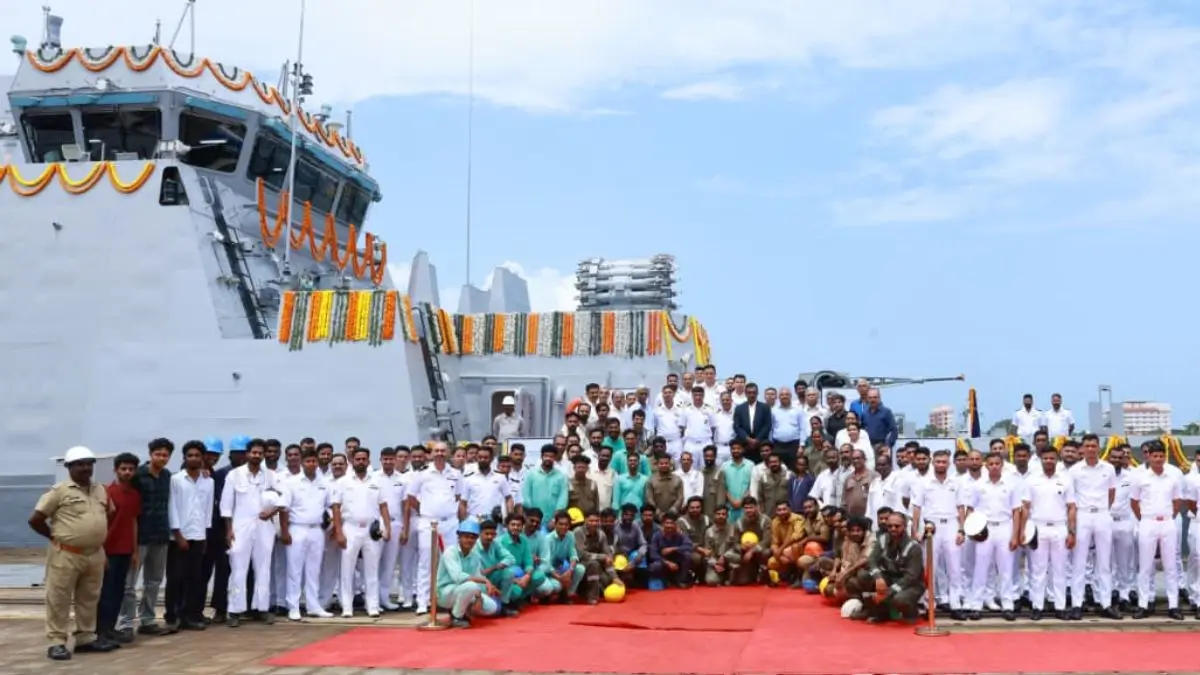






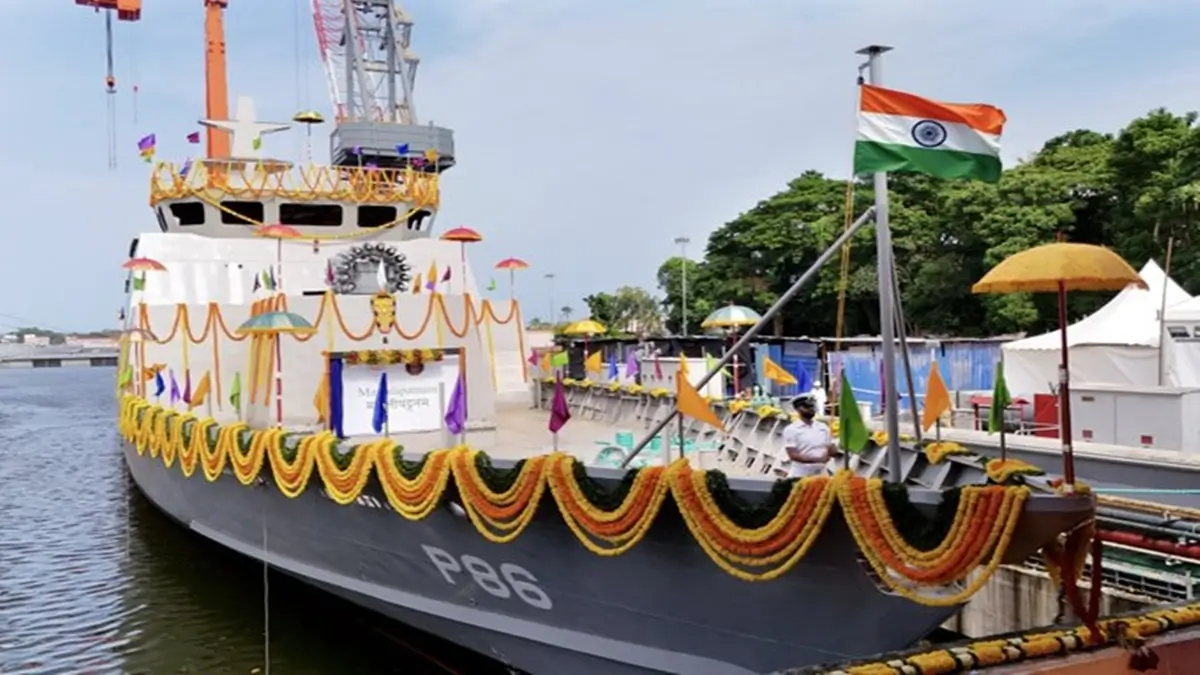
ASW Shallow Water Craft Machilipatnam launched by Indian Navy to boost anti-submarine warfare capability, coastal security and indigenous defence manufacturing in India.
Indian Navy Strengthens Coastal Defence with Machilipatnam
The Indian Navy has achieved another milestone in strengthening India’s maritime security by launching the Anti-Submarine Warfare Shallow Water Craft (ASW-SWC) Machilipatnam. The vessel is part of the Navy’s ambitious programme to modernise its coastal defence capabilities and enhance surveillance against underwater threats in India’s vast maritime domain. The induction of such advanced warships reflects India’s growing emphasis on indigenous defence manufacturing under the Aatmanirbhar Bharat initiative. The ASW-SWC programme is designed to replace ageing naval assets with technologically advanced platforms capable of protecting India’s coastline and strategic maritime interests.
Purpose of the ASW Shallow Water Craft
Machilipatnam has been specially designed for Anti-Submarine Warfare (ASW) operations in shallow coastal waters. These vessels are equipped with advanced sonar systems, lightweight torpedoes, rocket launchers and modern navigation equipment that enable them to detect, track and neutralise hostile submarines operating near India’s coastline. Unlike larger destroyers and frigates, shallow water craft can effectively operate in coastal regions where submarine detection is more challenging.
Indigenous Defence Manufacturing Gets a Boost
One of the most significant aspects of Machilipatnam is its high indigenous content. Built under India’s self-reliance programme, the vessel demonstrates the country’s increasing capability in designing and constructing sophisticated naval platforms. Indigenous shipbuilding reduces dependence on foreign suppliers, strengthens domestic defence industries, creates employment opportunities and enhances national security by ensuring reliable supply chains for critical defence equipment.
Enhancing India’s Maritime Security
India possesses a coastline of more than 7,500 kilometres and safeguards critical sea lanes through which a substantial portion of its trade and energy imports pass. With increasing submarine deployments in the Indian Ocean Region (IOR), strengthening underwater surveillance has become a strategic priority. The induction of Machilipatnam improves the Navy’s capability to monitor coastal waters, protect ports, offshore assets and commercial shipping routes from potential underwater threats.
The vessel will also support maritime domain awareness, coastal surveillance missions and coordinated operations with other naval and coast guard assets, thereby improving India’s overall maritime defence preparedness.
Strategic Importance in the Indian Ocean Region
The Indian Ocean has become an increasingly competitive strategic region due to the growing presence of foreign naval forces. Advanced anti-submarine platforms such as Machilipatnam help India maintain a credible deterrence against underwater threats while ensuring the security of vital sea communication routes.
The ASW Shallow Water Craft programme represents a long-term investment in India’s naval modernisation. As more vessels under this project enter service, the Indian Navy’s coastal defence network will become stronger and more capable of responding to emerging maritime security challenges.

Why This News is Important
Important for Defence and Security Exams
The launch of Machilipatnam is significant because defence modernisation is a frequently asked topic in UPSC, State PCS, CDS, NDA, CAPF, SSC, Railways and other competitive examinations. Questions are often framed around indigenous defence projects, naval exercises, defence manufacturing and strategic security initiatives.
Supports Aatmanirbhar Bharat
The project highlights India’s progress towards self-reliance in defence production. Indigenous warships reduce import dependency while promoting domestic technological innovation and industrial development. Candidates preparing for government examinations should understand how defence manufacturing contributes to national security and economic growth.
Maritime Security Remains a National Priority
India’s increasing focus on safeguarding the Indian Ocean Region makes anti-submarine warfare a major strategic concern. The commissioning of advanced ASW vessels demonstrates India’s efforts to strengthen coastal security, counter underwater threats and secure international shipping lanes. Such developments frequently appear in current affairs sections of competitive examinations.
Historical Context
Evolution of India’s Anti-Submarine Warfare Capability
India has continuously modernised its naval forces to address evolving maritime challenges. Earlier generations of anti-submarine vessels served effectively for decades but required replacement with modern platforms featuring advanced sonar, communication and weapon systems.
The ASW Shallow Water Craft programme was initiated to build a new class of specialised coastal warships capable of protecting India’s littoral waters. The project forms part of the broader naval modernisation programme aimed at strengthening indigenous shipbuilding capabilities and improving maritime security.
The launch of Machilipatnam follows the induction of other ASW shallow water craft under the same programme, demonstrating steady progress in expanding India’s submarine-hunting fleet and enhancing operational readiness.
Key Takeaways from This News
| S. No. | Key Takeaway |
|---|---|
| 1 | Machilipatnam is an Anti-Submarine Warfare Shallow Water Craft (ASW-SWC) launched for the Indian Navy. |
| 2 | The vessel strengthens India’s coastal defence and underwater surveillance capabilities. |
| 3 | It is designed to detect and neutralise enemy submarines operating in shallow waters. |
| 4 | The project supports the Government of India’s Aatmanirbhar Bharat initiative through indigenous defence manufacturing. |
| 5 | The induction of such vessels enhances India’s maritime security in the strategically important Indian Ocean Region. |
Frequently Asked Questions (FAQs) on Indian Navy Launches ASW Shallow Water Craft Machilipatnam
1. What is the full form of ASW-SWC?
Answer: ASW-SWC stands for Anti-Submarine Warfare Shallow Water Craft. These specialised naval vessels are designed to detect, track and neutralise enemy submarines operating in shallow coastal waters.
2. Which organisation launched the ASW Shallow Water Craft Machilipatnam?
Answer: The Indian Navy launched the ASW Shallow Water Craft Machilipatnam as part of its efforts to strengthen coastal defence and underwater surveillance capabilities.
3. What is the primary role of the ASW Shallow Water Craft?
Answer: The primary role of ASW Shallow Water Craft is to conduct anti-submarine warfare operations, including detecting and countering hostile submarines near coastal areas, ports and strategic maritime locations.
4. Why are shallow water craft important for India’s maritime security?
Answer: Shallow water craft are important because submarines can operate secretly in coastal regions. These vessels improve India’s ability to monitor underwater activities and protect ports, naval bases and offshore infrastructure.
5. Which Indian initiative is supported by the construction of ASW Shallow Water Craft?
Answer: The construction of ASW Shallow Water Craft supports the Aatmanirbhar Bharat (Self-Reliant India) initiative by promoting indigenous defence manufacturing.
6. Which branch of the Indian Armed Forces operates naval warships?
Answer: The Indian Navy operates naval warships, submarines and other maritime defence platforms to protect India’s maritime interests.
7. What type of warfare capability does Machilipatnam enhance?
Answer: Machilipatnam enhances Anti-Submarine Warfare (ASW) capability, allowing the Navy to detect and respond to underwater threats.
8. Why is the Indian Ocean Region strategically important for India?
Answer: The Indian Ocean Region is strategically important because it contains major international trade routes, energy supply routes and maritime areas crucial for India’s economic and security interests.
9. What is the significance of indigenous naval shipbuilding?
Answer: Indigenous naval shipbuilding reduces dependence on foreign defence suppliers, strengthens domestic industries and improves India’s strategic autonomy.
10. Which competitive examinations can ask questions related to this news?
Answer: Questions related to this topic can appear in UPSC Civil Services, State PCS, CDS, NDA, CAPF, SSC, Banking, Railways and other government examinations under defence and current affairs sections.
Some Important Current Affairs Links