





Gaganyaan Mission 2026 reaches major milestones as ISRO targets its first uncrewed flight in Q4 2026. Know key facts about LVM3, Vyommitra, human-rating and India’s space programme for government exams.
Gaganyaan Mission Moves Closer to Human Spaceflight
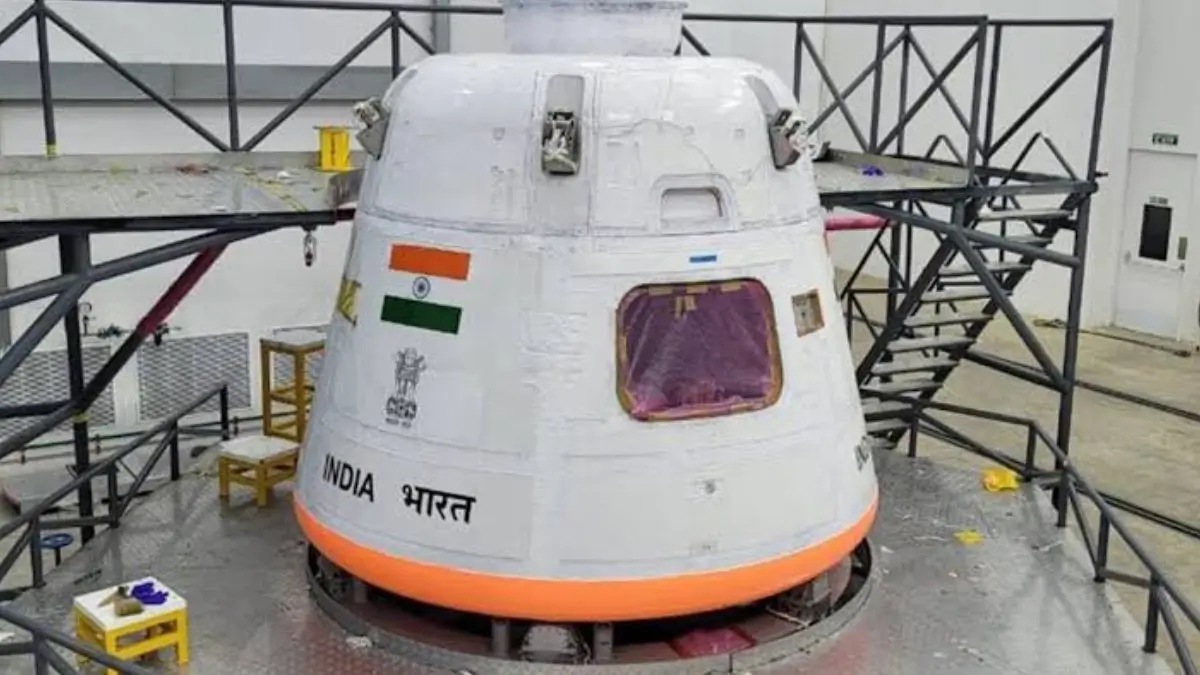
India’s ambitious Gaganyaan Mission has reached important technical milestones as the country moves closer to conducting its first human spaceflight. The Indian Space Research Organisation (ISRO) has made substantial progress in validating systems required for safe human spaceflight, with the first uncrewed experimental mission targeted for the fourth quarter (Q4) of 2026.
Human-Rating of Gaganyaan Systems
Human-rating is one of the most important requirements of the Gaganyaan programme because systems designed for astronauts must meet much higher standards of reliability and safety than conventional satellite missions. The programme has progressed in areas involving crew safety, propulsion, environmental control and other critical systems. Union Minister of State for Space Dr. Jitendra Singh informed Parliament about these developments in August 2026.
First Uncrewed Mission Targeted for Q4 2026
The first uncrewed Gaganyaan mission is expected to be a major validation exercise before astronauts are sent into orbit. The mission is planned to carry Vyommitra, a humanoid robot developed to simulate aspects of human presence in the spacecraft. Its purpose is to help evaluate spacecraft performance and human-related systems under spaceflight conditions.
Role of LVM3 in the Gaganyaan Programme
The Launch Vehicle Mark-3 (LVM3) has been selected as the launch vehicle for Gaganyaan. The rocket has undergone modifications and human-rating-related development to meet the demanding safety requirements of a crewed mission. Its successful operational history, including major lunar missions, provides an important foundation for its use in the human-spaceflight programme. Earlier tests of the human-rated HS200 solid booster were significant steps in this process.
Mission Profile and Astronaut Safety
The Gaganyaan programme is designed to demonstrate India’s capability to send humans into Low Earth Orbit (LEO) and safely return them to Earth. The planned human mission involves a crew of three astronauts travelling to an orbit around 400 km above Earth for approximately three days before returning safely. Earlier ISRO tests have focused on propulsion, crew escape and other systems necessary for mission safety.
Vyommitra and Uncrewed Testing
Vyommitra is an important component of the uncrewed testing phase. The humanoid robot is intended to interact with spacecraft systems and provide data that can help engineers assess the performance of systems designed for astronauts. Its deployment demonstrates India’s effort to test human-spaceflight technologies progressively before undertaking a crewed mission.
Gaganyaan and India’s Future Space Ambitions
Gaganyaan is not an isolated space project. It forms part of India’s broader human-spaceflight ambitions, including the development of the Bharatiya Antariksh Station (BAS). India aims to develop the station as part of its long-term human spaceflight programme, with operationalisation targeted around 2035.
Importance for India’s Space Sector
The successful completion of human-rating milestones would strengthen India’s capabilities in advanced spacecraft engineering, crew safety, life-support systems, propulsion and human-spaceflight operations. It could also contribute to the development of a wider space ecosystem involving research institutions, industries and technology companies.
Gaganyaan as an Exam-Relevant Current Affair
For government-exam aspirants, the Gaganyaan Mission is important under Science and Technology, Space Technology, India’s space programme and national achievements. Key facts to remember include ISRO as the implementing space agency, LVM3 as the launch vehicle, Vyommitra as the humanoid robot, Q4 2026 as the target for the first uncrewed experimental mission, and the longer-term objective of establishing the Bharatiya Antariksh Station.

Why This News is Important
India’s First Human Spaceflight Programme
The Gaganyaan Mission represents India’s most significant human-spaceflight initiative. Unlike conventional satellite launches, a crewed mission requires extremely high levels of reliability because the safety of astronauts depends on multiple interconnected systems. The latest human-rating milestones therefore indicate meaningful progress towards India’s first independent human spaceflight.
Strengthening Indigenous Space Technology
Gaganyaan is important from the perspective of technological self-reliance. Developing human-rated launch vehicles, crew modules, environmental control systems, propulsion systems and emergency escape mechanisms requires advanced engineering capabilities. Successful development of these technologies can strengthen India’s broader space and high-technology manufacturing ecosystem.
Importance for Competitive Examinations
The mission is highly relevant to examinations such as UPSC, State PCS, SSC, Banking, Railways, Defence and police recruitment examinations because questions related to ISRO, space missions, launch vehicles and major scientific achievements frequently appear in General Awareness and Science & Technology sections.
Gateway to Future Space Missions
Gaganyaan can serve as a technological foundation for India’s future human-spaceflight activities. The programme is linked to longer-term objectives, including the development of the Bharatiya Antariksh Station. India’s growing human-spaceflight capabilities could also enhance its role in international space cooperation and advanced space research.
Strategic and Scientific Significance
Human spaceflight can generate expertise in areas such as life-support technology, robotics, materials science, medicine, propulsion and autonomous systems. Consequently, Gaganyaan has significance beyond a single mission and represents an important step in India’s long-term space exploration strategy.
Historical Context: Background of the Gaganyaan Mission
Evolution of India’s Space Programme
India’s space programme began with a strong emphasis on practical applications such as communication, meteorology and remote sensing. Over the decades, ISRO developed increasingly sophisticated launch vehicles and spacecraft, enabling India to undertake complex missions independently. The country’s space programme has since expanded into lunar exploration, planetary missions and advanced launch technologies.
Development of Human-Spaceflight Capability
The idea of sending Indian astronauts into space evolved over several years before the Gaganyaan programme received formal momentum. The mission requires India to develop technologies specifically designed for human safety rather than merely placing an unmanned spacecraft into orbit.
Selection of LVM3
The LVM3 was selected as the launch vehicle for Gaganyaan because of its heavy-lift capability and demonstrated launch performance. Its components have been adapted and tested to meet human-rating requirements. The HS200 solid booster, for example, represents the human-rated version of the LVM3’s S200 booster and has undergone dedicated testing.
Uncrewed Missions Before Crewed Flight
A major principle of the Gaganyaan programme is progressive testing. Uncrewed missions allow ISRO to evaluate the spacecraft and associated systems without placing astronauts at risk. The first uncrewed mission targeted for Q4 2026, involving Vyommitra, is therefore an important step toward eventual crewed flight.
Long-Term Vision: Bharatiya Antariksh Station
India’s human-spaceflight ambitions extend beyond Gaganyaan. The proposed Bharatiya Antariksh Station is intended to provide a platform for sustained human presence and scientific activities in space, with operationalisation targeted for 2035. This makes Gaganyaan an important building block in India’s longer-term space exploration strategy.
Key Takeaways from Gaganyaan Mission Milestones
| S. No. | Key Takeaway |
|---|---|
| 1 | Mission: Gaganyaan is India’s human-spaceflight programme aimed at demonstrating the country’s capability to send astronauts to Low Earth Orbit and safely return them. |
| 2 | First Uncrewed Flight: The first uncrewed experimental Gaganyaan mission is targeted for Q4 2026. |
| 3 | Humanoid Robot: Vyommitra is planned to support the uncrewed mission and help test systems relevant to human spaceflight. |
| 4 | Launch Vehicle: LVM3 has been selected and modified for the demanding requirements of the Gaganyaan human-spaceflight programme. |
| 5 | Long-Term Goal: Gaganyaan forms part of India’s broader human-spaceflight strategy, including the proposed Bharatiya Antariksh Station, targeted for operationalisation by 2035. |
FAQs: Gaganyaan Mission
1. What is the Gaganyaan Mission?
Gaganyaan is India’s human-spaceflight programme developed by the Indian Space Research Organisation (ISRO). Its objective is to demonstrate India’s capability to send humans into Low Earth Orbit and safely bring them back to Earth.
2. Which organisation is responsible for the Gaganyaan Mission?
The Indian Space Research Organisation (ISRO) is the primary organisation responsible for developing and executing the Gaganyaan Mission.
3. What is the target for the first uncrewed Gaganyaan mission?
The first uncrewed Gaganyaan experimental flight is targeted for the fourth quarter of 2026 (Q4 2026).
4. Which launch vehicle will be used for the Gaganyaan Mission?
The Launch Vehicle Mark-3 (LVM3) has been selected as the launch vehicle for the Gaganyaan programme. It is being modified and human-rated to meet the stringent safety requirements of crewed spaceflight.
5. What is Vyommitra?
Vyommitra is a humanoid robot developed by ISRO for the Gaganyaan programme. It is intended to simulate aspects of human presence during uncrewed testing and help assess spacecraft systems before astronauts are carried aboard.
6. What is the main objective of the Gaganyaan Mission?
The primary objective is to demonstrate India’s capability to conduct human spaceflight to Low Earth Orbit (LEO) and safely return the crew to Earth.
7. Why are uncrewed missions important for Gaganyaan?
Uncrewed missions allow ISRO to test the spacecraft, launch vehicle, crew-related systems, safety mechanisms and other critical technologies before human astronauts are sent into space. This approach helps identify and resolve technical problems without exposing astronauts to risk.
8. What is human-rating in the context of Gaganyaan?
Human-rating refers to the process of ensuring that a launch vehicle and spacecraft meet stringent standards of safety, reliability and performance required to carry humans. It is a crucial requirement for the Gaganyaan programme.
9. What is the proposed Bharatiya Antariksh Station?
The Bharatiya Antariksh Station (BAS) is India’s proposed space station and represents a longer-term objective of the country’s human-spaceflight programme. Its planned development is closely linked with India’s broader ambitions in human space exploration.
10. Why is Gaganyaan important for government examinations?
Gaganyaan is relevant to UPSC, State PCS, SSC, Railways, Banking, Defence and other government examinations because it covers important Science and Technology topics, including ISRO, human spaceflight, launch vehicles, space exploration and India’s indigenous technological capabilities.
Some Important Current Affairs Links