




GOBARdhan scheme 2026 approved with ₹23,731 crore outlay to boost Compressed Biogas production, waste-to-energy, rural development and India’s circular bioeconomy.
GOBARdhan Scheme Receives Major Cabinet Approval
The Union Cabinet, chaired by Prime Minister Narendra Modi, approved the GOBARdhan National Circular Bioenergy Scheme on 6 August 2026 with a total outlay of ₹23,731 crore. The scheme will be implemented for ten financial years, from FY 2026-27 to FY 2035-36, with the objective of making Compressed Biogas (CBG) a major component of India’s future energy mix.
GOBARdhan Scheme to Transform Waste into Energy
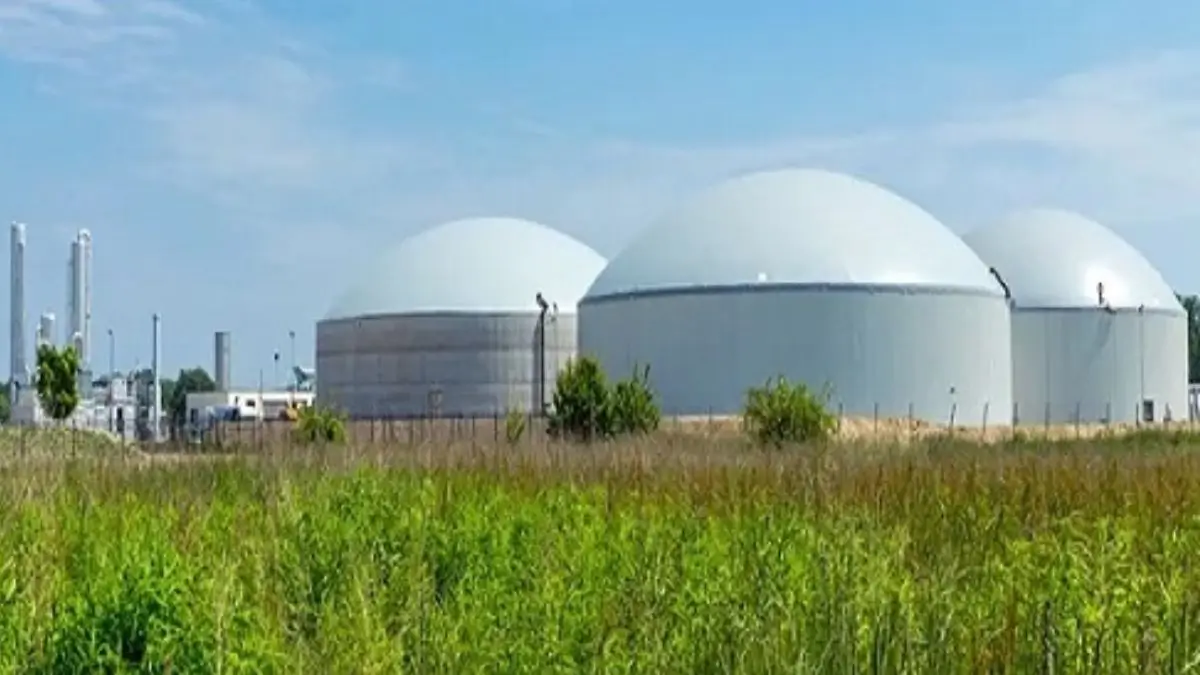
GOBARdhan stands for Galvanizing Organic Bio-Agro Resources Dhan. The scheme focuses on converting agricultural residue, cattle dung, press mud, municipal organic waste and other biomass into compressed biogas, organic manure and other economically useful products. This approach links waste management with renewable energy production and rural economic development.
Focus on Nearly Ten-Fold Growth in CBG Production
One of the major objectives of the GOBARdhan scheme is to increase India’s domestic CBG production by nearly ten times. The government expects the programme to attract substantial private investment and create a stronger circular bioeconomy in which organic waste becomes a source of energy, income and employment.
Six Key Components of the GOBARdhan Scheme
The scheme has been designed around six major growth engines. These include an assured CBG offtake mechanism, stable CBG pricing, capital assistance, pipeline infrastructure, credit guarantee support and a CBG Ecosystem Challenge Fund. Together, these measures are intended to address demand, financing, infrastructure and implementation challenges faced by CBG producers.
Assured Market for Compressed Biogas Producers
The assured CBG offtake framework will create predictable demand through City Gas Distribution entities. The notified CBG obligation is 3% in FY 2026-27, 4% in FY 2027-28 and 5% from FY 2028-29 onwards for CNG transport and domestic PNG segments. This mechanism is expected to improve the commercial viability of CBG projects and encourage long-term investment.
Stable Pricing Framework for CBG
The government has introduced an administered CBG price of ₹2,110 per Metric Million British Thermal Unit (MMBTU), equivalent to about ₹105 per kilogram of CBG. The pricing framework is designed to provide producers with greater revenue visibility over a minimum ten-year horizon while maintaining affordability for consumers.
Capital Assistance for New CBG Projects
Eligible greenfield CBG projects will receive capital assistance of up to ₹2 crore per tonne per day (TPD) of installed CBG capacity. The assistance can cover important assets associated with feedstock aggregation, organic manure processing and value addition. Brownfield projects that expand production capacity will also be eligible for support.
Pipeline and Credit Support to Strengthen the Sector
The scheme also supports pipeline infrastructure connecting CBG plants with trunk pipelines and City Gas Distribution networks. In addition, a dedicated credit guarantee mechanism will facilitate institutional finance for eligible MSME-based CBG projects, with credit guarantee coverage of up to 85% on eligible loans.
Benefits for Farmers and Rural Entrepreneurs
GOBARdhan can create new economic opportunities in rural areas through the collection and transportation of agricultural residue and cattle dung, operation of CBG plants and production of organic manure. Farmers, cooperatives, feedstock aggregators, MSMEs and rural entrepreneurs can therefore become participants in the emerging bioenergy value chain.
Contribution to India’s Energy Security
India currently meets nearly half of its natural gas requirement through imports. Expanding domestic CBG production can provide an indigenous renewable alternative to imported fossil fuels. Since CBG is chemically equivalent to natural gas, it can be integrated into the existing gas ecosystem, strengthening energy resilience and reducing import dependence.
Environmental and Circular Economy Benefits
The scheme promotes the productive use of organic waste that could otherwise end up in landfills or contribute to environmental pollution. Converting agricultural residue and other organic material into fuel and organic manure can improve waste management while supporting lower greenhouse-gas emissions. Thus, GOBARdhan combines renewable energy, waste management, rural development and the circular economy in one policy framework.
GOBARdhan Builds on Earlier Government Initiatives
The new national framework builds on earlier initiatives such as SATAT (Sustainable Alternative Towards Affordable Transportation), the Market Development Assistance scheme for organic manure, the Biomass Aggregation Machinery scheme, the Development of Pipeline Infrastructure scheme and Central Financial Assistance for CBG plants under the National Bioenergy Programme. More than 200 CBG plants had already been commissioned under the earlier ecosystem.
GOBARdhan and India’s Circular Bioeconomy
The scheme represents a shift from treating organic waste merely as a sanitation challenge to recognising it as an economic resource. By bringing demand assurance, pricing, capital assistance, infrastructure, credit and ecosystem development under a single framework, GOBARdhan seeks to create a scalable national CBG industry. This makes the scheme important for India’s clean-energy transition as well as its rural economy.

Why this News is Important
Importance for India’s Energy Security
The approval of the GOBARdhan scheme is significant because India is seeking to reduce its dependence on imported fossil fuels while meeting rising energy demand. Domestic CBG can supplement conventional natural gas and provide a renewable source of gaseous fuel. This makes the scheme relevant to questions on energy security, renewable energy and India’s import dependence.
Importance for the Rural Economy
GOBARdhan connects farmers and rural entrepreneurs with the clean-energy economy. Agricultural waste and cattle dung can become valuable feedstock for CBG plants, creating opportunities in collection, transportation, processing and manure production. The scheme therefore supports the concept of converting waste into wealth and can contribute to additional rural income.
Importance for Environmental Sustainability
The scheme promotes a circular model in which organic waste is converted into useful fuel and manure. It can help reduce waste accumulation, support scientific waste management and lower greenhouse-gas emissions. For government examinations, this makes GOBARdhan relevant to topics such as sustainable development, climate action, circular economy and bioenergy.
Importance for Private Investment and MSMEs
The government has introduced stable pricing, capital assistance, pipeline connectivity and credit guarantees to improve the financial viability of CBG projects. Credit guarantee support can particularly help MSME-based projects obtain institutional finance. The policy therefore combines public support with private-sector participation in the renewable-energy sector.
Importance for Competitive Examinations
For aspirants preparing for UPSC, State PCS, SSC, banking, railways, defence and other government examinations, this development is important because it combines several frequently tested subjects: government schemes, renewable energy, rural development, waste management, energy security, circular economy and environmental sustainability. Important facts to remember include the ₹23,731 crore outlay, FY 2026-27 to FY 2035-36 implementation period, Ministry of Petroleum and Natural Gas as nodal ministry and the target of nearly ten-fold growth in domestic CBG production.
Historical Context: Background of the GOBARdhan Initiative
Launch Under Swachh Bharat Mission
The GOBARdhan initiative was originally launched in 2018 under the Swachh Bharat Mission (Grameen) as part of Solid and Liquid Waste Management. Its initial focus was on converting animal waste, kitchen waste, crop residue and market waste into biogas and bio-slurry while improving sanitation and cleanliness in rural areas.
Expansion Towards Compressed Biogas
Over time, the government’s approach expanded from village-level waste management to developing a broader commercial CBG ecosystem. The SATAT initiative, launched to encourage the production and use of alternative fuels, helped create demand and investment opportunities for CBG producers.
Development of Supporting Infrastructure
Several complementary measures were introduced to address specific challenges in the CBG sector. These included support for biomass aggregation machinery, pipeline infrastructure, organic manure marketing and financial assistance for CBG plants. These initiatives gradually established the foundations needed for a larger bioenergy industry.
Consolidation Under One Ministry
Previously, the CBG ecosystem involved multiple ministries and schemes. The new GOBARdhan framework consolidates the national CBG programme under the Ministry of Petroleum and Natural Gas, creating an integrated approach to policy implementation and development of the entire value chain.
Transition to a National Circular Bioenergy Model
The 2026 approval represents a major expansion of the original waste-management concept. GOBARdhan is now positioned as a national circular bioenergy scheme aimed at simultaneously addressing energy security, rural livelihoods, waste management, private investment and environmental sustainability. The transition demonstrates how a sanitation-focused initiative has evolved into a broader clean-energy and circular-economy programme.
Key Takeaways from GOBARdhan Scheme Approval
| S. No. | Key Takeaway |
|---|---|
| 1 | The Union Cabinet approved the GOBARdhan National Circular Bioenergy Scheme with an outlay of ₹23,731 crore. |
| 2 | The scheme will be implemented from FY 2026-27 to FY 2035-36. |
| 3 | The Ministry of Petroleum and Natural Gas (MoPNG) is the nodal ministry for the scheme. |
| 4 | GOBARdhan aims to achieve nearly ten-fold growth in domestic Compressed Biogas production. |
| 5 | The scheme promotes waste-to-energy, rural livelihoods, private investment, energy security and India’s circular bioeconomy. |
FAQs: GOBARdhan Scheme
1. What is the GOBARdhan scheme?
GOBARdhan stands for Galvanizing Organic Bio-Agro Resources Dhan. It is a government initiative aimed at converting organic waste such as cattle dung, agricultural residue and other biomass into useful products including biogas, Compressed Biogas (CBG) and organic manure.
2. What is the total financial outlay approved for the GOBARdhan scheme?
The Union Cabinet has approved an outlay of ₹23,731 crore for the GOBARdhan National Circular Bioenergy Scheme.
3. What is the implementation period of the GOBARdhan scheme?
The scheme will be implemented for 10 financial years, from FY 2026-27 to FY 2035-36.
4. Which ministry is the nodal ministry for the GOBARdhan scheme?
The Ministry of Petroleum and Natural Gas (MoPNG) is the nodal ministry for the national CBG programme under the GOBARdhan framework.
5. What is Compressed Biogas?
Compressed Biogas, or CBG, is a purified form of biogas produced from organic feedstock such as agricultural waste, cattle dung and other biomass. It can be used as a cleaner gaseous fuel and can supplement conventional natural gas.
6. What is the main objective of the GOBARdhan scheme?
The major objective is to substantially increase domestic CBG production while promoting waste-to-energy conversion, rural economic opportunities, energy security, environmental sustainability and a circular bioeconomy.
7. What production growth does the government target under GOBARdhan?
The scheme aims to achieve nearly ten-fold growth in India’s domestic CBG production.
8. What is the assured CBG obligation under the scheme?
The CBG obligation for CNG transport and domestic PNG segments is 3% in FY 2026-27, 4% in FY 2027-28 and 5% from FY 2028-29 onwards.
9. What is the administered price of CBG under the new framework?
The administered CBG price has been fixed at ₹2,110 per MMBTU, equivalent to approximately ₹105 per kg of CBG.
10. How much capital assistance can eligible greenfield CBG projects receive?
Eligible greenfield CBG projects can receive capital assistance of up to ₹2 crore per tonne per day (TPD) of installed CBG capacity, subject to the applicable scheme provisions.
Some Important Current Affairs Links