









Coral Larvae Cryobank Philippines leads Southeast Asia’s coral conservation, preserving reef biodiversity and supporting restoration projects in the Coral Triangle.
🌊 Philippines Launches Southeast Asia’s First Coral Larvae Cryobank
Introduction: A Milestone in Marine Conservation
In a groundbreaking move for marine biodiversity, the Philippines has inaugurated Southeast Asia’s first Coral Larvae Cryobank. This pioneering facility aims to preserve coral genetic diversity and bolster reef restoration efforts in the face of escalating climate change threats.
What Is a Coral Larvae Cryobank?
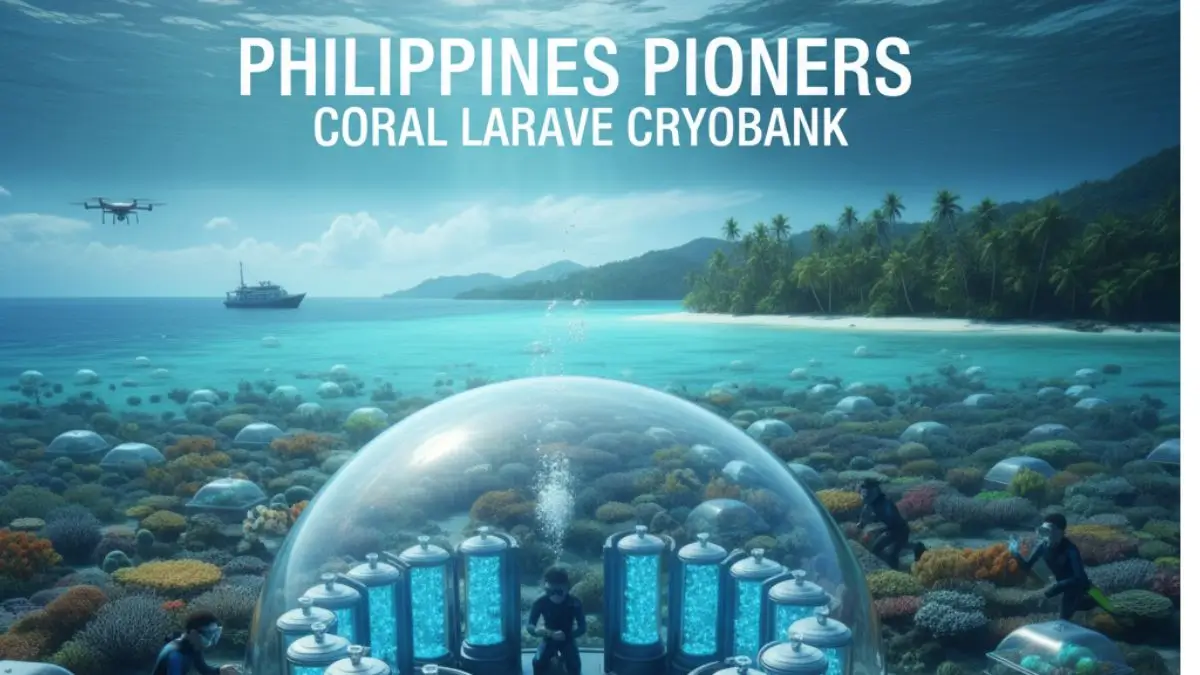
A Coral Larvae Cryobank is a specialized facility designed to freeze and store coral larvae at ultra-low temperatures, effectively halting all biological activity. This preservation method safeguards the genetic material of corals, ensuring their availability for future research and reef restoration initiatives. The process involves collecting coral larvae during spawning events, treating them with cryoprotectant solutions to prevent ice formation, and rapidly freezing them in liquid nitrogen at –196°C. When needed, these larvae can be thawed and reintroduced into reef ecosystems to aid in regeneration efforts.
Collaborative Regional Effort
This initiative is part of a collaborative effort under the Coral Research & Development Accelerator Platform (CORDAP), involving countries such as Taiwan, Indonesia, Malaysia, and Thailand. The project aims to establish a regional network of cryobanks, enhancing the collective capacity to conserve and restore coral reefs across Southeast Asia.
Significance for Marine Biodiversity
The Coral Triangle, encompassing parts of the Philippines, Indonesia, Malaysia, Papua New Guinea, Solomon Islands, and Timor-Leste, is renowned as the world’s epicenter of marine biodiversity. This region houses over 75% of the world’s coral species and a vast array of marine life. However, these ecosystems are under severe threat due to climate change, pollution, and destructive fishing practices. The establishment of the Coral Larvae Cryobank represents a critical step toward preserving this invaluable biodiversity for future generations.
🧭 Why This News Is Important
Relevance to Environment & Ecology
This development is highly pertinent to the Environment & Ecology section of the General Studies Paper III in civil services examinations. Understanding the mechanisms of coral preservation and the significance of the Coral Triangle is crucial for comprehending marine biodiversity conservation efforts. This initiative exemplifies innovative approaches to mitigating the impacts of climate change on marine ecosystems.
Implications for Regional Cooperation
The collaborative nature of this project underscores the importance of regional cooperation in addressing transboundary environmental challenges. It highlights the role of multilateral partnerships in fostering sustainable development and environmental stewardship. Such initiatives are often featured in governance and international relations segments of various competitive exams.
📜 Historical Context
The Coral Triangle: A Biodiversity Hotspot
The Coral Triangle is a marine region located in the western Pacific Ocean, recognized for its exceptional marine biodiversity. It spans approximately 6 million square kilometers and includes the Philippines, Indonesia, Malaysia, Papua New Guinea, Solomon Islands, and Timor-Leste. This area is home to over 75% of the world’s coral species and a significant proportion of reef fish species. Historically, the region has been a focal point for marine conservation efforts due to its ecological significance.
Growing Threats to Marine Ecosystems
In recent decades, the Coral Triangle has faced mounting threats from human activities, including overfishing, pollution, and climate change-induced coral bleaching. These factors have led to significant degradation of coral reef ecosystems, prompting urgent calls for conservation and restoration initiatives. The establishment of the Coral Larvae Cryobank is a direct response to these challenges, aiming to preserve coral genetic diversity and support reef restoration efforts.
✅ Key Takeaways from “Philippines Launches Southeast Asia’s First Coral Larvae Cryobank”
| S.No | Key Takeaway |
|---|---|
| 1 | First in Southeast Asia: The Philippines has inaugurated the region’s first Coral Larvae Cryobank, marking a significant advancement in marine conservation efforts. |
| 2 | Cryopreservation Technique: The facility employs advanced cryopreservation methods, including rapid freezing in liquid nitrogen, to store coral larvae for future restoration projects. |
| 3 | Regional Collaboration: The initiative is part of a broader regional effort involving countries like Taiwan, Indonesia, Malaysia, and Thailand under the Coral Research & Development Accelerator Platform. |
| 4 | Preserving the Coral Triangle: The project aims to protect the Coral Triangle, a biodiversity hotspot home to over 75% of the world’s coral species, from threats like climate change and pollution. |
| 5 | Examination Relevance: This development is pertinent to the Environment & Ecology section of civil services examinations, highlighting innovative conservation strategies in marine ecosystems. |
FAQs: Frequently Asked Questions
1. What is a Coral Larvae Cryobank?
A Coral Larvae Cryobank is a specialized facility that freezes and stores coral larvae at ultra-low temperatures, preserving their genetic material for future reef restoration and research.
2. Which country launched Southeast Asia’s first Coral Larvae Cryobank?
The Philippines has launched the first Coral Larvae Cryobank in Southeast Asia.
3. Why is the Coral Triangle significant?
The Coral Triangle, which includes the Philippines, Indonesia, Malaysia, Papua New Guinea, Solomon Islands, and Timor-Leste, is a biodiversity hotspot containing over 75% of the world’s coral species and numerous reef fish species.
4. How does cryopreservation help coral conservation?
Cryopreservation halts biological activity in coral larvae by freezing them at –196°C using liquid nitrogen, ensuring that genetic diversity is preserved for future reef restoration projects.
5. Which countries are collaborating under the Coral Research & Development Accelerator Platform (CORDAP)?
Countries like Taiwan, Indonesia, Malaysia, Thailand, and the Philippines are collaborating under CORDAP to establish a regional network of coral cryobanks.
6. How is this news relevant for government exams?
This news is relevant for Environment & Ecology sections of civil services exams (UPSC/PSC), banking, and teaching exams, highlighting conservation strategies, biodiversity hotspots, and climate change initiatives.
Some Important Current Affairs Links