








Patna Metro phase 1 launch by Bihar CM Nitish Kumar marks a major step in urban transport. Covering ISBT to Bhoothnath, trains run every 20 minutes with Madhubani art coaches.
Patna Metro: A New Era in Urban Mobility
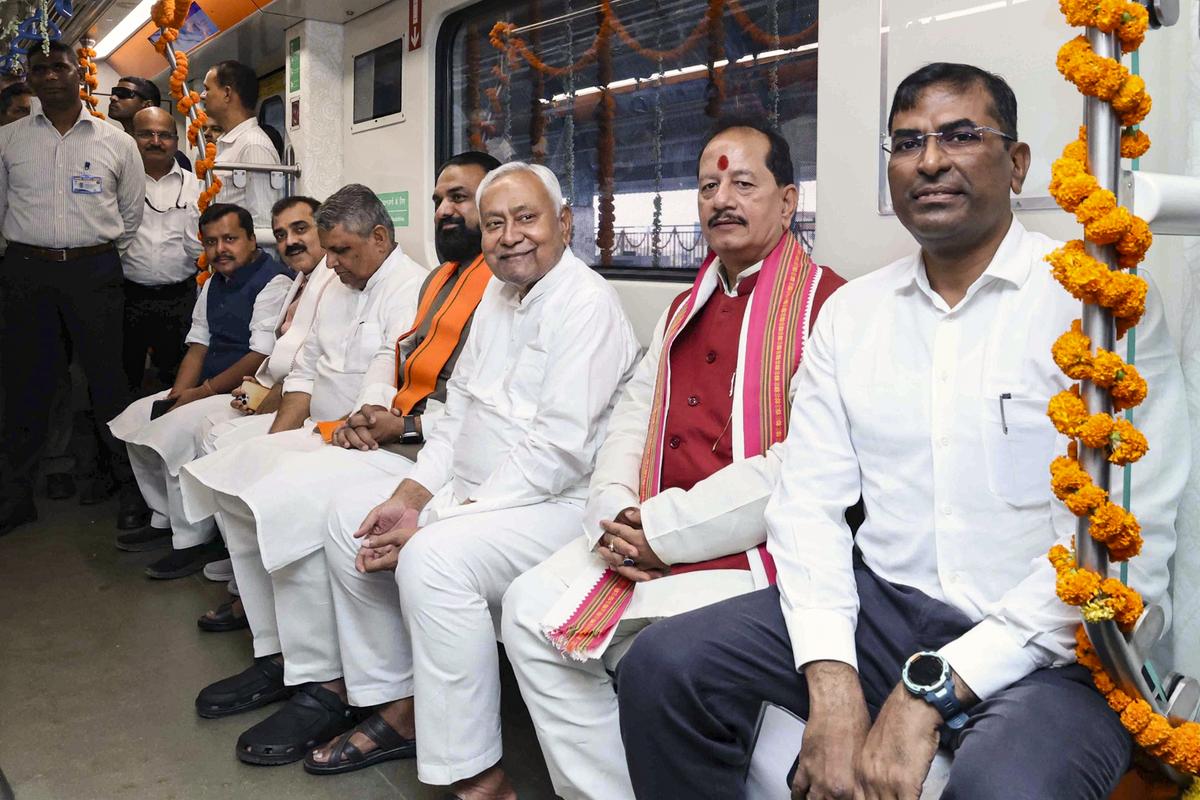
On October 6, 2025, Bihar Chief Minister Nitish Kumar inaugurated the first phase of the Patna Metro, marking a significant milestone in the state’s infrastructure development. This inaugural stretch of the Blue Line covers a 3.6 km elevated corridor connecting the Inter-State Bus Terminal (ISBT) to Bhoothnath Road, with stations at ISBT, Zero Mile, and Bhoothnath
Modern Features and Operational Details
The metro service commenced operations on October 7, 2025, with trains running daily from 8:00 AM to 10:00 PM. Each train comprises three coaches, accommodating 138 seated and 945 standing passengers, with a frequency of every 20 minutes The fare structure is set at ₹15 for the ISBT to Zero Mile section and ₹30 for the full stretch to Bhoothnath Road
Cultural Significance and Design Elements
Incorporating Bihar’s rich cultural heritage, the metro coaches feature traditional Madhubani art, reflecting the state’s artistic legacy. This design choice not only enhances the aesthetic appeal but also fosters a sense of pride among the residents
Strategic Importance for Urban Development
The Patna Metro is expected to alleviate traffic congestion, reduce pollution, and provide a reliable mode of transportation for the city’s growing population. As Patna becomes the 24th city in India to have a metro system, this development underscores the state’s commitment to modernizing its urban infrastructure
Why This News Is Important
Enhancement of Urban Infrastructure
The inauguration of the Patna Metro’s first phase signifies a major advancement in the city’s public transportation system. By providing an efficient and eco-friendly alternative to traditional road transport, the metro aims to ease traffic congestion and promote sustainable urban mobility.
Economic and Environmental Benefits
The metro project is expected to stimulate economic growth by improving connectivity and accessibility across key areas of the city. Additionally, the shift towards electric-powered trains will contribute to reducing air pollution and greenhouse gas emissions, aligning with global sustainability goals.
Cultural Representation in Design
The incorporation of Madhubani art in the metro’s design serves as a tribute to Bihar’s cultural heritage. This thoughtful integration not only beautifies the metro system but also educates commuters about the state’s rich artistic traditions.
Boost to Tourism and Local Economy
With improved transportation infrastructure, Patna is poised to attract more tourists, thereby boosting the local economy. The metro’s connectivity to major landmarks and cultural sites will facilitate easier access for visitors.
Political Significance Ahead of Elections
The timing of the metro’s inauguration, just before the Bihar Assembly elections, highlights the government’s focus on infrastructure development as a key agenda. This move is likely to influence public perception and support during the electoral process.
Historical Context:
Initiation of the Project
The concept of a metro system in Patna was first proposed in the early 2010s to address the city’s growing transportation challenges. After several years of planning and feasibility studies, the project received approval from the Bihar government in 2013 and from the central government in 2014.
Foundation Stone and Project Launch
Prime Minister Narendra Modi laid the foundation stone for the Patna Metro Rail Project on February 17, 2019, initiating the formal commencement of construction activities
Development Phases and Challenges
The project has been implemented in multiple phases, with the first phase focusing on the Blue Line corridor. Construction faced challenges such as land acquisition issues and the need to minimize disruption to existing urban structures. Despite these hurdles, the project has progressed steadily, with the first phase now operational.
Future Expansion Plans
Plans for the metro system’s expansion include the development of additional corridors and integration with other modes of public transport. These initiatives aim to create a comprehensive and interconnected urban transit network in Patna.
Key Takeaways from “Patna Metro: A New Era in Urban Mobility”
| S.No. | Key Takeaway |
|---|---|
| 1 | The first phase of Patna Metro, covering a 3.6 km stretch, was inaugurated on October 6, 2025. |
| 2 | The metro service operates daily from 8:00 AM to 10:00 PM, with trains running every 20 minutes. |
| 3 | Fares range from ₹15 to ₹30, depending on the distance traveled. |
| 4 | The metro coaches feature traditional Madhubani art, reflecting Bihar’s cultural heritage. |
| 5 | Patna becomes the 24th city in India to have a functional metro system. |
FAQs: Frequently Asked Questions
Q1: When was the first phase of Patna Metro inaugurated?
A: The first phase of Patna Metro was inaugurated on October 6, 2025, by Bihar CM Nitish Kumar.
Q2: Which areas are connected by the first phase of Patna Metro?
A: The first phase of Patna Metro covers a 3.6 km elevated corridor connecting ISBT to Bhoothnath Road with stations at ISBT, Zero Mile, and Bhoothnath.
Q3: What is the operational timing and frequency of the metro trains?
A: The metro trains operate daily from 8:00 AM to 10:00 PM with a frequency of every 20 minutes.
Q4: What is the passenger capacity of each metro train?
A: Each train has three coaches, accommodating 138 seated passengers and 945 standing passengers.
Q5: How does Patna Metro incorporate cultural heritage?
A: The metro coaches feature traditional Madhubani art, reflecting Bihar’s cultural heritage and enhancing aesthetic appeal.
Q6: What is the fare structure of the Patna Metro first phase?
A: Fares range from ₹15 for the ISBT to Zero Mile section and ₹30 for the full stretch to Bhoothnath Road.
Q7: How will the metro impact Patna’s urban development?
A: It is expected to reduce traffic congestion, lower pollution, boost connectivity, and provide a reliable urban transportation system.
Some Important Current Affairs Links