







Payal Nag first quadruple amputee wins archery gold at 2026 World Archery Para Series Final in Bangkok, inspiring India’s para sports and showcasing resilience and innovation.
Payal Nag Makes History: First Quadruple Amputee to Win International Archery Gold
Inspiring Young Archer from Odisha
In a historic and deeply inspiring achievement, Payal Nag, an 18‑year‑old para‑archer from Balangir district, Odisha, has carved her name in the annals of sports history by becoming the first quadruple amputee to win an international gold medal in archery. This monumental moment came at the 2026 World Archery Para Series Final held in Bangkok, Thailand on April 4, 2026.
Born into a financially struggling family, Payal’s life changed dramatically at the age of eight when a tragic electrocution accident resulted in the loss of all four of her limbs. Following this life‑altering setback, she was cared for in an orphanage, where she began a remarkable journey of resilience, courage, and transformation.
From Adversity to World Stage
Despite facing immense challenges, Payal did not let her physical condition limit her dreams. Her talent and determination first caught public attention through a viral video showing her painting using her mouth — an early sign of her extraordinary willpower. Inspired by another para‑athlete, she developed an interest in archery.
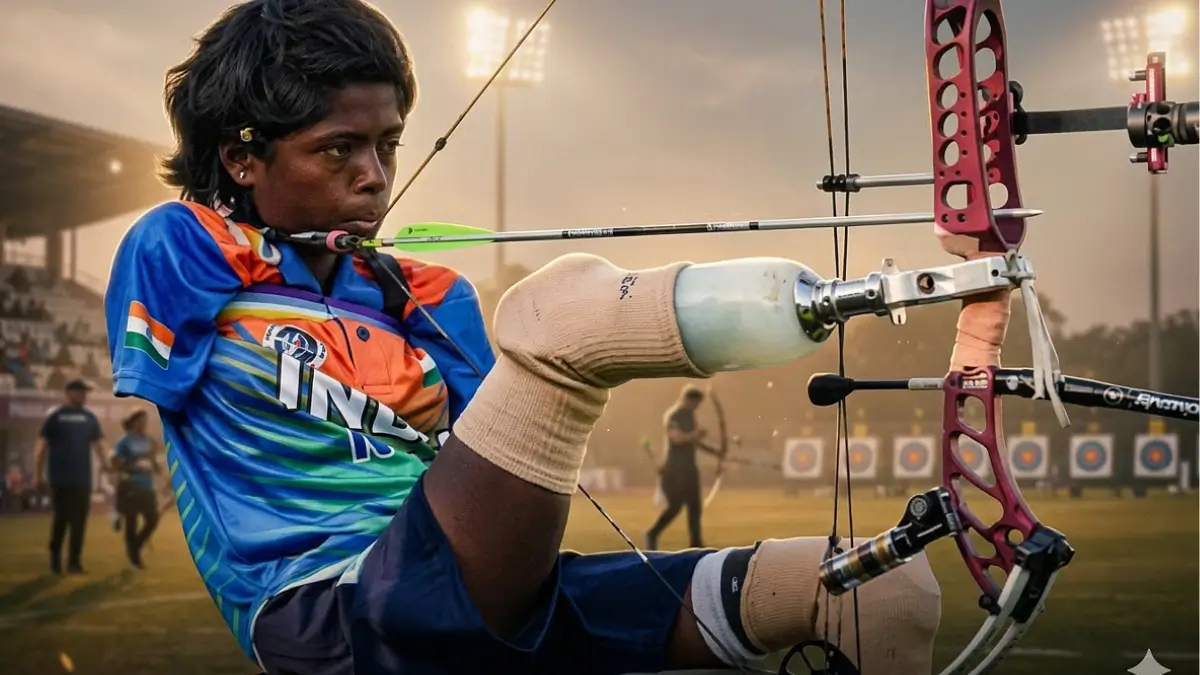
Her unique talent was recognized by archery coach Kuldeep Kumar Vedwan, who brought her into structured training at the Mata Vaishno Devi Shrine Archery Academy. With innovative coaching and customized equipment, Payal learned a remarkable technique — she uses a prosthetic bow support and draws the arrow using her shoulder and mouth, controlled through a special trigger mechanism.
Historic Gold Medal Triumph
At the World Archery Para Series in Bangkok, Payal achieved the impossible. In the women’s compound open individual final, she faced her idol and world‑ranked top archer Sheetal Devi, a celebrated para‑archer herself. Displaying nerve‑shattering precision and focus, Payal clinched the title with a score of 139‑136, defeating Sheetal and bringing home the gold medal — a first for any quadruple amputee in para archery.
Her victory not only highlights her personal grit but also positions India at the forefront in the para‑sports arena, as the country excelled across categories at the event.
A Symbol of Courage and Change
Payal Nag’s story is more than a sporting achievement; it is a testament to human resilience and adaptability. From losing her limbs in a childhood accident to excelling at the highest level of international para‑archery, she exemplifies what perseverance, innovation, and self‑belief can achieve. Her success challenges societal preconceptions about disability and ability, inspiring millions across India and the world.

📌 Why This News Is Important for Government Exam Aspirants
Represents Progressive India on Global Platforms
Payal Nag’s historic achievement reflects India’s growing prominence in international para sports. Her victory at a senior world‑level competition signifies India’s expanding capabilities in nurturing inclusive talent — a theme often highlighted in national policy discussions, such as disability empowerment, sports development, and youth programs.
Exam‑Relevant Topics Covered
This news story intersects multiple themes important for competitive exams:
1. Inclusion and Empowerment
Payal’s success underlines India’s approach toward inclusive growth and sensitization towards differently‑abled citizens, aligning with schemes like the Accessible India Campaign and Para Sports promotion. Exam questions often cover how differently‑abled individuals make significant societal contributions, reflecting inclusive governance goals.
2. Sports and National Pride
Competitive exams frequently include questions on India’s milestones in sports — from Olympics to world championships. Payal’s gold medal adds a new chapter in Indian para sports history, providing important facts for static and current affairs sections.
3. Role of Mentorship & Technology
Her win underscores the integration of adaptive technology and coaching strategies for para athletes — a topic appearing in general awareness and innovation sections of banking, SSC, and UPSC exams.
Overall, this achievement represents human spirit, policy impact, and India’s expanding prowess in world sporting events — all relevant areas for government job aspirants.
📜 Historical Context: Para Archery and India’s Progress
Para Archery: Growth Over Time
Para archery is an adapted form of archery for athletes with physical disabilities. Governed globally by the World Archery Federation, para archery has evolved over time to include multiple classifications, adaptive equipment, and accessibility measures that enable athletes with various challenges to compete at elite levels.
India’s Para Sports Journey
India’s performance in para sports has experienced a strong upward trajectory in recent years. Athletes such as Deepa Malik, Devendra Jhajharia, and Loveline Obiji have brought medals in Paralympics and world events, reinforcing India’s position on the global para‑sports map. Policy support such as Khelo India Para Games also promotes grassroots participation.
Milestone Moments
While para archery has seen individual stars, no quadruple amputee had ever won a senior international gold until Payal Nag’s 2026 victory. Her success places India at the forefront of innovation, representation, and determination in international sports, continuing a legacy of para athlete achievements from India.
🧠 Key Takeaways from Payal Nag’s Historic Archery Victory
| Sr. No. | Key Takeaway for Exams |
|---|---|
| 1 | Payal Nag is the first quadruple amputee to win an international archery gold medal. |
| 2 | She achieved this historic feat at the 2026 World Archery Para Series Final in Bangkok. |
| 3 | Payal uses a customized prosthetic bow support and shoulder‑mouth trigger system to shoot arrows. |
| 4 | She defeated reigning world‑ranked archer Sheetal Devi with a score of 139‑136 in the final. |
| 5 | Her journey from adversity to victory highlights inclusion, resilience, and India’s growing para sports ecosystem. |
FAQs: Frequently Asked Questions About Payal Nag’s Historic Archery Victory
1. Who is Payal Nag?
Payal Nag is an 18-year-old para-archer from Balangir, Odisha, who became the first quadruple amputee to win an international gold medal in archery at the 2026 World Archery Para Series Final in Bangkok.
2. What historic achievement did Payal Nag accomplish?
She won the gold medal in the women’s compound open individual event, defeating world-ranked archer Sheetal Devi, making her the first quadruple amputee to win at a senior international level.
3. How does Payal Nag shoot arrows despite losing all four limbs?
Payal uses a customized prosthetic bow support and operates a special trigger mechanism with her mouth and shoulder to draw and release arrows.
4. Which international event did she win the gold medal in?
Payal won at the 2026 World Archery Para Series Final, held in Bangkok, Thailand.
5. Why is her victory important for India?
Her victory demonstrates India’s strength in para sports, inclusion of differently-abled athletes, and innovative adaptive technologies in sports. It also inspires policies promoting youth and para-athletes.
6. Who coached Payal Nag for her international competitions?
She was coached by Kuldeep Kumar Vedwan at the Mata Vaishno Devi Shrine Archery Academy, where she learned specialized techniques for adaptive archery.
7. How does her story inspire exam aspirants?
Payal Nag exemplifies resilience, perseverance, and inclusive achievement, which are recurring themes in exams covering current affairs, sports, social initiatives, and disability empowerment.
Some Important Current Affairs Links