









Aizawl Becomes Fourth Northeast Capital Linked to National Railway Network
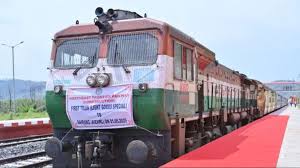
In a significant development for India’s northeastern region, Mizoram’s capital, Aizawl, has been officially connected to the national railway network through the Bairabi–Sairang New Line. This 51.38-kilometer broad-gauge railway project, sanctioned in 2008–09, has been a long-awaited infrastructure endeavor aimed at enhancing connectivity and economic integration in the region. The line extends from Bairabi, near the Assam border, to Sairang, approximately 20 kilometers from Aizawl.
Project Highlights
The Bairabi–Sairang railway line is a monumental infrastructure project that has faced numerous challenges due to the region’s difficult terrain. The construction involved the development of 48 tunnels, totaling 12.85 kilometers, and 142 bridges, including 55 major and 87 minor bridges. Notably, Bridge No. 196 stands at 104 meters, surpassing the height of Delhi’s Qutub Minar by 32 meters. The project also includes five road overbridges and six road underbridges, ensuring seamless integration with existing road networks. As of May 2025, the project has achieved 94.52% physical and 97.13% financial progress, with the formal inauguration expected after June 17, 2025 .
Strategic Importance
The completion of this railway line marks a significant milestone in India’s “Act East” policy, which aims to bolster connectivity and economic integration across the northeastern states. By linking Aizawl to the national railway network, the project facilitates smoother movement of people and goods, thereby promoting trade, tourism, and regional development. Additionally, it enhances strategic mobility, contributing to national security objectives by improving access to border areas.
Future Prospects
Looking ahead, there are plans to extend the railway line from Sairang to Zochachhuah (Zorinpui) near the India-Myanmar border. This extension is part of the Kaladan Multi-Modal Transit Transport Project, which aims to provide an alternative route for transporting goods to and from the northeastern region via the Sittwe Port in Myanmar . Such initiatives underscore the government’s commitment to enhancing regional connectivity and fostering economic growth in the northeastern states.
Why This News Is Important
Enhancing Regional Connectivity
The Bairabi–Sairang railway line significantly improves connectivity between Mizoram and the rest of India. This development reduces travel time and logistics costs, facilitating smoother movement of people and goods. Enhanced connectivity promotes trade, tourism, and regional development, contributing to the overall economic growth of the region.
Boosting Economic Integration
By integrating Mizoram into the national railway network, the project fosters economic integration with other states. It opens up new markets for local products and services, stimulates investments, and creates employment opportunities, thereby uplifting the local economy.
Strategic and Security Benefits
The improved connectivity enhances strategic mobility, allowing for quicker deployment of resources and personnel in border areas. This is crucial for national security, especially in the context of the northeastern region’s proximity to international borders.
Promoting Sustainable Development
Rail transport is more energy-efficient and environmentally friendly compared to road transport. The introduction of the railway line encourages a shift towards more sustainable modes of transportation, aligning with environmental conservation goals.
Aligning with National Policies
The project aligns with India’s “Act East” policy and the PM Gati Shakti National Master Plan, which aim to enhance infrastructure and connectivity in the northeastern region. It reflects the government’s commitment to balanced regional development and strategic integration.
Historical Context
The journey towards connecting Mizoram to the national railway network began in 2008–09 with the sanctioning of the Bairabi–Sairang railway line. The project faced several challenges, including the region’s difficult terrain and the need for extensive tunneling and bridge construction. Despite these obstacles, the project has made significant progress, with the first trial run conducted on May 1, 2025 . The completion of this railway line is a testament to the government’s commitment to improving infrastructure and connectivity in the northeastern region.
Key Takeaways from ‘Aizawl Becomes Fourth Northeast Capital Linked to National Railway Network’
| S.No | Key Takeaway |
|---|---|
| 1. | Aizawl is now connected to the national railway network via the Bairabi–Sairang line. |
| 2. | The project involves 48 tunnels and 142 bridges, including the 104-meter-high Bridge No. 196. |
| 3. | The railway line is expected to be inaugurated after June 17, 2025. |
| 4. | Future plans include extending the line to Zochachhuah (Zorinpui) near the India-Myanmar border. |
| 5. | The project aligns with India’s “Act East” policy and the PM Gati Shakti National Master Plan. |
FAQs: Frequently Asked Questions
Q1: What is the significance of the Bairabi–Sairang railway line?
A1: It connects Mizoram’s capital, Aizawl, to the national railway network for the first time, enhancing connectivity, economic integration, and regional development.
Q2: How long is the Bairabi–Sairang railway line?
A2: The railway line is approximately 51.38 kilometers long.
Q3: What are some engineering challenges faced during the project?
A3: The project involved constructing 48 tunnels and 142 bridges, including the 104-meter-high Bridge No. 196, to navigate the difficult hilly terrain.
Q4: When is the formal inauguration of the railway line expected?
A4: The inauguration is expected to take place after June 17, 2025.
Q5: What future extensions are planned for the railway line?
A5: There are plans to extend the line from Sairang to Zochachhuah (Zorinpui) near the India-Myanmar border, supporting the Kaladan Multi-Modal Transit Transport Project.
Q6: How does this project support India’s “Act East” policy?
A6: By improving connectivity in the Northeast, it fosters economic growth and strategic integration with neighboring countries.
Q7: What benefits does the railway line provide for national security?
A7: It enhances strategic mobility by facilitating quicker movement of personnel and resources to border areas.
Some Important Current Affairs Links