


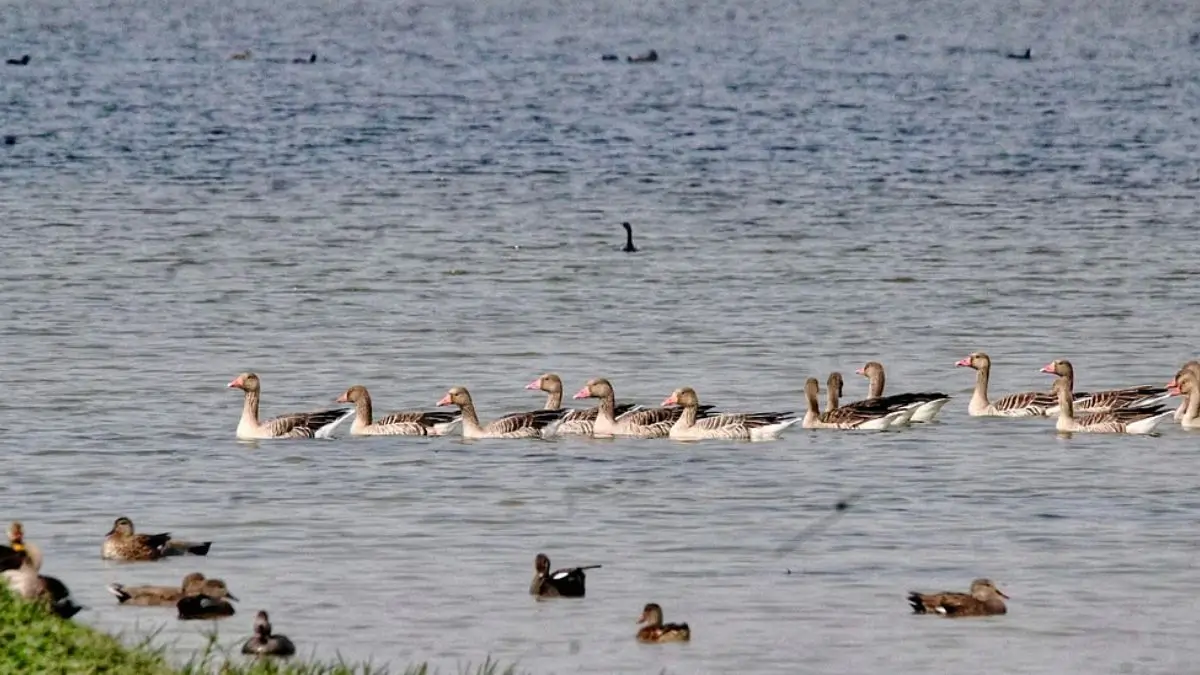
Shekha Jheel Ramsar Site 2026 becomes India’s 99th Ramsar site in Uttar Pradesh. Learn key facts, importance, MCQs, and exam-relevant insights for UPSC, SSC, and banking exams.
India Adds 99th Ramsar Site with Inclusion of Shekha Jheel in Uttar Pradesh
📍 Introduction to the New Ramsar Site
India has achieved a significant milestone in environmental conservation with the addition of Shekha Jheel Bird Sanctuary in Aligarh, Uttar Pradesh, as its 99th Ramsar site. This announcement was made by Bhupender Yadav, the Union Minister for Environment, Forest and Climate Change. The recognition places India just one step away from reaching 100 Ramsar sites, marking a historic moment in the country’s conservation journey.
🌿 Ecological Importance of Shekha Jheel
Shekha Jheel is a vital wetland ecosystem that plays a key role in supporting biodiversity. It serves as an important habitat for migratory birds such as the Bar-headed Goose, Painted Stork, and several duck species. Located along the Central Asian Flyway, it acts as a crucial stopover for birds during migration seasons.
🦆 Role in Bird Conservation and Biodiversity
The sanctuary supports a diverse range of flora and fauna, contributing significantly to ecological balance. Wetlands like Shekha Jheel are essential for maintaining biodiversity, providing breeding grounds, and ensuring survival of numerous aquatic and avian species. This Ramsar designation highlights the site’s global ecological importance.
🌍 Contribution to Climate and Water Security
Wetlands are often referred to as “natural sponges” due to their ability to regulate water cycles. Shekha Jheel helps in groundwater recharge, flood control, and carbon sequestration. The Ramsar recognition will strengthen conservation efforts and promote sustainable use of wetland resources.
📈 Boost to Eco-Tourism and Local Livelihoods
The Ramsar tag is expected to boost eco-tourism in the region. Increased tourist inflow can create employment opportunities and support local economies. The government has also emphasized that this recognition will improve livelihoods while ensuring environmental sustainability.
🗺️ Uttar Pradesh Leads in Ramsar Sites
With this addition, Uttar Pradesh now has 12 Ramsar sites, the highest among Indian states. This further strengthens the state’s position as a leader in wetland conservation and biodiversity protection.

📌 Why This News is Important
🎯 Importance for Competitive Exams
This development is highly relevant for aspirants preparing for exams like UPSC, SSC, Banking, Railways, Defence, and State PSCs. Questions related to environmental conventions, biodiversity hotspots, and Ramsar sites are frequently asked in both prelims and mains examinations.
🌏 Global Environmental Commitments
India’s growing list of Ramsar sites reflects its commitment to global environmental agreements such as the Ramsar Convention on Wetlands. It demonstrates the country’s proactive approach toward sustainable development and conservation of natural ecosystems.
🧠 Static + Current Affairs Integration
This topic bridges static and dynamic portions of the syllabus. Students must understand concepts like wetlands, migratory routes (Central Asian Flyway), and ecological services along with current updates like new Ramsar site additions.
📊 Increasing Focus on Environment Topics
In recent years, environmental issues have gained prominence in exams. Topics such as climate change, biodiversity conservation, and eco-tourism are frequently asked, making this news highly exam-relevant.
🏛️ Historical Context: Ramsar Convention and India
🌐 What is the Ramsar Convention?
The Ramsar Convention is an international treaty signed in 1971 in Ramsar, Iran, aimed at the conservation and sustainable use of wetlands. Countries that are part of this convention designate wetlands of international importance, known as Ramsar sites.
🇮🇳 India’s Journey in Wetland Conservation
India became a signatory to the Ramsar Convention in 1982. Since then, the country has steadily increased its number of Ramsar sites, reflecting growing awareness and policy focus on environmental conservation.
📊 Growth in Ramsar Sites
From just a few sites initially, India has now reached 99 Ramsar sites as of April 2026. This expansion highlights the country’s commitment to protecting wetlands, which are crucial for biodiversity, water security, and climate resilience.
🌱 Importance of Wetlands in India
Wetlands in India support agriculture, fisheries, and biodiversity. They also play a critical role in flood control, groundwater recharge, and carbon storage, making them essential for sustainable development.
📊 Key Takeaways from This News
| S. No. | Key Takeaway |
|---|---|
| 1 | Shekha Jheel Bird Sanctuary in Aligarh is declared India’s 99th Ramsar site |
| 2 | Uttar Pradesh now has the highest number of Ramsar sites (12) |
| 3 | The site lies on the Central Asian Flyway and supports migratory birds |
| 4 | Ramsar recognition boosts biodiversity conservation, eco-tourism, and livelihoods |
| 5 | India is close to achieving 100 Ramsar sites, marking a major milestone |
FAQs for Competitive Exams
1. What is a Ramsar Site?
A Ramsar Site is a wetland designated as being of international importance under the Ramsar Convention, an international treaty for wetland conservation signed in 1971 in Iran.
2. Which is India’s 99th Ramsar Site?
Shekha Jheel Bird Sanctuary in Aligarh, Uttar Pradesh, has been declared India’s 99th Ramsar Site.
3. Which state has the highest number of Ramsar Sites in India?
Uttar Pradesh has the highest number of Ramsar sites in India, with a total of 12 sites.
4. Why are wetlands important for the environment?
Wetlands help in groundwater recharge, flood control, biodiversity conservation, and carbon sequestration, making them crucial for ecological balance.
5. What is the Central Asian Flyway?
It is a major migratory route for birds that connects breeding grounds in Siberia with wintering grounds in South Asia, including India.
6. When did India join the Ramsar Convention?
India became a signatory to the Ramsar Convention in 1982.
7. Which ministry is responsible for Ramsar site designation in India?
The Ministry of Environment, Forest and Climate Change oversees Ramsar site nominations and conservation.
8. What benefits does Ramsar recognition provide?
It boosts conservation efforts, promotes eco-tourism, and helps secure international support for sustainable wetland management.
Some Important Current Affairs Links




