






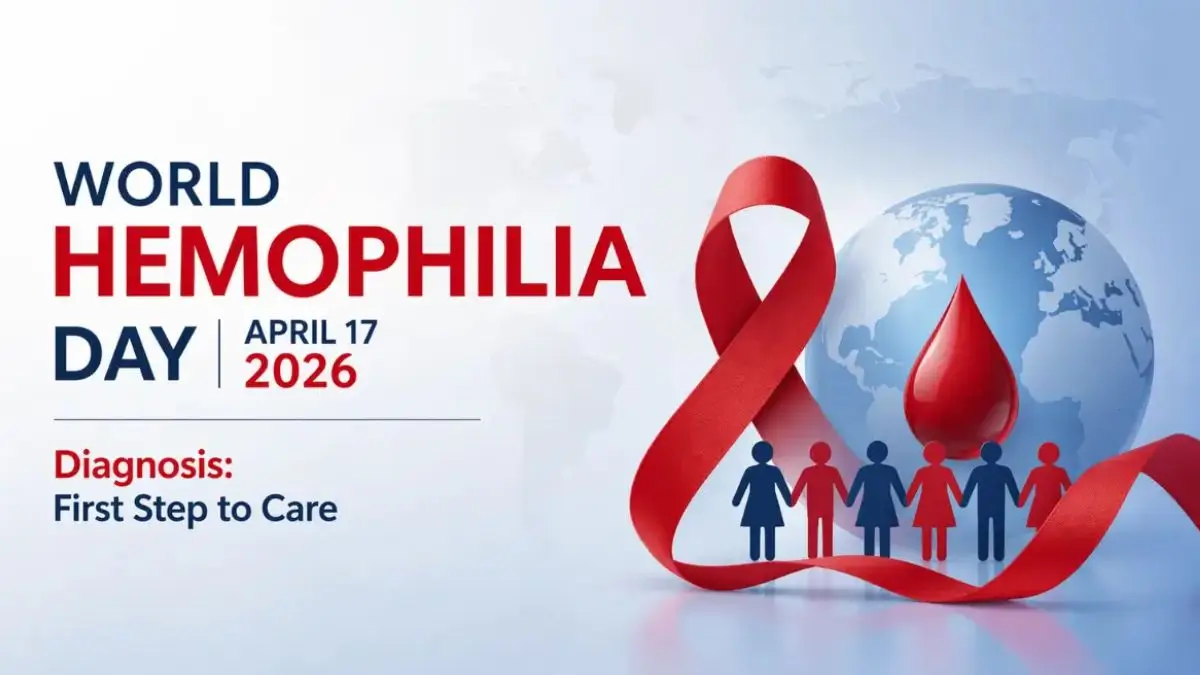
World Hemophilia Day 2026 theme Diagnosis The First Step to Care explained with key facts, importance, history, MCQs and FAQs for UPSC, SSC, Banking and other competitive exams.
World Hemophilia Day 2026: Theme, Significance, and Key Highlights for Competitive Exams
Introduction to World Hemophilia Day 2026
World Hemophilia Day is observed globally every year on April 17 to raise awareness about hemophilia and other inherited bleeding disorders. The day aims to promote better diagnosis, treatment, and care for people affected by such conditions. It is especially important for students preparing for competitive exams like UPSC, SSC, Banking, Railways, Defence, and State PCS, as it is frequently asked in current affairs sections.
What is Hemophilia?
Hemophilia is a genetic bleeding disorder in which the blood does not clot properly due to the lack of clotting factors. This can lead to prolonged bleeding even from minor injuries and sometimes spontaneous internal bleeding. The condition mainly affects males, although females can also be carriers or affected in rare cases.
Theme of World Hemophilia Day 2026
The theme for 2026 is “Diagnosis: The First Step to Care.” This theme emphasizes the importance of early detection of the disease. A large number of cases worldwide remain undiagnosed, leading to complications that could otherwise be prevented with timely treatment.
Global Challenges Highlighted in 2026
One of the major concerns highlighted this year is that over 75% of people with hemophilia remain undiagnosed globally. This lack of diagnosis prevents access to essential treatment and healthcare services. The campaign calls for improved healthcare infrastructure, better diagnostic tools, and increased awareness among the general population.
Role of Awareness Campaigns
World Hemophilia Day also focuses on awareness campaigns such as “Light It Up Red,” where landmarks across the world are illuminated in red to show solidarity with people suffering from bleeding disorders. These campaigns help reduce stigma and encourage people to seek medical attention early.
India’s Scenario and Need for Action
In India, hemophilia is still underdiagnosed due to limited awareness and lack of access to specialized healthcare facilities. Many patients are diagnosed only after severe complications arise. Improving awareness, expanding diagnostic facilities, and ensuring affordable treatment are key priorities for the country.

Why This News is Important
Relevance for Competitive Exams
World Hemophilia Day is a recurring topic in exams like UPSC, SSC, Banking, and State PCS. Questions are often asked about its date, theme, and significance. The 2026 theme is particularly important because it highlights a global healthcare challenge—late diagnosis.
Public Health Perspective
The theme emphasizes early diagnosis, which is crucial in preventing severe complications such as joint damage and internal bleeding. It highlights the gap between healthcare access in developed and developing countries.
Global Awareness and Policy Impact
The observance encourages governments and healthcare organizations to improve diagnostic facilities and treatment access. It also supports global initiatives aimed at achieving equitable healthcare for all patients with bleeding disorders.
Social and Economic Impact
Undiagnosed hemophilia can lead to disability, reduced productivity, and financial burden on families. Raising awareness helps in early treatment, reducing long-term healthcare costs and improving quality of life.
Historical Context of World Hemophilia Day
Origin and Establishment
World Hemophilia Day was established in 1989 by the World Federation of Hemophilia. The date, April 17, was chosen to honor the birth anniversary of its founder, Frank Schnabel, who himself suffered from hemophilia.
Hemophilia in History
Hemophilia is often referred to as the “royal disease” because it affected several European royal families, including descendants of Queen Victoria. The disease has been known for centuries but was scientifically understood only in the 19th and 20th centuries.
Evolution of Treatment
Initially, treatment options were very limited. Over time, advancements such as clotting factor replacement therapy and gene therapy have significantly improved life expectancy and quality of life for patients.
Growth of Global Awareness
Since its inception, World Hemophilia Day has grown into a global movement, involving governments, NGOs, and healthcare professionals working together to improve diagnosis and treatment.
Key Takeaways from World Hemophilia Day 2026
| S. No. | Key Takeaway |
|---|---|
| 1 | World Hemophilia Day is observed on April 17 every year. |
| 2 | The 2026 theme is “Diagnosis: The First Step to Care.” |
| 3 | Hemophilia is a genetic bleeding disorder caused by lack of clotting factors. |
| 4 | Over 75% of patients globally remain undiagnosed, highlighting a major healthcare gap. |
| 5 | The day was established in 1989 by the World Federation of Hemophilia to raise awareness. |
FAQs: World Hemophilia Day 2026
1. When is World Hemophilia Day observed?
World Hemophilia Day is observed every year on April 17 across the globe.
2. What is the theme of World Hemophilia Day 2026?
The theme for 2026 is “Diagnosis: The First Step to Care.”
3. What is hemophilia?
Hemophilia is a genetic bleeding disorder where blood does not clot properly due to the deficiency of clotting factors.
4. Who is most affected by hemophilia?
Hemophilia primarily affects males, while females are usually carriers, though rare cases of affected females exist.
5. Which organization initiated World Hemophilia Day?
It was established by the World Federation of Hemophilia (WFH) in 1989.
6. Why is early diagnosis important in hemophilia?
Early diagnosis helps prevent severe bleeding complications, joint damage, and disability.
7. What percentage of hemophilia patients remain undiagnosed globally?
Approximately 75% of people with hemophilia remain undiagnosed worldwide.
8. Why is hemophilia called the “royal disease”?
It is called the “royal disease” because it affected European royal families, especially descendants of Queen Victoria.
9. What are the main types of hemophilia?
The two main types are:
- Hemophilia A (Factor VIII deficiency)
- Hemophilia B (Factor IX deficiency)
10. What is the significance of “Light It Up Red” campaign?
It is a global awareness initiative where landmarks are lit in red to support people with bleeding disorders.
Some Important Current Affairs Links