









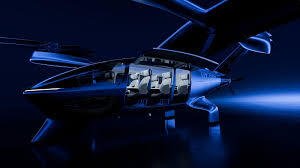
India’s First eVTOL Air Taxi “Shunya” Unveiled by Sarla Aviation
In a groundbreaking move for India’s aviation sector, Sarla Aviation has introduced the country’s first Electric Vertical Take-Off and Landing (eVTOL) air taxi, named Shunya. This innovation has the potential to revolutionize urban air mobility, providing an eco-friendly and efficient solution for city transport. The launch of Shunya marks a significant leap forward in India’s aviation capabilities, aligning with global trends in electric aviation.
What is eVTOL Technology?
eVTOL technology is a class of aircraft designed to take off and land vertically, much like a helicopter, but powered entirely by electricity. Unlike conventional aircraft, eVTOLs do not require runways for takeoff or landing, making them ideal for urban environments where space is limited. These vehicles are designed to be silent, energy-efficient, and capable of navigating short distances at relatively high speeds.
Shunya: The First Step Towards Sustainable Air Travel in India
Shunya’s unveiling is part of India’s growing commitment to sustainable transportation solutions. Developed by Sarla Aviation, a pioneering company in the field of aviation technology, Shunya aims to reduce the carbon footprint of air travel while enhancing the efficiency of city commutes. The air taxi can accommodate a small number of passengers, providing a convenient and faster alternative to traditional road transport in congested urban areas.
The electric nature of Shunya promises a significant reduction in greenhouse gas emissions when compared to traditional fossil fuel-based aircraft. Additionally, its vertical take-off and landing capabilities ensure that it can be used in densely populated areas where space for conventional airports or helipads is scarce.
Future of Air Taxis in India
The launch of Shunya is just the beginning of a new era in aviation, as the concept of air taxis continues to gain traction worldwide. Several countries, including the United States, China, and various European nations, are investing heavily in eVTOL technology as part of their vision for sustainable and efficient urban transport. India, with its rapidly growing urban population, is an ideal candidate for such innovations.
The successful implementation of air taxis could significantly reduce traffic congestion and commuting times in major cities like Delhi, Mumbai, and Bangalore. However, regulatory frameworks and infrastructure development will be crucial to ensuring the smooth integration of these air vehicles into India’s airspace and urban transport system.

Why This News is Important
Impact on India’s Transportation Sector
The introduction of Shunya, India’s first eVTOL air taxi, marks a significant milestone in the country’s transportation landscape. This development is poised to reshape the way people travel in urban areas by offering an environmentally friendly, fast, and cost-effective alternative to traditional modes of transport. Urban mobility challenges, especially in densely populated cities, have made it increasingly difficult for residents to rely on conventional transportation methods. The launch of Shunya offers a promising solution to address these issues while aligning with global trends towards sustainable, green technologies.
Technological Innovation and Environmental Sustainability
eVTOL technology is at the forefront of aviation innovation, and its successful adoption in India can pave the way for more widespread use of electric aircraft. The shift towards electric vehicles is critical in combating climate change, and the aviation industry is no exception. Shunya, as an electric-powered air taxi, is a significant step toward reducing carbon emissions from one of the most challenging sectors to decarbonize. If adopted on a large scale, eVTOLs can play a crucial role in India’s goals for achieving net-zero emissions.
Economic Opportunities and Job Creation
The introduction of air taxis like Shunya can stimulate India’s economy by creating new industries and job opportunities. The development, manufacturing, and operation of eVTOLs require a skilled workforce, ranging from engineers and technicians to operators and regulators. Moreover, as the market for urban air mobility grows, it can attract investments and boost India’s position as a leader in aerospace and technology innovation.
Historical Context
Evolution of Electric Aircraft
The concept of electric aircraft has been explored for decades, but only in recent years has it gained significant traction. The rise of electric vehicles (EVs) in the automotive industry has driven innovation in the aviation sector, leading to the development of eVTOLs. These aircraft promise to address the key challenges of urban air mobility, such as congestion, pollution, and inefficiency in traditional transport systems.
The first significant breakthrough in eVTOL technology came in the early 2000s, with various aerospace companies conducting successful prototypes of electrically-powered vertical take-off and landing aircraft. The concept gained more attention in the 2010s as companies such as Joby Aviation, Lilium, and Volocopter began developing their own eVTOL prototypes, testing them for practicality in urban settings.
India’s introduction of the Shunya air taxi comes at a time when global interest in eVTOLs is skyrocketing. Cities around the world are looking at electric aircraft as a viable solution to their transportation woes. The regulatory frameworks in many countries are evolving to accommodate these new technologies, and India’s decision to embrace eVTOLs positions it to be part of the global urban air mobility revolution.
Key Takeaways from India’s First eVTOL Air Taxi Shunya
| Serial Number | Key Takeaway |
|---|---|
| 1 | Shunya is India’s first electric vertical take-off and landing (eVTOL) air taxi, developed by Sarla Aviation. |
| 2 | eVTOL technology is designed for urban air mobility, capable of reducing traffic congestion in densely populated cities. |
| 3 | The introduction of Shunya aligns with India’s goals for sustainable transportation and reducing carbon emissions. |
| 4 | eVTOLs represent a global trend towards eco-friendly aviation, with many countries investing in this technology. |
| 5 | Shunya’s success could pave the way for the integration of air taxis into India’s transport system, offering faster commutes. |
Important FAQs for Students from this News
Q1: What is an eVTOL aircraft?
A1: An eVTOL (Electric Vertical Take-Off and Landing) aircraft is a type of aircraft that uses electric power to hover, take off, and land vertically. It doesn’t require traditional runways and is designed to operate in urban environments, making it ideal for urban air mobility.
Q2: What makes Shunya unique in India’s aviation sector?
A2: Shunya is India’s first eVTOL air taxi, which sets it apart as a pioneering project in the country. It combines cutting-edge electric propulsion technology with vertical take-off and landing capabilities, making it a groundbreaking innovation in sustainable urban transportation.
Q3: How does the Shunya air taxi contribute to environmental sustainability?
A3: Shunya is powered entirely by electricity, reducing its carbon emissions significantly when compared to traditional aircraft that use fossil fuels. Its integration into India’s transport system can help reduce pollution and contribute to the country’s goals of achieving net-zero emissions.
Q4: What are the benefits of eVTOLs for urban transport?
A4: eVTOLs like Shunya offer faster, more efficient transport solutions for crowded urban areas, where traditional transportation methods are often slow due to traffic. They also reduce noise pollution, are eco-friendly, and require less space compared to conventional aircraft, making them ideal for cities with limited land.
Q5: Will India see widespread adoption of air taxis soon?
A5: While the widespread adoption of air taxis in India may take time, the launch of Shunya marks an important first step. The future success of air taxis depends on the development of necessary infrastructure, regulatory frameworks, and public acceptance. However, India’s growing interest in electric mobility suggests that air taxis will likely play an important role in the future of urban transport.
Some Important Current Affairs Links