







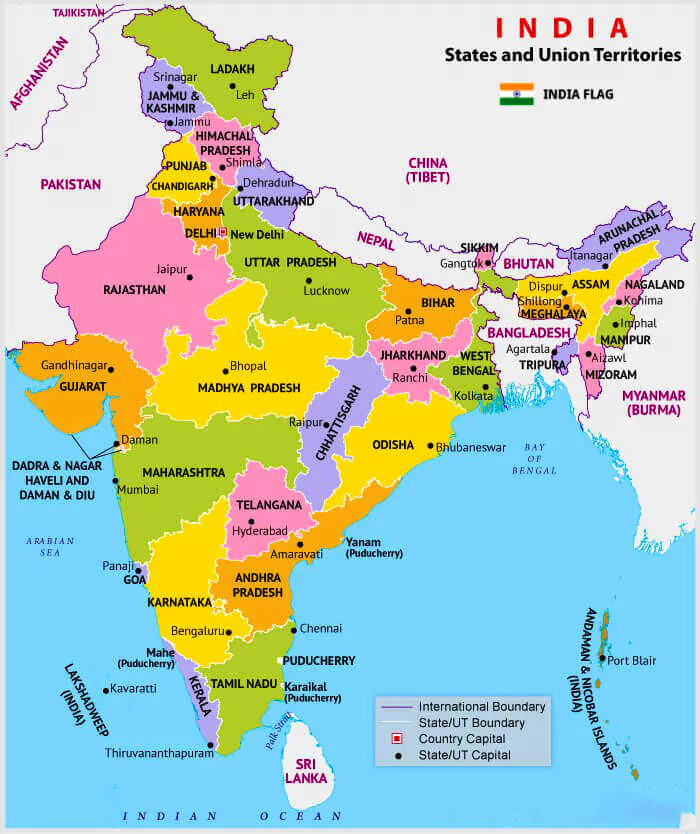
Indian States and Capitals 2025 – Check the updated list of 28 states and 8 union territories with capitals. Essential for SSC, UPSC, Banking, Railways, and other exams.
“States and Capitals of India – A Comprehensive Overview” 🏛️
Introduction: India’s Federal Structure and Administrative Divisions
India, the world’s seventh-largest country by land area, is organized into a federal structure, consisting of 28 states and 8 union territories. Each of these administrative units has a designated capital, serving as the political and administrative hub. Understanding this structure is essential not only for governance but also for aspirants preparing for civil services, banking, railways, and teaching exams, where questions on Indian polity and geography are common .
What Defines a State and Union Territory?
A state is a semi-autonomous region with its own elected government, legislative assembly, and the authority to enact laws on specific subjects. In contrast, a union territory (UT) is directly governed by the central government, although some, like Delhi and Puducherry, have legislative assemblies with limited powers.
Breakdown of India’s 28 States and Their Capitals
Here’s a brief overview of a few major states and their capitals:
- Uttar Pradesh – Lucknow
- Maharashtra – Mumbai
- West Bengal – Kolkata
Each state capital is a focal point of governance, culture, and regional identity.
Listing of Union Territories and Their Capitals
India’s 8 UTs include:
- Delhi – New Delhi
- Puducherry – Puducherry
- Jammu & Kashmir – Srinagar (summer), Jammu (winter)
Union territories may have different administrative setups depending on their history and constitutional status.
Significance in Exams: Relevance of States and Capitals
Questions regarding the number of states, union territories, and matching them to their capitals appear frequently in the General Knowledge section of government exams. They test candidates’ knowledge of India’s political geography, which is crucial for roles in administration, banking, railways, and education.
Recent Updates and Administrative Changes
Although the count of states and UTs has remained stable since 2019, there have been administrative reorganization efforts, such as the bifurcation and merger of certain regions. Keeping updated on any changes is vital, as exam questions often revolve around these modifications.
Concluding Remarks
A solid grasp of India’s administrative divisions, especially its states and capitals, is an indispensable part of any government exam preparation. These fundamentals build a foundation for understanding federal affairs, administrative jurisdiction, and geographical trivia.
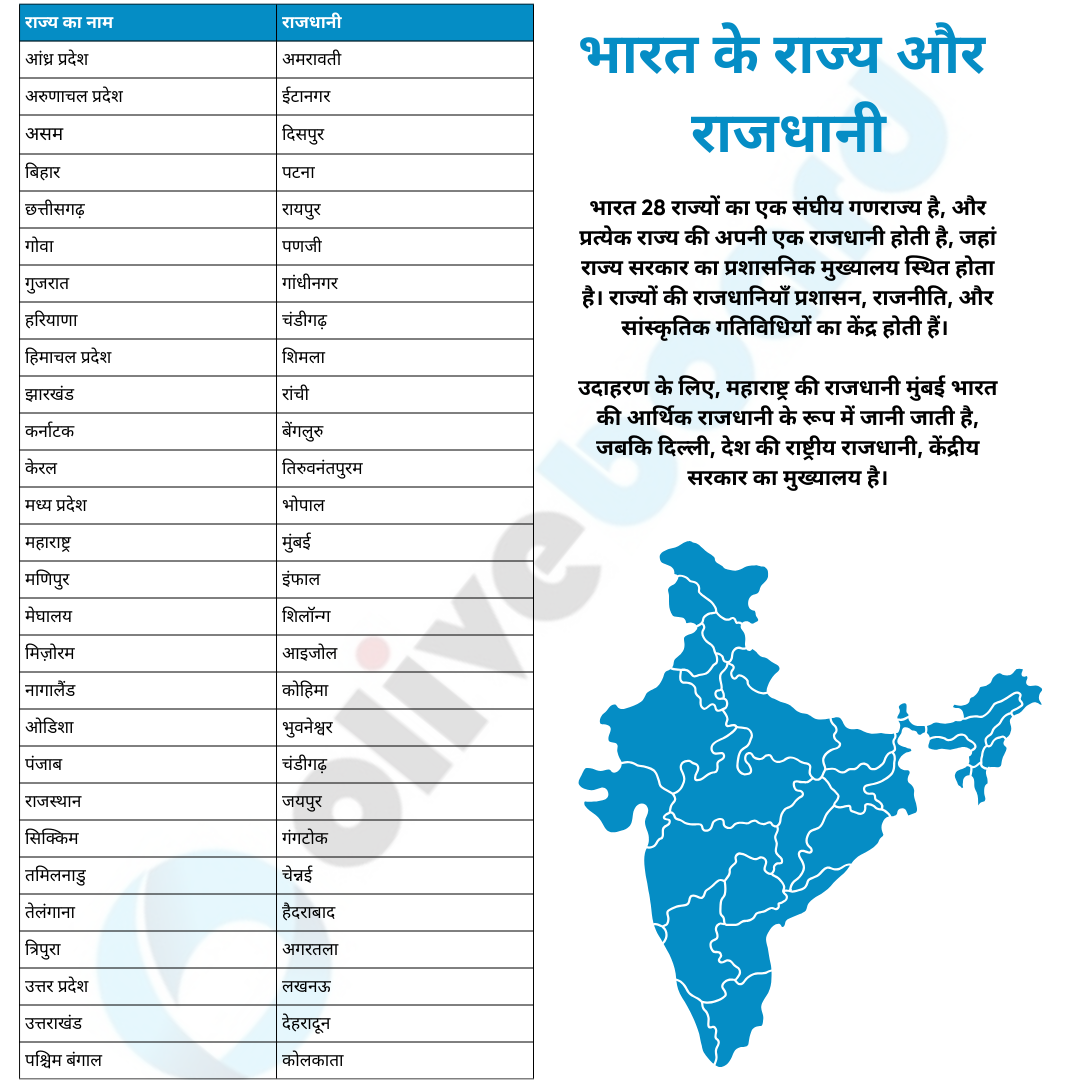
B) Why This News Is Important
Central Pillar of General Knowledge
Knowledge of India’s states and capitals forms a core component of the General Studies section across various competitive exams (e.g., SSC CGL, UPSC Prelims, IBPS RRB). It tests basic awareness necessary for administrative roles and governance-related positions.
Enhances Administrative Aptitude
Understanding administrative divisions boosts comprehension of federalism and governance. Aspirants for police, civil services, and education departments must be aware of regional jurisdictions for effective functioning.
Reflects Evolving Political Landscape
Any reorganization or change in statehood—like the formation of new states or alteration in union territory status—can directly impact administrative processes. This makes the topic continuously relevant and frequently asked in exams immediately after such changes.
C) Historical Context
Origins of India’s States
At independence in 1947, India was divided into British provinces and princely states. The States Reorganisation Act of 1956 saw the re-drawing of state boundaries on linguistic lines, establishing the current federal framework.
Emergence of Union Territories
Union territories were formed in situations where direct governance by the central government was deemed beneficial—either due to strategic, historical, or administrative reasons. Examples include Chandigarh (shared capital) and Andaman & Nicobar Islands.
Recent Administrative Evolutions
In 2019, Jammu & Kashmir and Ladakh were reorganized. Jammu & Kashmir became a UT, and Ladakh emerged as a separate UT. This restructuring emphasized the government’s adaptability to regional governance models and remains a key precedent for future developments.
D) Key Takeaways from “States and Capitals – How Many States in India?”
| S.No. | Key Takeaway |
|---|---|
| 1 | India has 28 states and 8 union territories, each with its own capital . |
| 2 | States have elected governments, whereas union territories are centrally administered, with exceptions like Delhi and Puducherry. |
| 3 | The States Reorganisation Act of 1956 created linguistic states and shaped modern boundaries. |
| 4 | Recent reorganization in 2019 included the bifurcation of Jammu & Kashmir into two UTs. |
| 5 | Knowing states and capitals is vital for competitive exams in General Studies and Administrative Aptitude. |
FAQs: Frequently Asked Questions
1. How many states and union territories are there in India as of 2025?
India has 28 states and 8 union territories as of 2025.
2. Which state has the summer and winter capitals?
Jammu and Kashmir has two capitals: Srinagar (summer) and Jammu (winter).
3. What is the difference between a state and a union territory in India?
A state has its own government and legislature, while a union territory is administered directly by the Central Government (though some UTs like Delhi and Puducherry have limited self-governance).
4. Which was the last major change in the political map of India?
The bifurcation of Jammu and Kashmir into two union territories (Jammu & Kashmir and Ladakh) on October 31, 2019, was the most recent major change.
5. Are union territories included in questions in government exams?
Yes, union territories and their capitals are frequently asked in static GK sections of UPSC, SSC, Railways, Banking, and Teaching exams.
6. Why is it important to remember states and capitals?
This topic is vital for polity, geography, and general awareness sections in competitive exams, particularly for civil services and public sector roles.
7. Which act reorganized the Indian states in 1956?
The States Reorganisation Act, 1956, reorganized states based on linguistic and administrative criteria.
8. Which state has Mumbai as its capital?
Maharashtra has Mumbai as its capital.
9. Which exam categories most frequently ask questions about Indian states and capitals?
SSC, UPSC, State PSCs, Banking exams (IBPS, SBI), Defence, and Railways regularly include these in General Knowledge or Static GK sections.
10. How to remember Indian states and their capitals for exams?
Use mnemonics, practice quizzes, revision maps, and previous year questions for quick and effective retention.
Some Important Current Affairs Links