





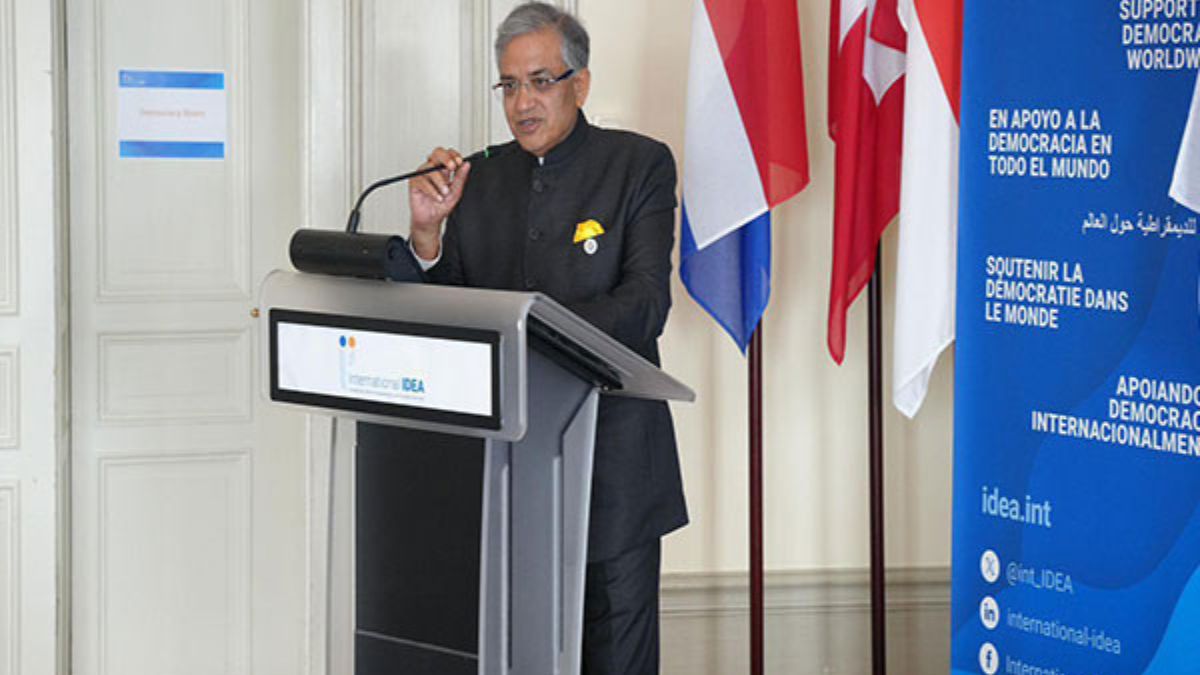
India electoral transparency 2025 highlighted by CEC Gyanesh Kumar at Stockholm Conference, showcasing EVM usage, inclusive elections, and global electoral leadership.
Introduction: India’s Global Democratic Showcase
At the International IDEA Stockholm Conference on Electoral Integrity (June 10–12, 2025), Chief Election Commissioner (CEC) Gyanesh Kumar delivered a keynote address highlighting India’s commitment to transparent and inclusive elections. This gathering, organised by International IDEA and attended by over 100 delegates from around 50 countries, provided a global platform for India to share its democratic best practices
Statutory Sharing of Electoral Rolls
Since 1960, India’s Election Commission has annually shared updated electoral rolls with all recognised political parties. This process includes claims, objections, and appeals, making the system one of the most rigorous and participatory in the world
Enormous Scale and Coordination
In the 2024 general elections:
- 979 million registered electors participated
- 1.05 million polling stations were set up
- 6.2 million EVMs were used
- Over 20 million personnel (polling staff, observers, police, party agents) were mobilised
This made it the largest election platform globally—surpassing even several national governments and major corporations
Inclusive Design: Leaving No Voter Behind
India’s electoral system ensures inclusivity across demographics:
- First-time voters, senior citizens (85+), third-gender electors, persons with disabilities
- Infrastructure support for remote and high-altitude polling (e.g., Tashigang, HP)
Capacity-Building and Bilateral Engagements
India has extended its electoral governance expertise globally through:
- Capacity-building workshops for Election Management Bodies (EMBs)
- Bilateral meetings at the conference with election officials from nearly 20 countries, covering topics like diaspora voting and electoral tech
📚 Why This News Is Important
Significance for Aspirants in Governance Roles
For students preparing for competitive exams (UPSC, State PSCs), these insights are vital: the Election Commission of India is a prime example of a constitutional authority ensuring democratic integrity through transparency, scale, and inclusion.
Illustration of Institutional Resilience
Showcasing India’s electoral processes on an international platform reaffirms the robustness and global recognition of its democratic institutions—critical for exam-focused answers on governance, federal structures, and constitutional roles.
Relevance to Syllabus Themes
This case ties into key topics such as “Electoral Reforms,” “Role of Constitutional Bodies,” and “India’s Foreign Relations & Soft Power”—common in UPSC Mains/Interview and State PSC general studies.
Exam-Oriented Utility
Facts and figures—like the annual roll-sharing since 1960, nearly 1 billion registered electors, 6.2 million EVMs—provide quantitative data perfect for scoring in Mains answers or interview responses, where specificity matters.
🕰️ Historical Context
Evolution of India’s Electoral Architecture
- 1951–52: First General Election with 173 million electors and 200,000 polling booths
- 1960: Introduction of statutory roll-sharing, enabling audits and challenges
- 2019 Onwards: Deployment of EVMs with VVPAT ensures transparency during voting
- 2024: Elections conducted with ~1.05 million booths, 6.2 million EVMs, and 979 million voters — symbolising the maturation of India’s democratic processes
This evolution reflects increasing complexity in electorate inclusion, technological adoption, and institutional coordination—showing constitutional adaptability while preserving democratic values.
📝 Key Takeaways from “Electoral Transparency Showcased”
| S. No | Key Takeaway |
|---|---|
| 1 | Annual statutory roll-sharing since 1960 with political parties enhances electoral accountability. |
| 2 | 979 million voters and 1.05 million polling stations in 2024 highlight democratic scale. |
| 3 | 6.2 million EVMs deployed underscore India’s technological integration in polling. |
| 4 | Inclusive policies for special categories (elderly, disabled, third gender, remote areas) ensure universal participation. |
| 5 | Global capacity-building efforts showcase India’s soft power and leadership in electoral democracy. |
FAQs: Frequently Asked Questions
Q1. What is the International IDEA Conference?
The International IDEA Conference is a global forum focused on strengthening electoral integrity, transparency, and democratic processes, attended by election officials, scholars, and policymakers from around the world.
Q2. Who is Gyanesh Kumar?
Gyanesh Kumar is the current Chief Election Commissioner (CEC) of India. He recently represented India at the International IDEA Stockholm Conference on Electoral Integrity in 2025.
Q3. Why was India’s electoral process highlighted at the conference?
India’s electoral process was showcased due to its scale, inclusivity, and technological integration, including its transparent roll-sharing system and the deployment of millions of EVMs.
Q4. What is the significance of roll-sharing since 1960?
The statutory sharing of electoral rolls since 1960 with political parties enhances transparency and allows for public objections, making India’s electoral system highly participative and accountable.
Q5. What technological tools are used in Indian elections?
India uses Electronic Voting Machines (EVMs), Voter Verifiable Paper Audit Trails (VVPATs), and other digital technologies to ensure secure, tamper-proof, and transparent elections.
Q6. How many voters participated in the 2024 General Elections?
Approximately 979 million registered voters participated in the 2024 General Elections, making it the largest electoral event in the world.
Q7. What is the Election Commission of India’s role in global capacity-building?
The ECI conducts training programs and exchanges knowledge with election management bodies globally, showcasing India’s electoral best practices and supporting democratic development worldwide.
Some Important Current Affairs Links