






Narmada Project Payment Pact explained for UPSC, PSC, SSC, Banking, Railways, Defence, and Teaching exams. Learn about the four-state agreement, Narmada Valley Development Project, cooperative federalism, key facts, historical background, FAQs, and MCQs.
Four States Reach Historic Agreement on Narmada Project Cost Sharing
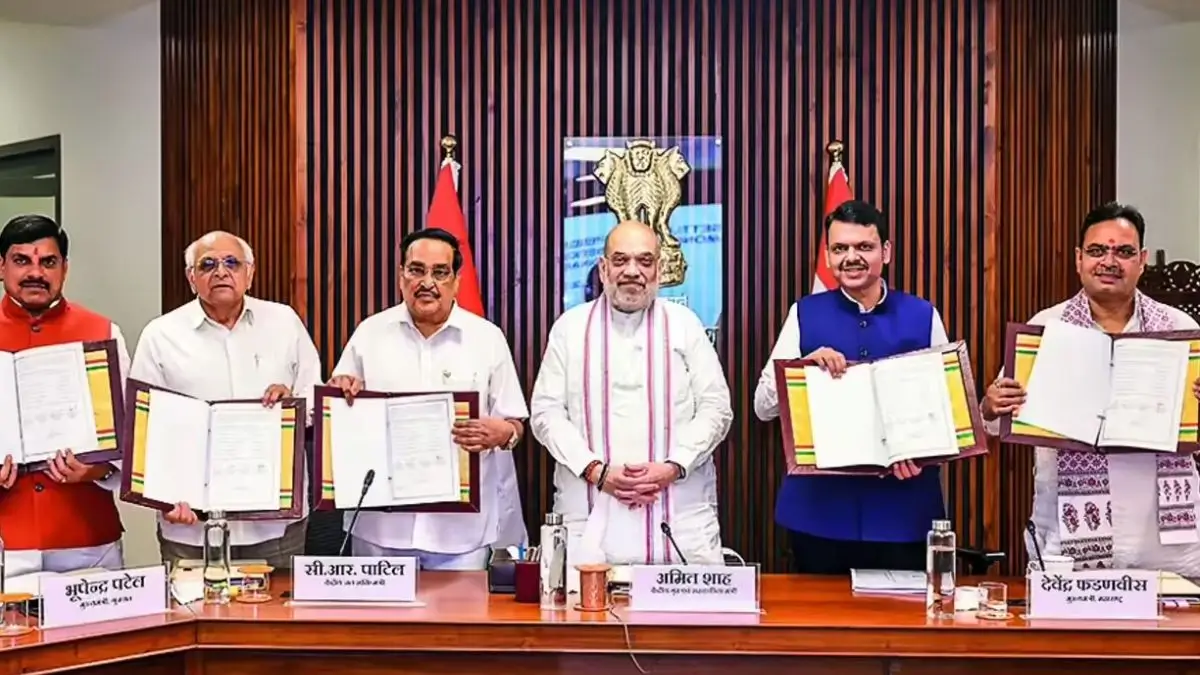
In a major step towards improving inter-state cooperation in water resource management, Madhya Pradesh, Gujarat, Maharashtra, and Rajasthan have signed a payment agreement to resolve the long-pending cost-sharing dispute related to the Narmada Valley Development Project. The agreement aims to streamline the payment mechanism among the participating states and ensure the smooth execution of the multipurpose river valley project.
The pact marks an important milestone in addressing financial disagreements that had delayed payments and affected the implementation of various components of the Narmada Project. The agreement is expected to improve coordination among the states while promoting efficient management of one of India’s largest river development initiatives.
Understanding the Narmada Valley Development Project
The Narmada Valley Development Project is one of India’s most significant river valley projects. It involves the construction of several dams, canals, hydroelectric stations, and irrigation infrastructure on the Narmada River, which flows westward through central India before emptying into the Arabian Sea.
The project has multiple objectives, including irrigation, hydroelectric power generation, drinking water supply, flood control, and regional development. It has played a vital role in improving agricultural productivity and providing water security to several drought-prone regions across western and central India.
Why Was the Cost-Sharing Dispute Created?
The Narmada Project involves multiple beneficiary states, each receiving different levels of irrigation benefits, drinking water supply, and electricity generation. Since the project requires enormous financial investment, disagreements arose over how construction costs, maintenance expenses, and compensation payments should be distributed among the participating states.
Over the years, delays in settling financial obligations resulted in pending payments between the states. These disputes affected administrative coordination and slowed certain project-related activities. To overcome these challenges, the four states negotiated a mutually acceptable payment mechanism that defines responsibilities more clearly.
Key Features of the New Payment Agreement
The newly signed agreement establishes a structured framework for clearing pending financial liabilities and regulating future payments. It provides greater transparency in calculating each state’s financial contribution based on agreed principles under the supervision of the Narmada Control Authority (NCA).
The agreement also seeks to reduce future disputes by introducing a predictable payment schedule and strengthening institutional coordination. This will help ensure that infrastructure development, maintenance activities, and rehabilitation measures continue without unnecessary financial interruptions.
Benefits for Agriculture and Irrigation
Agriculture remains one of the biggest beneficiaries of the Narmada Project. The improved financial arrangement will support timely completion and maintenance of irrigation canals that provide water to millions of hectares of farmland.
Reliable irrigation reduces farmers’ dependence on monsoon rainfall, increases crop productivity, and encourages cultivation of multiple crops throughout the year. The project also supports rural livelihoods by improving agricultural income and reducing water scarcity in drought-prone regions.
Impact on Drinking Water Supply
Apart from irrigation, the Narmada Project supplies drinking water to numerous urban and rural settlements. Better financial coordination among the participating states will help ensure uninterrupted operation of water distribution systems.
The agreement strengthens long-term planning for water supply infrastructure, benefiting households, industries, and public institutions that depend on Narmada water for daily needs.
Contribution to Hydroelectric Power Generation
The Narmada Project includes several hydroelectric power stations that generate renewable electricity. Proper cost-sharing arrangements are essential for maintaining these facilities and ensuring efficient power generation.
The agreement will facilitate smoother operation of hydropower infrastructure, contributing to India’s clean energy goals while improving electricity availability in participating states.
Importance of Cooperative Federalism
The payment pact demonstrates the principle of cooperative federalism, where states work together to resolve shared challenges through dialogue and consensus. Water resources often cross state boundaries, making inter-state cooperation essential for sustainable development.
The successful resolution of this financial dispute highlights the importance of institutional mechanisms in balancing the interests of multiple states while ensuring equitable utilization of shared natural resources.
Significance for Government Exam Aspirants
This development is highly relevant for competitive examinations such as UPSC, State PSCs, SSC, Banking, Railways, Defence, Teaching, and Police recruitment exams. Questions may be asked about interstate river water management, cooperative federalism, multipurpose river valley projects, irrigation development, the Narmada River, the Narmada Control Authority, and the economic significance of major dam projects.
Candidates should also understand how interstate agreements contribute to sustainable water resource management, agricultural development, renewable energy generation, and national infrastructure planning, making this news an important addition to current affairs preparation.

Why this News is Important
Strengthening Cooperative Federalism in India
The agreement signed by Madhya Pradesh, Gujarat, Maharashtra, and Rajasthan to resolve the long-standing payment dispute over the Narmada Project is an important example of cooperative federalism. Since rivers often flow across multiple states, effective management requires coordination, mutual trust, and timely financial commitments. By reaching a consensus, the four states have demonstrated how inter-state issues can be resolved through dialogue instead of prolonged disagreements.
Boost to Water Resource Management
The payment pact is expected to improve the implementation and maintenance of the Narmada Project by ensuring that financial obligations are fulfilled on time. This will support better management of irrigation systems, drinking water supply, and hydroelectric power generation. Efficient water resource management is becoming increasingly important due to climate change, population growth, and rising demand for water across agriculture, industries, and urban areas.
Importance for Agriculture and Rural Development
The Narmada Project is one of India’s largest multipurpose river valley projects and plays a significant role in irrigating agricultural land across beneficiary states. Timely funding will facilitate the maintenance and expansion of irrigation infrastructure, helping farmers achieve better crop yields and reducing dependence on uncertain monsoon rainfall. Improved irrigation also contributes to food security and rural economic development.
Relevance for Competitive Examinations
This development is highly important for aspirants preparing for UPSC, State PSC, SSC, Banking, Railways, Defence, Police, and Teaching examinations. Questions may be asked about interstate river disputes, cooperative federalism, the Narmada River, the Narmada Control Authority, multipurpose river valley projects, irrigation, hydroelectric power, and water governance. Candidates should also understand how such agreements contribute to national development and sustainable utilization of natural resources.
Historical Context
Origin of the Narmada Valley Development Project
The Narmada River, one of India’s major west-flowing rivers, originates from the Amarkantak Plateau in Madhya Pradesh and flows through Madhya Pradesh, Maharashtra, and Gujarat before draining into the Arabian Sea. Owing to its vast water resources, the river has long been considered suitable for large-scale irrigation and hydropower development.
Establishment of the Narmada Water Dispute Tribunal
Differences among the riparian states over water sharing and project implementation led the Government of India to establish the Narmada Water Disputes Tribunal (NWDT) in 1969 under the Inter-State River Water Disputes Act, 1956. After extensive deliberations, the Tribunal delivered its final award in 1979, allocating water among Madhya Pradesh, Gujarat, Maharashtra, and Rajasthan while laying down guidelines for dam construction, rehabilitation, and cost sharing.
Development of Major Infrastructure
Following the Tribunal’s award, several major dams and associated infrastructure were developed under the Narmada Valley Development Project. The Sardar Sarovar Dam in Gujarat and the Indira Sagar Dam in Madhya Pradesh became two of the most significant components of the project. These projects were designed to provide irrigation, drinking water, hydroelectric power, and flood moderation benefits to millions of people.
Environmental and Rehabilitation Challenges
Over the decades, the Narmada Project has also witnessed debates regarding environmental conservation, displacement of affected families, forest land diversion, and rehabilitation measures. Various judicial interventions, government policies, and rehabilitation programs have sought to balance developmental needs with environmental protection and the rights of project-affected communities.
Continuing Importance of Inter-State Coordination
As one of India’s largest multipurpose river valley projects, the Narmada Project continues to require close coordination among participating states. The latest payment agreement represents another significant milestone in ensuring smoother financial management, reducing administrative delays, and strengthening long-term cooperation for the sustainable development of the Narmada basin.
Key Takeaways from Narmada Project Payment Pact
| S. No. | Key Takeaway |
|---|---|
| 1 | Madhya Pradesh, Gujarat, Maharashtra, and Rajasthan signed a payment agreement to resolve the long-pending cost-sharing dispute related to the Narmada Project. |
| 2 | The agreement establishes a clearer payment mechanism for sharing project-related expenses and settling pending financial liabilities among the participating states. |
| 3 | The Narmada Project is a multipurpose river valley project that provides irrigation, drinking water, hydroelectric power, and flood management benefits to millions of people. |
| 4 | The agreement strengthens cooperative federalism by promoting coordination and consensus among states in managing shared river resources. |
| 5 | The development is important for competitive examinations as it covers topics such as inter-state river water management, Narmada River, Narmada Control Authority, irrigation projects, hydroelectric power, and water governance. |
Frequently Asked Questions (FAQs)
1. What is the Narmada Project Payment Pact?
The Narmada Project Payment Pact is an agreement signed by Madhya Pradesh, Gujarat, Maharashtra, and Rajasthan to resolve the long-standing cost-sharing dispute related to the Narmada Valley Development Project and establish a streamlined payment mechanism.
2. Which four states signed the Narmada Project Payment Pact?
The four participating states are:
- Madhya Pradesh
- Gujarat
- Maharashtra
- Rajasthan
3. What is the main objective of the Narmada Valley Development Project?
The project aims to provide:
- Irrigation facilities
- Drinking water supply
- Hydroelectric power generation
- Flood control
- Regional socio-economic development
4. Which river is associated with the Narmada Valley Development Project?
The project is based on the Narmada River, one of India’s major west-flowing rivers.
5. Where does the Narmada River originate?
The Narmada River originates from the Amarkantak Plateau in Madhya Pradesh.
6. Into which sea does the Narmada River drain?
The river flows westward and empties into the Arabian Sea.
7. Which authority oversees the implementation of the Narmada Project?
The Narmada Control Authority (NCA) oversees the implementation, coordination, and regulation of the project.
8. Why is the payment agreement important?
It resolves pending financial disputes, improves inter-state coordination, ensures timely project funding, and supports uninterrupted irrigation, drinking water supply, and hydropower generation.
9. Which tribunal settled the Narmada water-sharing dispute?
The Narmada Water Disputes Tribunal (NWDT) settled the dispute and delivered its final award in 1979.
10. Why is this topic important for competitive examinations?
The topic is relevant for UPSC, State PSC, SSC, Banking, Railways, Defence, Police, and Teaching exams because it covers cooperative federalism, inter-state river disputes, water resource management, irrigation, hydroelectric power, and environmental governance.
Some Important Current Affairs Links