







India AMCA stealth fighter project launched with ₹15,803 crore investment to develop India’s indigenous fifth-generation fighter aircraft. Know features, importance, MCQs, FAQs and exam-focused current affairs analysis for UPSC, SSC, Banking and Defence exams.
India Launches ₹15,803 Crore AMCA Project for Fifth-Generation Stealth Fighter
Major Boost to India’s Indigenous Defence Capability
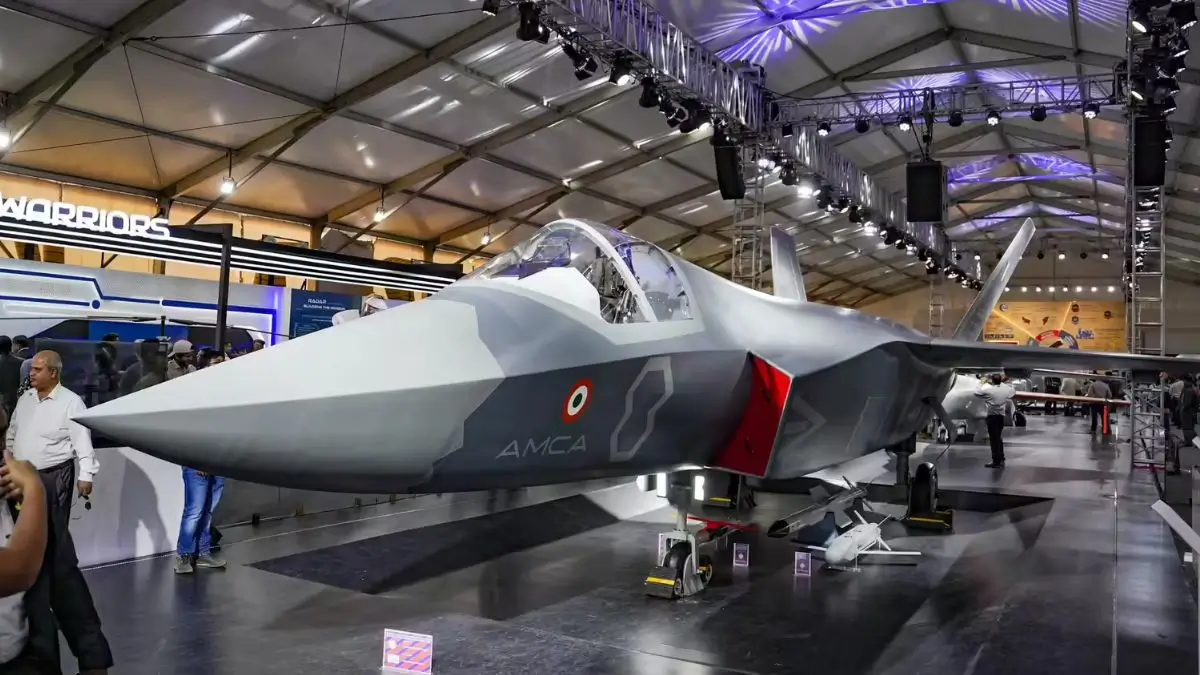
India has taken a historic step toward strengthening its air power and defence manufacturing ecosystem by launching the ₹15,803 crore Advanced Medium Combat Aircraft (AMCA) project. The ambitious programme aims to develop India’s first indigenous fifth-generation stealth fighter aircraft capable of competing with some of the world’s most advanced combat jets. The project reflects the country’s growing focus on self-reliance in defence production under the “Aatmanirbhar Bharat” initiative.
The foundation for the AMCA infrastructure project was laid in Andhra Pradesh in the presence of Defence Minister Rajnath Singh and Andhra Pradesh Chief Minister N. Chandrababu Naidu. The project is expected to transform India into one of the few nations capable of designing and manufacturing advanced stealth fighter aircraft.
What is the AMCA Project?
The Advanced Medium Combat Aircraft (AMCA) is India’s indigenous fifth-generation stealth fighter jet programme being developed by the Defence Research and Development Organisation through the Aeronautical Development Agency (ADA). The aircraft is designed as a twin-engine, multirole stealth fighter capable of air superiority missions, ground attacks, electronic warfare and precision strikes.
The AMCA will incorporate advanced stealth technology, internal weapon bays, artificial intelligence-enabled systems, supercruise capability and modern avionics. The aircraft is expected to significantly enhance the operational capabilities of the Indian Air Force (IAF).
Key Features of the Fifth-Generation Fighter Jet
The AMCA project is particularly important because fifth-generation fighter aircraft represent the most advanced level of military aviation technology. These aircraft possess radar-evading stealth capabilities and can conduct missions with enhanced survivability in hostile airspace.
Some expected features of the AMCA include:
- Stealth design to reduce radar detection
- Advanced electronic warfare systems
- Internal weapons carriage for low observability
- Artificial intelligence-based combat systems
- Supercruise capability for sustained supersonic speed
- Network-centric warfare integration
- Indigenous avionics and sensors
These capabilities will help India strengthen its defence preparedness against evolving regional and global security challenges.
Private Sector Participation in Defence Manufacturing
One of the most significant aspects of the AMCA programme is the participation of private sector companies alongside public sector units. The government has approved a new execution model that allows Indian companies to bid independently or form joint ventures and consortiums for the project.
This move is expected to increase competition, improve efficiency and boost India’s defence industrial base. Major Indian companies from the aerospace and defence sectors have shown interest in participating in the programme.
The project is also expected to generate large-scale employment opportunities and create a strong domestic aerospace ecosystem capable of supporting future defence projects.
Importance for the Indian Air Force
The Indian Air Force has long been facing a shortage of fighter squadrons. The sanctioned strength of the IAF is 42 squadrons, but operational numbers remain below this target. The AMCA programme is expected to address future combat aviation requirements and reduce dependence on foreign fighter aircraft imports.
The AMCA is expected to complement other indigenous projects such as the HAL Tejas and future combat platforms. Reports indicate that the IAF may eventually induct over 120 AMCA aircraft into service.
Timeline and Future Plans
According to various reports, the project includes the development of five prototypes before large-scale production begins. The first prototype is expected to fly around 2028–2029, while induction into the Indian Air Force may begin after 2035.
The first versions of the AMCA may use GE-414 engines, while future variants could feature more powerful engines developed jointly with international partners.
Strategic Importance for India
The AMCA project is not just a defence programme; it is also a symbol of India’s technological ambitions. Countries capable of producing fifth-generation fighter aircraft are extremely limited. Successful development of the AMCA would place India among an elite group of nations possessing cutting-edge stealth fighter technology.
The programme also aligns with India’s broader goal of reducing dependence on imported military hardware while promoting indigenous innovation, defence exports and strategic autonomy.

Why This News is Important
Strengthening National Security
The launch of the AMCA project is important because it directly contributes to India’s national security and defence preparedness. Fifth-generation fighter aircraft are essential in modern warfare due to their stealth technology, advanced sensors and electronic warfare capabilities. With neighbouring countries rapidly modernising their air forces, India requires advanced indigenous platforms to maintain strategic balance in the region.
The AMCA will provide the Indian Air Force with advanced combat capabilities that can perform multiple roles including air dominance, deep strike missions and electronic warfare operations. This enhances India’s deterrence capability against potential threats.
Promoting Aatmanirbhar Bharat
The project is also significant because it promotes the government’s “Aatmanirbhar Bharat” vision. India has traditionally depended heavily on imported fighter aircraft from countries like Russia, France and the United States. The AMCA project aims to reduce this dependence by encouraging domestic defence manufacturing and technological innovation.
The inclusion of private companies in the programme marks a major policy shift in India’s defence sector. It opens opportunities for Indian industries to gain expertise in aerospace manufacturing, advanced engineering and defence technology.
Important for Competitive Exams
For students preparing for UPSC, SSC, Banking, Railways, Defence and State PCS examinations, the AMCA project is important under topics such as:
- Defence Technology
- Internal Security
- Science and Technology
- Government Policies
- Aatmanirbhar Bharat
- Indian Air Force Modernisation
- DRDO Projects
Questions related to fifth-generation fighter aircraft, stealth technology, indigenous defence systems and major government defence initiatives are frequently asked in competitive examinations.
Historical Context
India’s Journey Towards Indigenous Fighter Aircraft
India’s efforts to develop indigenous fighter aircraft began decades ago with projects led by the Hindustan Aeronautics Limited and the Defence Research and Development Organisation. One of the earliest major projects was the Light Combat Aircraft (LCA) programme, which resulted in the development of the Tejas fighter aircraft.
The successful development of the Tejas gave Indian scientists and engineers confidence to move toward more advanced combat aircraft programmes. The AMCA represents the next major milestone in India’s aerospace journey.
Evolution of Fifth-Generation Fighter Technology
Globally, only a few countries possess operational fifth-generation fighter aircraft. The United States developed the F-22 Raptor and F-35 Lightning II, while China developed the J-20 and Russia developed the Su-57. These aircraft introduced stealth capabilities, advanced avionics and network-centric warfare systems.
India initially explored collaboration opportunities with foreign countries for advanced fighter technology but later decided to focus more strongly on indigenous development. The AMCA project emerged as a long-term strategic initiative to achieve self-reliance in next-generation military aviation.
Government Approval and Policy Support
In 2024, the Cabinet Committee on Security approved the full-scale engineering development of AMCA prototypes. Later, the Defence Ministry approved the execution model allowing participation from both public and private sectors. These approvals accelerated the programme and paved the way for infrastructure development and prototype manufacturing.
Key Takeaways from This News
| S.No. | Key Takeaway |
|---|---|
| 1 | India launched the ₹15,803 crore AMCA project to develop a fifth-generation stealth fighter aircraft. |
| 2 | The AMCA programme is being developed by DRDO’s Aeronautical Development Agency (ADA). |
| 3 | The fighter jet will feature stealth technology, AI systems, supercruise capability and advanced avionics. |
| 4 | Private sector companies will participate alongside public sector units in the project. |
| 5 | The AMCA project supports India’s Aatmanirbhar Bharat initiative and aims to strengthen indigenous defence manufacturing. |
FAQs on India’s AMCA Fifth-Generation Stealth Fighter Project
1. What is AMCA?
The Advanced Medium Combat Aircraft (AMCA) is India’s indigenous fifth-generation stealth fighter jet project being developed by the Aeronautical Development Agency (ADA) under the Defence Research and Development Organisation (DRDO).
2. What is the cost of the AMCA project?
The AMCA infrastructure and development project has been launched with an estimated cost of ₹15,803 crore.
3. Which organisation is developing the AMCA fighter jet?
The project is being developed by the Aeronautical Development Agency (ADA) in collaboration with DRDO, Indian defence industries and aerospace partners.
4. What generation fighter aircraft is AMCA?
AMCA is a fifth-generation stealth fighter aircraft designed with advanced stealth technology, supercruise capability and AI-enabled avionics.
5. What are the major features of the AMCA fighter jet?
Key features include:
- Stealth technology
- Internal weapons bay
- Advanced radar systems
- Artificial intelligence integration
- Supercruise capability
- Electronic warfare systems
- Multirole combat capability
6. Which countries currently possess fifth-generation fighter aircraft?
Countries with operational fifth-generation fighter aircraft include:
- United States
- China
- Russia
India aims to join this elite group through the AMCA project.
7. Which Indian state is associated with the AMCA infrastructure project?
The AMCA infrastructure project has been launched in Andhra Pradesh.
8. Why is the AMCA project important for India?
The project is important because it strengthens India’s defence self-reliance, modernises the Indian Air Force and reduces dependence on foreign fighter jet imports.
9. What is the role of private companies in the AMCA programme?
The government has allowed private sector participation in the AMCA programme through joint ventures and partnerships with public sector organisations.
10. Which exams can include questions related to the AMCA project?
Questions on the AMCA project may appear in:
Defence examinations
UPSC Civil Services
State PCS exams
SSC exams
CDS and NDA
Banking awareness sections
Railway recruitment exams
Some Important Current Affairs Links