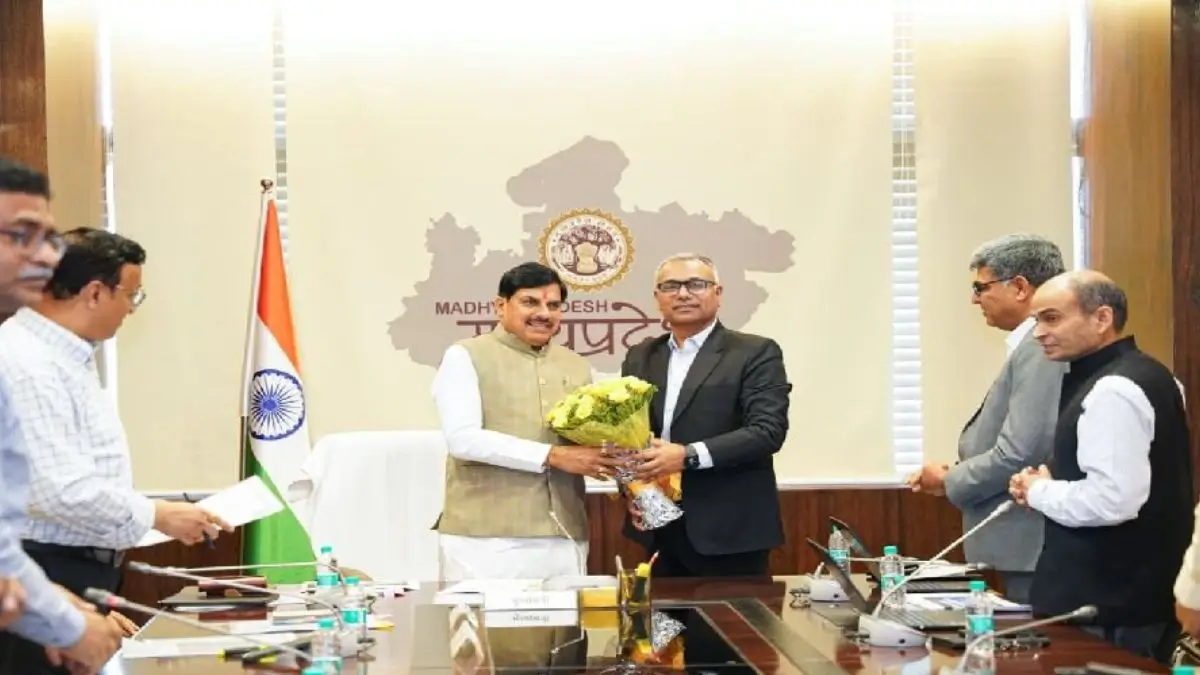








India semiconductor mission projects approved by the Union Cabinet aim to boost chip manufacturing, OSAT facilities, and Mini/Micro-LED technology in Gujarat under Atmanirbhar Bharat.
Union Cabinet Clears Two New Semiconductor Projects Under India Semiconductor Mission
India has taken another major step toward becoming a global semiconductor manufacturing hub after the Union Cabinet approved two new semiconductor projects under the India Semiconductor Mission (ISM). The projects, with a combined investment of around ₹3,936 crore, will be established in Gujarat and are expected to strengthen India’s electronics and chip manufacturing ecosystem.
Expansion of India’s Semiconductor Ecosystem
The newly approved projects are part of the Government of India’s long-term strategy to reduce dependence on imported semiconductor chips and promote domestic manufacturing. Semiconductors are essential components used in smartphones, computers, automobiles, defence equipment, medical devices, and telecommunications infrastructure.
With the approval of these two projects, the total number of semiconductor projects sanctioned under the India Semiconductor Mission has increased to 12. The initiative is expected to accelerate technological self-reliance and support the vision of “Atmanirbhar Bharat.”
Two Semiconductor Units Approved by the Cabinet
The Union Cabinet approved two key projects in Gujarat under the India Semiconductor Mission. The first project is a compound semiconductor fabrication facility with Mini/Micro LED production capability. The second project is a semiconductor assembly and testing unit, commonly known as an OSAT facility.
These projects are expected to generate more than 2,200 skilled jobs and attract additional investments in the electronics manufacturing sector.
India’s First Mini/Micro-LED Facility
One of the most significant highlights of the announcement is the establishment of India’s first commercial Mini/Micro-LED display fabrication facility using Gallium Nitride (GaN) technology.
The project will be developed by Crystal Matrix Limited in Dholera, Gujarat. The facility will manufacture advanced display panels and GaN epitaxy wafers that are used in televisions, smartphones, wearable devices, augmented reality systems, and other next-generation electronic products.
The unit is expected to have an annual production capacity of 72,000 square meters of display panels and 24,000 RGB wafer sets.
Semiconductor Packaging and Testing Facility
The second project approved by the government is an Outsourced Semiconductor Assembly and Test (OSAT) unit in Surat, Gujarat. OSAT facilities play an important role in chip manufacturing because they handle chip assembly, testing, marking, and packaging before semiconductors are used in electronic devices.
The facility will support industries such as automotive electronics, industrial electronics, power management systems, and consumer electronics. It is expected to strengthen India’s semiconductor supply chain and reduce dependence on foreign packaging units.
Importance of the India Semiconductor Mission
The India Semiconductor Mission was launched to create a complete semiconductor ecosystem in the country. Semiconductor shortages during the COVID-19 pandemic exposed the risks associated with excessive dependence on global supply chains.
To address this challenge, India has been offering financial incentives and policy support to attract semiconductor manufacturers. The mission aims to boost chip fabrication, packaging, research, innovation, and skill development in the semiconductor sector.
The government has also collaborated with leading domestic and international companies to establish semiconductor fabrication and assembly plants in different states.
Gujarat Emerging as India’s Semiconductor Hub
Gujarat is rapidly becoming the center of India’s semiconductor manufacturing ecosystem. Several large semiconductor investments have already been announced in the state, including projects by Tata Electronics and Micron Technology.
The new approvals further strengthen Gujarat’s position as a leading semiconductor destination. The presence of advanced infrastructure, industrial corridors, and policy support has helped attract major semiconductor investments to the state.
Strategic Importance for India
Semiconductors are considered strategic assets because they are crucial for economic growth, national security, artificial intelligence, telecommunications, electric vehicles, and defence technologies.
By expanding domestic semiconductor production, India aims to reduce import dependency and become an important player in global electronics supply chains. The projects will also improve India’s competitiveness in advanced technology manufacturing.
The development of semiconductor infrastructure can boost employment opportunities, research activities, startup ecosystems, and exports in the long term.

Why This News is Important
Importance for Competitive Examinations
This development is highly important for students preparing for UPSC, SSC, Banking, Railways, Defence, State PCS, and other government examinations because semiconductor manufacturing and technological self-reliance are frequently asked topics in current affairs and economic development sections.
Questions may be asked regarding the India Semiconductor Mission, semiconductor manufacturing, Gallium Nitride technology, Atmanirbhar Bharat, or India’s electronics policy. Aspirants should remember the investment amount, location of the projects, and objectives of the mission.
Strategic and Economic Importance
Semiconductors are the backbone of the modern digital economy. Almost every electronic device requires semiconductor chips for functioning. India currently imports a large portion of its semiconductor requirements from foreign countries.
The approval of these projects reflects India’s commitment to becoming self-reliant in critical technologies. It will strengthen manufacturing capabilities, improve national security, support the digital economy, and create employment opportunities for skilled youth.
Boost to Make in India Initiative
The projects support flagship government initiatives such as “Make in India,” “Digital India,” and “Atmanirbhar Bharat.” By encouraging domestic manufacturing, the government aims to reduce import bills and strengthen India’s position in global supply chains.
The semiconductor sector is expected to become one of the most important industries in the future due to increasing demand for electronics, electric vehicles, artificial intelligence systems, and 5G technology.
Historical Context
India’s Dependence on Semiconductor Imports
For many years, India depended heavily on semiconductor imports from countries like Taiwan, China, South Korea, and the United States. Despite being a major consumer of electronics, India lacked advanced semiconductor manufacturing facilities.
The global semiconductor shortage during the COVID-19 pandemic highlighted vulnerabilities in global supply chains and affected industries such as automobiles, consumer electronics, and telecommunications.
Launch of India Semiconductor Mission
To overcome these challenges, the Government of India launched the India Semiconductor Mission in 2021 with financial incentives worth thousands of crores for semiconductor fabrication and display manufacturing.
The mission aimed to establish semiconductor fabs, chip packaging units, design ecosystems, and research infrastructure in India. Since then, several companies have announced semiconductor projects across states like Gujarat, Assam, Odisha, and Andhra Pradesh.
Growing Global Semiconductor Competition
Countries around the world are investing heavily in semiconductor manufacturing because chips are essential for emerging technologies and national security. The United States introduced the CHIPS and Science Act, while several Asian countries expanded semiconductor incentives.
India has also accelerated investments in this sector to become a trusted alternative manufacturing destination in the global semiconductor supply chain.
Key Takeaways from This News
| S.No. | Key Takeaway |
|---|---|
| 1 | The Union Cabinet approved two semiconductor projects under the India Semiconductor Mission with an investment of ₹3,936 crore. |
| 2 | Both projects will be established in Gujarat and are expected to generate more than 2,200 skilled jobs. |
| 3 | One project includes India’s first Mini/Micro-LED fabrication facility using Gallium Nitride (GaN) technology. |
| 4 | The second project is an OSAT semiconductor packaging and testing facility in Surat. |
| 5 | With these approvals, the total number of semiconductor projects under the India Semiconductor Mission has increased to 12. |
FAQs Related to India Semiconductor Mission and Semiconductor Projects
1. What is the India Semiconductor Mission (ISM)?
The India Semiconductor Mission is a government initiative launched in 2021 to develop a complete semiconductor and display manufacturing ecosystem in India. It provides financial incentives and policy support to semiconductor companies.
2. How many semiconductor projects have been approved under ISM?
With the latest Cabinet approval, the total number of approved semiconductor projects under the India Semiconductor Mission has increased to 12.
3. Which state will host the newly approved semiconductor projects?
Both newly approved semiconductor projects will be established in Gujarat.
4. What is an OSAT facility?
OSAT stands for Outsourced Semiconductor Assembly and Test. These facilities assemble, package, and test semiconductor chips before they are used in electronic devices.
5. Why are semiconductors important?
Semiconductors are essential for manufacturing smartphones, laptops, automobiles, medical equipment, defence systems, artificial intelligence systems, and telecommunication devices.
6. What is Gallium Nitride (GaN) technology?
Gallium Nitride (GaN) is an advanced semiconductor material used in high-performance electronics, LED displays, 5G systems, and power devices due to its efficiency and speed.
7. What is the significance of Mini/Micro-LED technology?
Mini/Micro-LED technology is used in advanced display systems for smartphones, televisions, smartwatches, augmented reality devices, and next-generation consumer electronics.
8. Which government initiatives are supported by these projects?
The projects support initiatives such as Make in India, Digital India, and Atmanirbhar Bharat.
9. Why is Gujarat becoming a semiconductor hub?
Gujarat offers strong industrial infrastructure, investor-friendly policies, and dedicated semiconductor zones such as Dholera, attracting large semiconductor investments.
10. Why is this topic important for government exams?
Questions related to semiconductor missions, technological self-reliance, Make in India, and strategic industries are frequently asked in UPSC, SSC, Banking, Railways, Defence, and State PCS examinations.
Some Important Current Affairs Links