


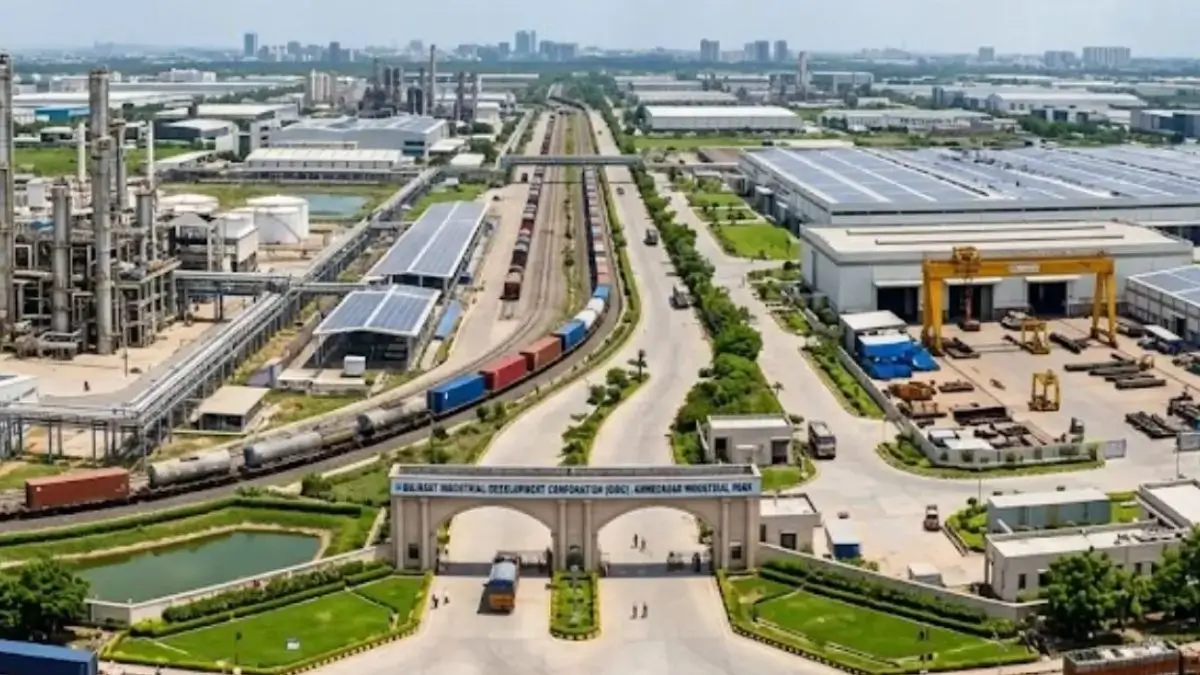
BHAVYA Scheme industrial parks initiative aims to develop 100 world-class industrial parks across India to boost manufacturing, investment, infrastructure, and employment opportunities under DPIIT.
Government Unveils BHAVYA Scheme Guidelines to Build 100 World-Class Industrial Parks Across India
The Government of India has released detailed operational guidelines for the ambitious BHAVYA Scheme, formally known as the Bharat Audyogik Vikas Yojna. The initiative aims to establish 100 world-class industrial parks across India to strengthen the manufacturing sector, improve industrial infrastructure, and generate large-scale employment opportunities. The scheme is being implemented by the Department for Promotion of Industry and Internal Trade (DPIIT) under the Ministry of Commerce and Industry.
Objective of the BHAVYA Scheme
The primary objective of the BHAVYA Scheme is to transform India into a globally competitive manufacturing hub by creating modern industrial ecosystems equipped with advanced infrastructure. The government intends to provide “plug-and-play” industrial facilities so that companies can begin operations quickly without delays related to land acquisition, utilities, or approvals.
The initiative supports major national missions such as “Make in India,” “Atmanirbhar Bharat,” and PM Gati Shakti. By integrating transportation, logistics, digital governance, and sustainable infrastructure, the scheme aims to enhance India’s industrial productivity and global competitiveness.
Financial Allocation and Timeline
The Union Cabinet has approved an outlay of ₹33,660 crore for the implementation of the BHAVYA Scheme. The project will be executed over a six-year period from FY 2026-27 to FY 2031-32.
The central government will provide substantial financial support for infrastructure development. Reports suggest that assistance of up to ₹1 crore per acre will be provided for core infrastructure development, along with support for external connectivity such as roads, power supply, and logistics systems.
Features of the Industrial Parks
The proposed industrial parks will include modern facilities such as uninterrupted power supply, water availability, waste management systems, digital governance platforms, warehousing facilities, and multimodal logistics connectivity.
The parks will be developed with a focus on sustainability and environmental efficiency. Smart infrastructure and green industrial practices are expected to play an important role in their design and operation.
The parks will range between 100 acres and 1,000 acres. However, smaller parks with a minimum size of 25 acres may be permitted in northeastern and hilly states to encourage balanced regional industrial development.
Selection Process and State Participation
The scheme will follow a challenge-based competitive selection process. Initially, 50 industrial parks will be selected in the first phase. States and Union Territories will submit proposals, and selection will depend on criteria such as infrastructure readiness, industrial potential, connectivity, and sustainability plans.
The private sector and state governments will jointly participate in the implementation process. Special Purpose Vehicles (SPVs) may also be formed for park management and development.
Expected Economic Impact
The BHAVYA Scheme is expected to significantly boost manufacturing output and industrial investment in India. By providing investment-ready infrastructure, the government aims to attract both domestic and foreign investors.
The scheme is also expected to generate massive employment opportunities in manufacturing, logistics, transportation, construction, and service sectors. Experts believe the initiative will support India’s ambition of becoming a global manufacturing powerhouse and achieving long-term economic growth.
Role of Industrial Corridors
The BHAVYA Scheme will complement existing industrial corridor projects such as the Delhi-Mumbai Industrial Corridor (DMIC) and other National Industrial Corridor Development Programme (NICDP) projects. States like Rajasthan have already proposed multiple industrial hubs under the scheme due to their strategic industrial location advantages.
Importance for Competitive Examinations
The BHAVYA Scheme is highly important for students preparing for UPSC, SSC, Banking, Railways, State PSCs, Defence, and other government examinations because it relates to economic development, infrastructure, manufacturing policy, industrial growth, employment generation, and government schemes.
Questions may be asked regarding:
- Full form of BHAVYA
- Ministry implementing the scheme
- Financial allocation
- Number of industrial parks
- Objectives of the scheme
- Link with Make in India and PM Gati Shakti
- Importance of industrial corridors
The scheme also reflects the government’s strategy to improve ease of doing business and enhance India’s global manufacturing capabilities.

Why This News is Important
Boost to India’s Manufacturing Sector
The BHAVYA Scheme is important because it represents one of the largest industrial infrastructure initiatives launched by the Government of India in recent years. Manufacturing plays a crucial role in economic development, employment generation, and export growth. By creating modern industrial parks with ready infrastructure, the government aims to strengthen India’s industrial base and reduce delays faced by investors.
Employment Generation and Economic Growth
The scheme is expected to create large-scale direct and indirect employment opportunities across sectors such as manufacturing, logistics, warehousing, transport, and services. This is especially significant for India’s growing youth population. Industrial growth can also improve regional economies and increase income generation.
Enhancing Ease of Doing Business
One major challenge faced by industries in India has been delays related to land acquisition, approvals, and infrastructure availability. The BHAVYA Scheme seeks to address these problems through plug-and-play industrial facilities. This can improve India’s ranking in global ease-of-doing-business indicators and attract foreign investment.
Strategic Importance for Government Exams
Government examinations frequently include questions on economic schemes, industrial policies, and infrastructure initiatives. The BHAVYA Scheme combines multiple important topics including Make in India, industrial corridors, sustainable development, logistics infrastructure, and employment generation. Therefore, this topic is highly relevant for current affairs preparation.
Historical Context
Evolution of Industrial Development in India
India has focused on industrial development since independence through industrial policies, public sector undertakings, and special economic zones. Over the years, industrial infrastructure became a major requirement for attracting investment and improving production capacity.
Emergence of Industrial Corridors
To modernize industrial growth, the government introduced industrial corridor projects such as the Delhi-Mumbai Industrial Corridor (DMIC), Chennai-Bengaluru Industrial Corridor, and Amritsar-Kolkata Industrial Corridor. These projects aimed to improve connectivity, logistics, and industrial competitiveness.
Make in India and Atmanirbhar Bharat
In 2014, the government launched the Make in India initiative to encourage domestic manufacturing and foreign investment. Later, the Atmanirbhar Bharat campaign further emphasized self-reliance in industrial production. The BHAVYA Scheme is considered an extension of these broader economic reforms aimed at making India a global manufacturing hub.
Need for Plug-and-Play Infrastructure
Industries often face delays because of inadequate infrastructure and complicated approvals. The concept of plug-and-play industrial parks emerged to provide ready-to-use facilities that can accelerate investment and production activities. The BHAVYA Scheme institutionalizes this approach at a national level.
Key Takeaways from This News
| S.No. | Key Takeaway |
|---|---|
| 1 | The Government of India launched the BHAVYA Scheme to develop 100 world-class industrial parks across the country. |
| 2 | The scheme has a financial outlay of ₹33,660 crore and will run from FY 2026-27 to FY 2031-32. |
| 3 | DPIIT under the Ministry of Commerce and Industry is implementing the scheme. |
| 4 | The industrial parks will provide plug-and-play infrastructure with logistics, utilities, and digital governance systems. |
| 5 | The scheme supports initiatives such as Make in India, PM Gati Shakti, and Atmanirbhar Bharat while promoting employment and investment growth. |
FAQs Related to BHAVYA Scheme and Industrial Parks
1. What is the full form of BHAVYA Scheme?
BHAVYA stands for Bharat Audyogik Vikas Yojna.
2. Which ministry is implementing the BHAVYA Scheme?
The scheme is being implemented by the Department for Promotion of Industry and Internal Trade (DPIIT) under the Ministry of Commerce and Industry.
3. What is the main objective of the BHAVYA Scheme?
The main objective is to establish 100 world-class industrial parks across India to strengthen manufacturing, attract investment, and create employment opportunities.
4. How many industrial parks will be developed under the scheme?
A total of 100 industrial parks will be developed under the BHAVYA Scheme.
5. What is the estimated budget allocated for the scheme?
The government has approved an outlay of ₹33,660 crore for the implementation of the scheme.
6. What are plug-and-play industrial parks?
Plug-and-play industrial parks are ready-to-use industrial zones equipped with infrastructure such as roads, electricity, water supply, internet connectivity, and logistics facilities, enabling industries to start operations quickly.
7. Which government initiatives are linked with the BHAVYA Scheme?
The scheme supports initiatives like Make in India, PM Gati Shakti, and Atmanirbhar Bharat.
8. Why is the BHAVYA Scheme important for competitive exams?
The scheme is important because questions related to economic development, industrial policies, government schemes, infrastructure, and employment generation are frequently asked in UPSC, SSC, Banking, Railways, Defence, and State PSC exams.
9. What is DPIIT?
DPIIT stands for Department for Promotion of Industry and Internal Trade, which works under the Ministry of Commerce and Industry.
10. What benefits are expected from the BHAVYA Scheme?
The scheme is expected to boost manufacturing, attract domestic and foreign investment, improve logistics infrastructure, and generate large-scale employment opportunities.
Some Important Current Affairs Links




