
Gujarat Air-Filled Rubber Dams are India’s first inflatable rubber dams built using South Korean technology. Learn about their features, benefits, SCADA system, irrigation impact, exam relevance, FAQs, and MCQs for UPSC, PSC, SSC, Banking, Railways, Defence, and other government exams.
Introduction
The Government of Gujarat has launched a pioneering water infrastructure initiative by constructing the state’s first air-filled rubber dams using advanced South Korean rubber bladder technology. The two projects, located on the Heran River in Chhota Udepur district and the Ambika River in Tapi district, are expected to improve irrigation, groundwater recharge, flood management, and water conservation. Together, the projects involve an investment of more than ₹162 crore and represent a significant step toward adopting modern engineering solutions for sustainable water resource management.
What are Air-Filled Rubber Dams?
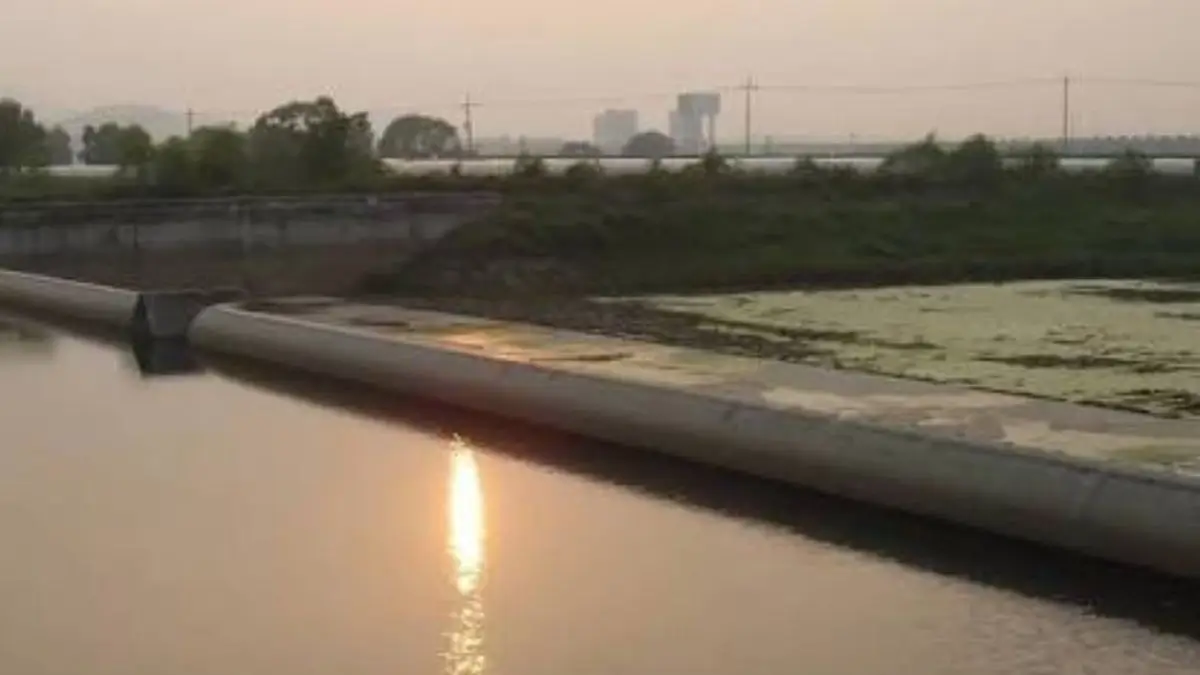
Air-filled rubber dams are flexible hydraulic structures made of specially designed rubber bladders that are anchored across rivers or canals. These rubber bladders are inflated using air or water whenever water storage is required. During heavy rainfall or floods, the structures can be deflated quickly, allowing excess water and silt to pass naturally through the river channel.
Unlike conventional concrete dams, rubber dams are economical, require less construction time, and are easier to operate. Their flexibility makes them highly suitable for rivers where water flow changes significantly across seasons.
Key Features of Gujarat’s Rubber Dam Projects
The first project, known as the Rajvasana Rubber Dam, is being constructed across the Heran River in Chhota Udepur district at a cost of over ₹82 crore. The project is designed to increase the storage capacity of the existing weir to nearly 3.5 million cubic metres (MCM) of water and provide irrigation benefits to approximately 3,420 hectares of agricultural land covering 25 villages.
The second project, the Pathakwadi Rubber Dam, is being developed across the Ambika River in Tapi district at an estimated cost of around ₹79 crore. Once completed, it will provide assured irrigation to nearly 650 hectares of farmland, benefiting several nearby villages.
Advanced South Korean Technology
The dams employ specially engineered rubber bladders imported from South Korea. These rubber membranes have a thickness ranging from 18 mm to 32 mm and are designed to withstand temperatures above 50°C. The expected operational lifespan of these inflatable structures is around 30 years.
Another important technological feature is the use of SCADA (Supervisory Control and Data Acquisition) systems that automate the inflation and deflation process. This reduces manual intervention, improves operational efficiency, and enhances safety during flood situations.
Benefits for Agriculture and Water Management
The rubber dams are expected to significantly improve irrigation facilities in water-scarce regions of Gujarat. By storing more river water during dry periods, they will ensure reliable water availability for both Kharif and Rabi crops. Increased storage will also help recharge groundwater, improving drinking water availability in surrounding villages.
During monsoon seasons, the inflatable structures can be deflated, allowing floodwaters and accumulated silt to flow downstream. This reduces flood risks and minimizes sediment accumulation behind the dam, thereby extending the structure’s efficiency and lifespan.
Importance for Government Exam Aspirants
This initiative highlights India’s increasing emphasis on climate-resilient infrastructure and modern water conservation technologies. Questions related to rubber dams, SCADA systems, irrigation infrastructure, groundwater recharge, and sustainable water management frequently appear in UPSC, State PSC, SSC, Banking, Railways, Defence, and other government recruitment examinations.
The project also reflects India’s growing use of international technology partnerships to strengthen agricultural infrastructure and improve rural livelihoods.
Conclusion
Gujarat’s first air-filled rubber dam projects demonstrate how innovative engineering can address multiple challenges simultaneously, including irrigation shortages, groundwater depletion, flood management, and climate resilience. The adoption of South Korean technology represents a forward-looking approach toward sustainable development and efficient water resource management. If successfully implemented, these projects could serve as a model for other Indian states facing similar water management challenges.

Why This News is Important
Strengthening India’s Water Security
Water scarcity remains one of India’s biggest developmental challenges. Gujarat’s adoption of inflatable rubber dam technology introduces an innovative and sustainable solution for conserving river water while ensuring year-round irrigation. The project supports national efforts toward efficient water management and climate adaptation.
Relevance for Competitive Examinations
The topic combines multiple syllabus areas, including geography, environment, agriculture, disaster management, science and technology, and infrastructure development. Students preparing for UPSC, State PSCs, SSC, Banking, Railways, Defence, and Teaching examinations should understand the working mechanism of rubber dams, their advantages over conventional dams, and their role in sustainable development.
Promoting International Technological Collaboration
The project showcases India’s willingness to adopt globally proven engineering technologies. The use of South Korean rubber bladder technology and automated SCADA systems demonstrates how international cooperation can improve domestic infrastructure and resource management.
Historical Context
Evolution of Water Conservation in India
India has traditionally relied on tanks, ponds, canals, reservoirs, barrages, and check dams to store and distribute water. Over the years, increasing water demand, urbanization, climate variability, and groundwater depletion have encouraged governments to adopt more advanced water conservation technologies.
Development of Rubber Dam Technology
Rubber dams were first developed internationally during the mid-20th century and have since been widely adopted in countries such as Japan, South Korea, China, and the United States. These structures are particularly useful in regions where permanent concrete dams are technically difficult or economically expensive.
India has gradually started experimenting with inflatable rubber dam technology for river regulation, irrigation improvement, and flood control. Gujarat’s latest initiative marks another important milestone in modernizing India’s water infrastructure.
Key Takeaways from Gujarat’s First Air-Filled Rubber Dam Project
| S. No. | Key Takeaway |
|---|---|
| 1 | Gujarat is constructing its first two air-filled rubber dams using South Korean rubber bladder technology. |
| 2 | The dams are located on the Heran River (Chhota Udepur) and Ambika River (Tapi). |
| 3 | The projects involve an investment exceeding ₹162 crore and aim to improve irrigation, groundwater recharge, and flood control. |
| 4 | The dams use SCADA-based automation for efficient inflation and deflation, reducing manual operation. |
| 5 | The initiative is expected to become a model for sustainable water management and climate-resilient infrastructure in India. |
FAQs: Frequently Asked Questions
1. What are air-filled rubber dams?
Air-filled rubber dams are inflatable hydraulic structures made of reinforced rubber bladders that are installed across rivers or canals. They can be inflated to store water and deflated during floods to allow excess water and sediment to pass through.
2. Which state has constructed India’s first air-filled rubber dams using South Korean technology?
Gujarat has constructed India’s first air-filled rubber dams using advanced South Korean technology.
3. On which rivers are Gujarat’s first rubber dams being constructed?
The dams are being constructed on:
- Heran River in Chhota Udepur district
- Ambika River in Tapi district
4. Which country provided the technology for Gujarat’s rubber dam project?
The technology has been adopted from South Korea, which has extensive experience in constructing inflatable rubber dams.
5. What is the total estimated cost of the two rubber dam projects?
The combined estimated cost of the projects is more than ₹162 crore.
6. What is the main objective of constructing air-filled rubber dams?
The primary objectives are:
- Water conservation
- Irrigation development
- Groundwater recharge
- Flood management
- Sustainable water resource management
7. What is SCADA technology?
SCADA (Supervisory Control and Data Acquisition) is an automated monitoring and control system that enables efficient inflation and deflation of the rubber dams, improving operational efficiency and safety.
8. How are rubber dams different from conventional concrete dams?
Rubber dams:
- Require lower construction costs.
- Can be installed faster.
- Are flexible and inflatable.
- Can be deflated during floods.
- Require less maintenance compared to many conventional structures.
9. How do rubber dams help farmers?
Rubber dams ensure a reliable supply of irrigation water, improve groundwater recharge, increase agricultural productivity, and provide water during dry seasons.
10. Why is this topic important for government examinations?
This topic is important because it covers:
Sustainable Development
Water Resource Management
Environment & Ecology
Agriculture
Science & Technology
Infrastructure Development
Disaster Management
Some Important Current Affairs Links