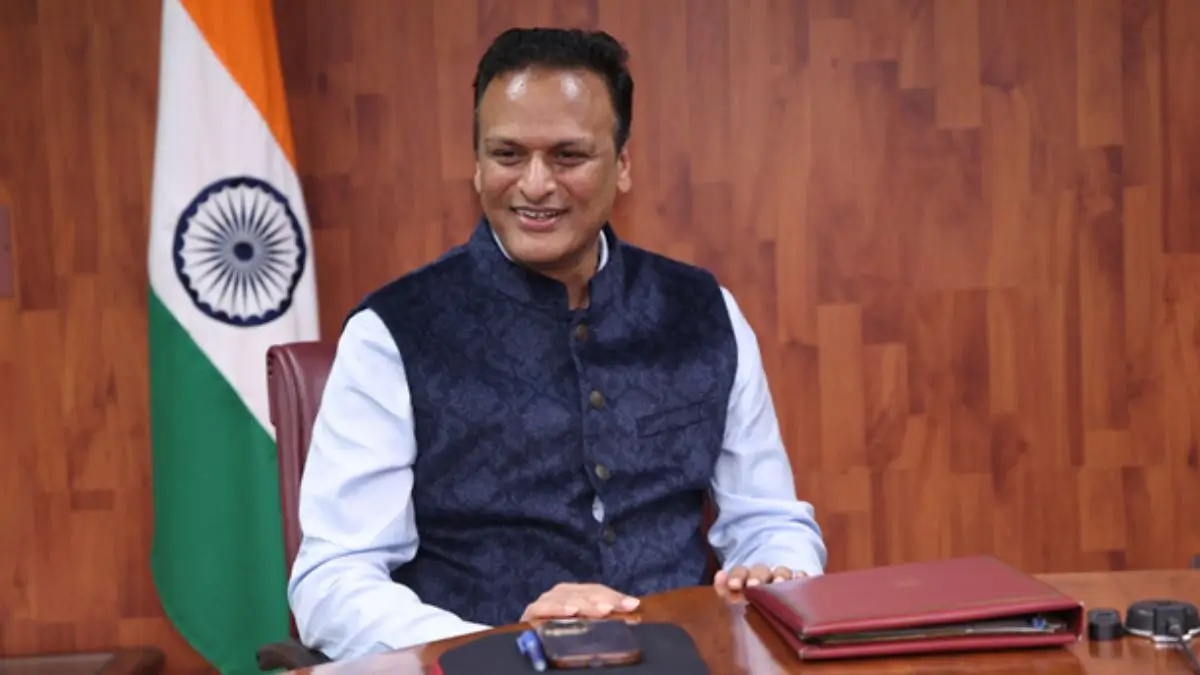







CBSE AI curriculum for Classes 3–8 introduces computational thinking, problem-solving, and foundational AI skills to make students future-ready. Learn key features and exam relevance.
CBSE Introduces AI and Computational Thinking Curriculum for Classes 3–8
The Central Board of Secondary Education (CBSE) has taken a major leap in modernising school education by formally introducing a Curriculum on Artificial Intelligence (AI) and Computational Thinking (CT) for students from Classes 3 to 8, starting from the 2026–27 academic session.
Unveiled by Union Education Minister Dharmendra Pradhan at an event in Vigyan Bhawan, New Delhi, the new curriculum aims to ensure that young learners develop a solid foundation in digital literacy, future‑ready skills and logical reasoning.
🔍 A Transformative Education Reform
Traditionally, AI education in schools was limited to a brief module in higher classes. The new framework institutionalises AI and computational thinking from Class 3 onwards — a change that underscores how early exposure to technology is being prioritised in the Indian education system.
The curriculum is backed by structured modules, teacher handbooks, and student assessment frameworks designed in collaboration with the National Council of Educational Research and Training (NCERT), ensuring age‑appropriate and pedagogically sound instruction.
🎯 Key Features of the Curriculum
- 💡 Computational Thinking (CT): Students will learn logical reasoning, pattern recognition, problem decomposition and step‑by‑step problem solving.
- 🤖 Artificial Intelligence Basics: Learners will be introduced to the fundamentals of AI and how it applies to daily life and future technologies.
- 📚 Integration Across Subjects: In primary classes, CT will be woven into subjects like mathematics and EVS through activities and games, making learning engaging.
- 🧑🏫 Hands‑On and Activity‑Based Learning: Teachers will employ practical activities, puzzles, storytelling and collaborative tasks to nurture natural curiosity and creative thinking.
- 📊 Assessment and Growth Monitoring: Students’ progress will be tracked through assessment frameworks that prioritise understanding and application over rote learning.
📈 Driving Future‑Ready Skills
The new curriculum places emphasis on digital citizenship, problem‑solving, and innovation mindset, which are crucial competencies in an increasingly automated and data‑driven world. By introducing AI earlier, the initiative seeks to prepare students not just for exams but for future careers in technology, research and industry.
The initiative aligns with the broader “AI for Education, AI in Education” vision under the National Education Policy 2020, indicating a long‑term commitment to equipping learners with skills relevant to the 21st century.

📌 Why This News Is Important for Competitive Exams
🌐 1. Aligns With National Education Priorities
This move reflects the Indian government’s commitment to digital transformation in education, in line with the National Education Policy 2020 (NEP 2020) which emphasises integrating 21st century skills into schooling. Understanding this reform helps candidates explain how policy frameworks shape educational outcomes — a likely topic in exams like UPSC, state PSCs, and education‑related posts.
🧠 2. Focus on Future Skills
For aspirants preparing for exams that include General Studies / Education sections (such as teaching, bank PO, SSC, Railways), this news represents a shift from traditional rote learning toward logical reasoning, computational thinking, and analytical skills beginning at the school level.
🏫 3. Implications for Tech and Society
Questions in exams may ask about the role of AI in education, early tech literacy, or how nations prepare students for the Fourth Industrial Revolution — all themes highlighted by this curriculum update.
🎓 4. Policy Implementation Understanding
This topic sharpens your grasp of how educational policies are conceptualised, designed, and implemented — useful for essay writing and interview discussions in civil services and other competitive exams.
📊 5. Enhances General Knowledge
This development is high‑impact current affairs content as it combines education, technology policy, digital readiness, and national strategy, making it valuable for Prelims and Mains alike.
📜 Historical Context – Evolution of AI Education in India
The CBSE’s latest curriculum is not an isolated initiative but a part of a progressive education reform movement in India. Before this update:
- AI was introduced as a 15‑hour optional module for Classes 6–8 and an optional subject in Classes 9–12 under earlier frameworks.
- The National Education Policy 2020 emphasised 21st century skills, recommending integration of computing, AI and digital literacy at all levels of school education.
- Earlier, AI was sporadically taught in senior classes, but there was no structured, standardised framework across schools.
By institutionalising AI and CT from Class 3, the CBSE has expanded this vision, aiming to build a generation that isn’t just tech‑aware but tech‑competent. This reflects a global trend where educational systems are adapting to the demands of a digital economy and job market.
📌 Key Takeaways from “CBSE Introduces AI Curriculum for Classes 3–8”
| S. No. | Key Takeaway |
|---|---|
| 1 | CBSE has introduced a Computational Thinking and AI curriculum for Classes 3–8 from academic year 2026–27. |
| 2 | The curriculum was launched by Union Education Minister Dharmendra Pradhan in New Delhi. |
| 3 | It focuses on digital literacy, logical reasoning, problem‑solving, and foundational AI skills. |
| 4 | The curriculum was developed in collaboration with NCERT and includes structured modules and assessment frameworks. |
| 5 | The initiative aligns with the National Education Policy 2020 and aims to make students future‑ready for technological advancements. |
FAQs – Frequently Asked Questions
Q1. What new curriculum has CBSE introduced for Classes 3–8?
A: CBSE has introduced a curriculum on Artificial Intelligence (AI) and Computational Thinking (CT) for students from Classes 3 to 8 starting from the 2026–27 academic session.
Q2. Who launched the CBSE AI and Computational Thinking curriculum?
A: The curriculum was launched by Union Education Minister Dharmendra Pradhan at Vigyan Bhawan, New Delhi.
Q3. Which organization collaborated with CBSE for designing the curriculum?
A: The curriculum was developed in collaboration with NCERT (National Council of Educational Research and Training) to ensure age‑appropriate and pedagogically sound modules.
Q4. What are the key skills students will learn from this curriculum?
A: Students will develop skills in logical reasoning, problem solving, pattern recognition, basic AI concepts, and computational thinking, making them future-ready.
Q5. Why is this curriculum significant for competitive exams?
A: This initiative reflects India’s NEP 2020 goals, the integration of 21st-century skills, and early exposure to AI, making it important for exams like UPSC, State PSCs, Banking, Teaching, and other civil service exams.
Q6. How will AI and CT be integrated into lower classes?
A: In primary classes, CT will be integrated through subjects like Mathematics and EVS, using activity-based learning, games, puzzles, and collaborative exercises.
Q7. From which academic session will this curriculum be implemented?
A: The CBSE AI and Computational Thinking curriculum will be implemented from 2026–27.
Some Important Current Affairs Links