









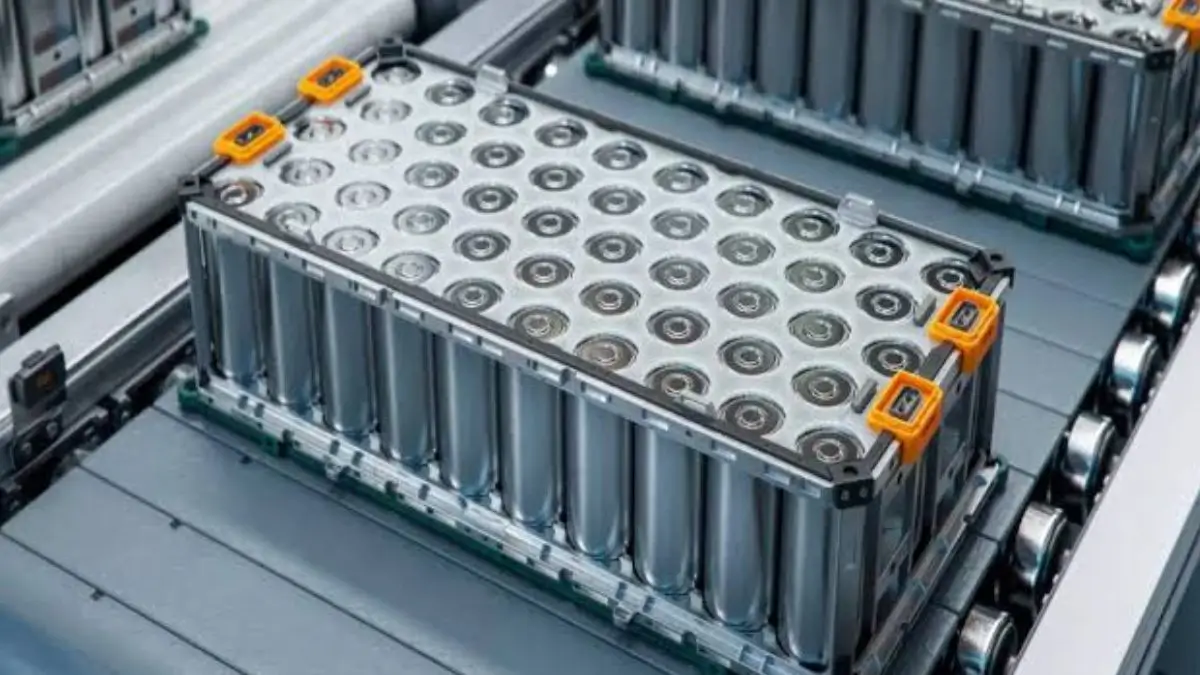
ACC battery manufacturing under PLI scheme is a major government initiative to establish 10 GWh battery capacity in India. Learn about the PLI ACC Battery Scheme, objectives, importance, renewable energy impact and exam-relevant facts.
Government Launches Global Tender for Advanced Battery Manufacturing
The Government of India has invited global bids to establish 10 Gigawatt-hours (GWh) of Advanced Chemistry Cell (ACC) battery manufacturing capacity under the Production Linked Incentive (PLI) Scheme. The Ministry of Heavy Industries released the Request for Proposal (RFP) to select companies that will establish giga-scale battery manufacturing facilities in India. The newly announced capacity is specifically earmarked for Grid-Scale Stationary Storage Systems (GSSS), which are essential for storing electricity generated from renewable energy sources such as solar and wind.
Objective of the PLI ACC Battery Scheme
The National Programme on ACC Battery Storage was approved by the Union Cabinet in May 2021 with a total financial outlay of ₹18,100 crore. The programme aims to develop 50 GWh of domestic ACC battery manufacturing capacity. Out of this target, 40 GWh has already been allocated to domestic manufacturers, while the remaining 10 GWh is now being offered through global competitive bidding.
Importance of Advanced Chemistry Cell Batteries
Advanced Chemistry Cell batteries are next-generation rechargeable batteries used in electric vehicles (EVs), renewable energy storage, consumer electronics and industrial applications. Unlike conventional batteries, ACC batteries provide higher energy density, longer life cycles, faster charging capabilities and improved efficiency. These features make them critical for India’s transition towards clean energy and sustainable transportation.
Boosting India’s Renewable Energy Mission
As India rapidly expands its renewable energy capacity, reliable energy storage has become essential because solar and wind power are intermittent. Grid-scale battery storage helps stabilize electricity supply by storing excess renewable energy and releasing it during periods of high demand or low generation. The additional 10 GWh manufacturing capacity will strengthen India’s renewable energy infrastructure and improve power grid reliability.
Reducing Import Dependence
India currently imports a significant portion of advanced battery cells. Developing domestic ACC manufacturing will reduce import dependence, improve energy security and strengthen the country’s supply chain for clean energy technologies. The initiative also aligns with the Government’s vision of Atmanirbhar Bharat by encouraging indigenous manufacturing and technological innovation.
Investment and Employment Opportunities
The global tender is expected to attract both domestic and international companies, bringing substantial investments into India’s battery manufacturing sector. New giga-scale manufacturing plants will create thousands of direct and indirect employment opportunities while promoting research, development and technology transfer.
Transparent Selection Process
The Ministry of Heavy Industries has adopted a transparent two-stage selection process under the Quality and Cost Based Selection (QCBS) mechanism through the Central Public Procurement Portal (CPPP). Interested companies must submit their bids online according to the prescribed timeline.
Relevance for Competitive Examinations
This initiative is highly significant for competitive examinations because it covers multiple syllabus areas including government schemes, renewable energy, clean technology, industrial policy, energy security, Make in India, Atmanirbhar Bharat and sustainable development. Questions related to the PLI Scheme, ACC batteries, renewable energy storage and the Ministry of Heavy Industries are likely to appear in UPSC, State PCS, Banking, SSC, Railways and other government recruitment examinations.

B) Why this News is Important
Supports India’s Green Energy Transition
The invitation for global bids represents another major step towards achieving India’s clean energy goals. Large-scale battery storage is essential for integrating renewable energy into the national electricity grid and ensuring uninterrupted power supply despite fluctuations in solar and wind generation.
Strengthens Domestic Manufacturing
The initiative will promote domestic manufacturing of high-value battery technologies, reduce dependence on imported battery cells and strengthen India’s industrial competitiveness. This aligns with the broader objectives of the Make in India and Atmanirbhar Bharat initiatives.
Important for Government Examinations
The news combines several important exam topics including:
- Production Linked Incentive (PLI) Scheme
- Renewable Energy
- Advanced Chemistry Cell (ACC) Batteries
- Ministry of Heavy Industries
- Energy Security
- Grid-Scale Energy Storage
- Atmanirbhar Bharat
- Sustainable Development
Government examinations frequently ask questions related to flagship schemes, industrial policies and renewable energy initiatives, making this development highly relevant for aspirants.
C) Historical Context
Origin of the PLI ACC Battery Scheme
The Government of India approved the National Programme on Advanced Chemistry Cell (ACC) Battery Storage in May 2021 with a budgetary allocation of ₹18,100 crore. The objective was to establish 50 GWh of domestic manufacturing capacity for advanced battery cells and create a globally competitive battery ecosystem in India.
India’s Growing Focus on Battery Manufacturing
India’s rapid expansion of electric mobility and renewable energy has significantly increased the demand for advanced battery technologies. Earlier, the country relied heavily on imported battery cells. Through the PLI Scheme, the government aims to attract investments, promote technological innovation, generate employment and establish India as a global manufacturing hub for advanced batteries.
D) Key Takeaways from “10 GWh ACC Battery Manufacturing Global Tender”
| S. No. | Key Takeaway |
|---|---|
| 1 | The Ministry of Heavy Industries has invited global bids for 10 GWh ACC battery manufacturing capacity. |
| 2 | The capacity is reserved for Grid-Scale Stationary Storage Systems under the PLI ACC Scheme. |
| 3 | The National Programme on ACC Battery Storage has a total outlay of ₹18,100 crore. |
| 4 | The scheme targets 50 GWh of domestic ACC battery manufacturing, of which 40 GWh has already been allocated. |
| 5 | The initiative aims to strengthen renewable energy integration, reduce battery imports and promote Atmanirbhar Bharat. |
Frequently Asked Questions (FAQs)
1. What is the latest development regarding ACC battery manufacturing in India?
The Government of India has invited global bids for setting up 10 GWh Advanced Chemistry Cell (ACC) battery manufacturing capacity under the Production Linked Incentive (PLI) Scheme. The capacity is aimed at developing grid-scale stationary energy storage systems.
2. What is the objective of the PLI Scheme for ACC Battery Storage?
The main objective of the PLI Scheme for ACC Battery Storage is to establish domestic manufacturing capabilities for advanced battery cells, reduce import dependency, attract investment, create employment opportunities and develop India as a global hub for battery manufacturing.
3. What is the total target capacity under the National Programme on ACC Battery Storage?
The National Programme on Advanced Chemistry Cell (ACC) Battery Storage aims to create 50 GWh of domestic ACC battery manufacturing capacity in India.
4. What is the financial outlay of the ACC Battery Storage Programme?
The Union Government approved the ACC Battery Storage Programme in 2021 with a total financial allocation of ₹18,100 crore.
5. Which ministry is responsible for implementing the ACC Battery PLI Scheme?
The Ministry of Heavy Industries is responsible for implementing the PLI Scheme for Advanced Chemistry Cell Battery Storage.
6. What are Advanced Chemistry Cell (ACC) batteries?
Advanced Chemistry Cell batteries are next-generation rechargeable batteries with high energy density, longer lifespan and improved efficiency. They are used in electric vehicles, renewable energy storage systems, consumer electronics and industrial applications.
7. Why are ACC batteries important for renewable energy?
ACC batteries help store electricity generated from renewable sources like solar and wind. Since renewable energy production depends on weather conditions, battery storage ensures a stable and reliable power supply.
8. What is the significance of Grid-Scale Stationary Storage Systems (GSSS)?
Grid-Scale Stationary Storage Systems help store large amounts of electricity and supply it during peak demand periods. They improve grid stability and support renewable energy integration.
9. What is the Production Linked Incentive (PLI) Scheme?
The Production Linked Incentive (PLI) Scheme is a government initiative that provides financial incentives to companies based on their production performance. It aims to promote domestic manufacturing, increase exports and attract investments.
10. How will ACC battery manufacturing support Atmanirbhar Bharat?
Domestic ACC battery manufacturing will reduce India’s dependence on imported battery cells, strengthen supply chains, encourage innovation and support India’s goal of becoming self-reliant in clean energy technologies.
Some Important Current Affairs Links