






Sudden Glacier Collapse Triggered a Massive Flood
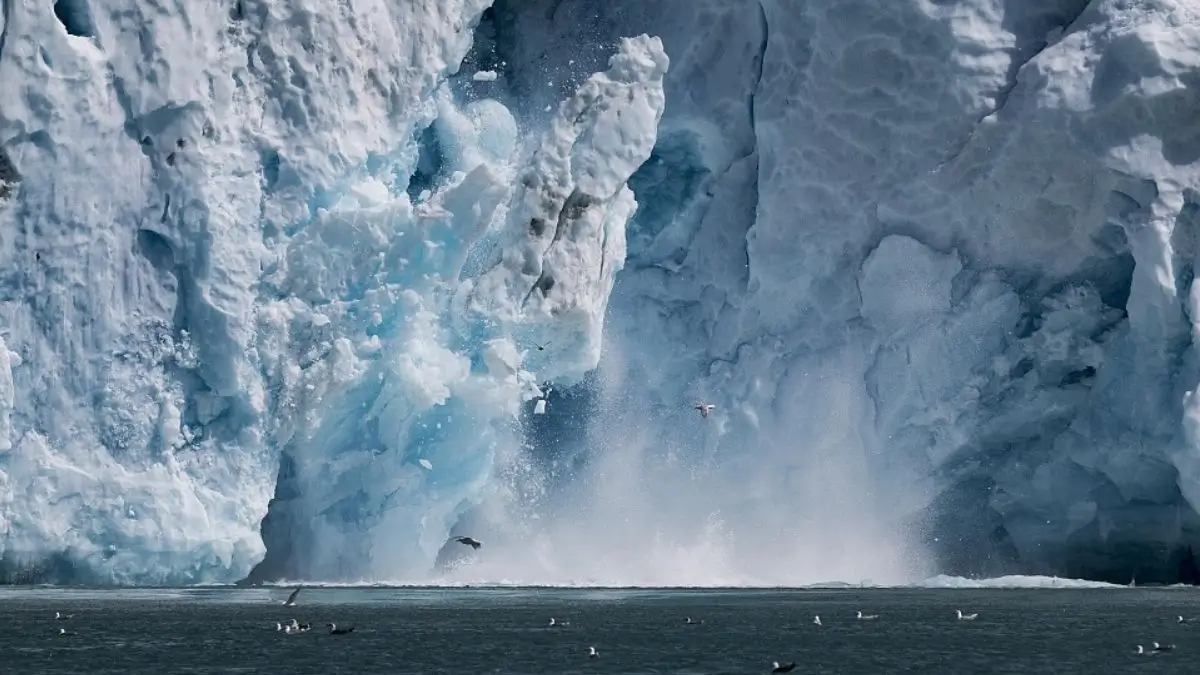
A devastating flash flood struck central Nepal on August 26, 2026, after a major glacier collapse in the Himalayan region generated a powerful surge of water, ice, rocks and debris. The disaster affected communities along rivers in the Nepal-China border region and caused extensive destruction to homes, roads, bridges and other infrastructure. Preliminary scientific investigations indicate that the event was associated with a large ice-rock collapse rather than a conventional earthquake.
Glacier Collapse and the Lhende Khola River
According to preliminary assessments, a substantial portion of a glacier detached from the mountain and fell into the Lhende Khola, a tributary of the Bhote Koshi River. The falling mass displaced water and carried large quantities of sediment and boulders downstream. Researchers are also examining whether the debris temporarily blocked the river, allowing water to accumulate before suddenly breaking through and intensifying the flood.
Initial Earthquake Theory Was Revised
The disaster was initially associated with a magnitude 4.4 seismic event. However, subsequent analysis by the U.S. Geological Survey indicated that the seismic signal was generated by the glacier collapse and associated debris flow. The collapse itself produced an event equivalent to approximately magnitude 5.2, demonstrating the enormous energy released when a large mass of ice and rock moved rapidly down the mountain.
Rapid Rise in River Water Levels
One of the most dangerous features of the disaster was the speed at which the flood developed. Researchers reported that water levels in affected rivers rose by around 7–9 metres within approximately 30 minutes. Such an abrupt rise leaves communities with extremely little time to evacuate and illustrates why early-warning systems are particularly important in steep Himalayan valleys.
Role of Rising Temperatures
Scientists have cautioned against attributing the individual collapse solely to climate change because the immediate trigger is still being investigated. However, rising temperatures are changing the Himalayan cryosphere by accelerating glacier melt, affecting snow cover and weakening permafrost and ice-rock connections. Unusually high temperatures before the incident may have weakened the snow and ice structure around the collapse zone.
Why the Himalayas Are Increasingly Vulnerable
The Hindu Kush Himalaya contains more than 63,000 glaciers that feed major Asian river systems and support the water, food, energy and livelihood security of billions of people. Glacier retreat can enlarge glacial lakes, expose previously ice-supported rock surfaces and increase the possibility of avalanches, landslides, debris flows and sudden floods.
Need for Better Disaster Preparedness
The Nepal disaster highlights the importance of glacier monitoring, satellite observation, river-level surveillance and cross-border disaster communication. Experts have stressed that Himalayan communities may sometimes have only minutes to respond to cascading hazards. Strengthening early-warning systems and improving coordination between countries sharing the Himalayan river systems will therefore be essential for reducing future losses.

Why This News Is Important
Relevance to Geography and Environment
The Himalayan glacier collapse is important for competitive examinations because it connects physical geography, climate change, disaster management and environmental science. Questions may focus on glaciers, glacial lakes, flash floods, permafrost, the Hindu Kush Himalaya and the causes of increasing cryospheric hazards.
Understanding Compound Disasters
The incident demonstrates how one natural process can trigger a chain of hazards. A glacier collapse can generate an avalanche, displace water, block a river, release sediment and ultimately produce a destructive flash flood. Understanding this sequence is particularly relevant to questions on disaster management and geomorphological processes.
Climate Change Connection
The event also highlights the changing risks faced by mountain ecosystems under global warming. Scientists distinguish between the immediate trigger of a particular collapse and the broader climatic conditions that may increase instability. Rising temperatures are contributing to glacier retreat, permafrost thaw and changes in meltwater patterns across the Himalayas.
Importance for India and South Asia
The Himalayan region is directly connected with the water security of South Asia. Major rivers originating in the Himalayas support agriculture, drinking water, hydropower and ecosystems across several countries. Therefore, glacier-related disasters in Nepal and the wider Himalayan region have significance beyond national boundaries.
Disaster Management Lessons
The disaster reinforces the need for early-warning systems, hazard mapping, remote sensing, evacuation planning and regional cooperation. For civil service examinations, the incident can be linked with the Sendai Framework for Disaster Risk Reduction, climate adaptation and resilient infrastructure.
Historical Context: Himalayan Glacier and Flood Hazards
Long-Term Glacier Retreat
The Himalayas have experienced significant changes in glacier conditions as global temperatures rise. Scientific assessments indicate that glacier loss has accelerated in the Hindu Kush Himalaya, while retreating ice can contribute to the formation and expansion of glacial lakes. These changes can create new risks for downstream settlements and infrastructure.
Previous Himalayan Disasters
Nepal and the wider Himalayan region have experienced several glacier-, avalanche- and landslide-related disasters. The 2015 earthquake in Nepal triggered a major avalanche in the Langtang region, while a glacial lake-related flood affected the Bhote Koshi area in 2025. Such events demonstrate the region’s exposure to multiple interacting mountain hazards.
Glacial Lake Outburst Floods
A Glacial Lake Outburst Flood, or GLOF, occurs when water stored in a glacial lake is suddenly released, often because of failure of an ice or moraine dam, an avalanche or another disturbance. GLOFs can produce extremely rapid downstream flooding and are a major concern in the Himalayas.
Climate Change and Mountain Stability
Climate change does not necessarily provide the immediate trigger for every glacier collapse. However, warming can alter the physical conditions that maintain glacier and mountain stability. Glacier retreat, permafrost thaw, changing precipitation and increased meltwater can collectively make some mountain environments more vulnerable to cascading hazards.
Key Takeaways from Himalayan Glacier Collapse and Nepal Flash Floods
| S. No. | Key Takeaway |
|---|---|
| 1 | A major glacier and ice-rock collapse in the Himalayas triggered the catastrophic flash flooding in central Nepal in August 2026. |
| 2 | The collapse affected the Lhende Khola, a tributary of the Bhote Koshi River, sending water, ice, rocks and debris downstream. |
| 3 | The event was initially associated with an earthquake, but seismic analysis indicated that the signal was generated by the glacier collapse and debris flow. |
| 4 | River levels reportedly rose by about 7–9 metres within 30 minutes, highlighting the extremely rapid nature of Himalayan flash floods. |
| 5 | The disaster underlines the importance of glacier monitoring, climate adaptation, early-warning systems and cross-border disaster-management cooperation. |
FAQs: Himalayan Glacier Collapse and Nepal Flash Floods
1. What caused the flash floods in central Nepal in August 2026?
The flash floods were triggered by a major glacier and ice-rock collapse in the Himalayan region. The collapse sent water, ice, rocks and debris into the Lhende Khola, intensifying downstream flooding.
2. Which river was directly affected by the glacier collapse?
The collapse affected the Lhende Khola, which is a tributary of the Bhote Koshi River.
3. What is a Glacial Lake Outburst Flood (GLOF)?
A GLOF is a sudden release of water from a glacial lake, often caused by the failure of an ice or moraine dam, an avalanche or another disturbance. Such floods can travel rapidly downstream and cause extensive destruction.
4. Was an earthquake responsible for the Nepal flash flood?
Initial reports associated the event with a magnitude 4.4 earthquake. However, subsequent seismic analysis indicated that the recorded seismic signal was generated by the glacier collapse and associated debris movement.
5. How quickly did the river water level rise?
The affected river levels reportedly increased by approximately 7–9 metres within about 30 minutes, demonstrating the extremely rapid nature of the event.
6. How is climate change connected with Himalayan glacier hazards?
Rising temperatures are contributing to glacier retreat, permafrost degradation and changes in snow and ice conditions. These processes can increase instability in some Himalayan environments, although climate change cannot automatically be identified as the direct trigger of every individual glacier collapse.
7. Why are Himalayan glaciers important for South Asia?
Himalayan glaciers contribute to river systems that provide water for agriculture, drinking, hydropower and ecosystems across several South Asian countries.
8. What is permafrost?
Permafrost is ground that remains frozen for at least two consecutive years. In mountain regions, warming and thawing permafrost can weaken slopes and contribute to landslides and other hazards.
9. What are cascading hazards in mountainous regions?
Cascading hazards occur when one natural event triggers additional hazards. For example, a glacier collapse can cause an avalanche or debris flow, obstruct a river and subsequently produce a sudden flood.
10. What disaster-management measures can reduce risks from Himalayan floods?
Important measures include satellite-based glacier monitoring, early-warning systems, river-level sensors, hazard mapping, emergency communication networks, evacuation planning and cooperation among countries sharing Himalayan river systems.
Some Important Current Affairs Links