









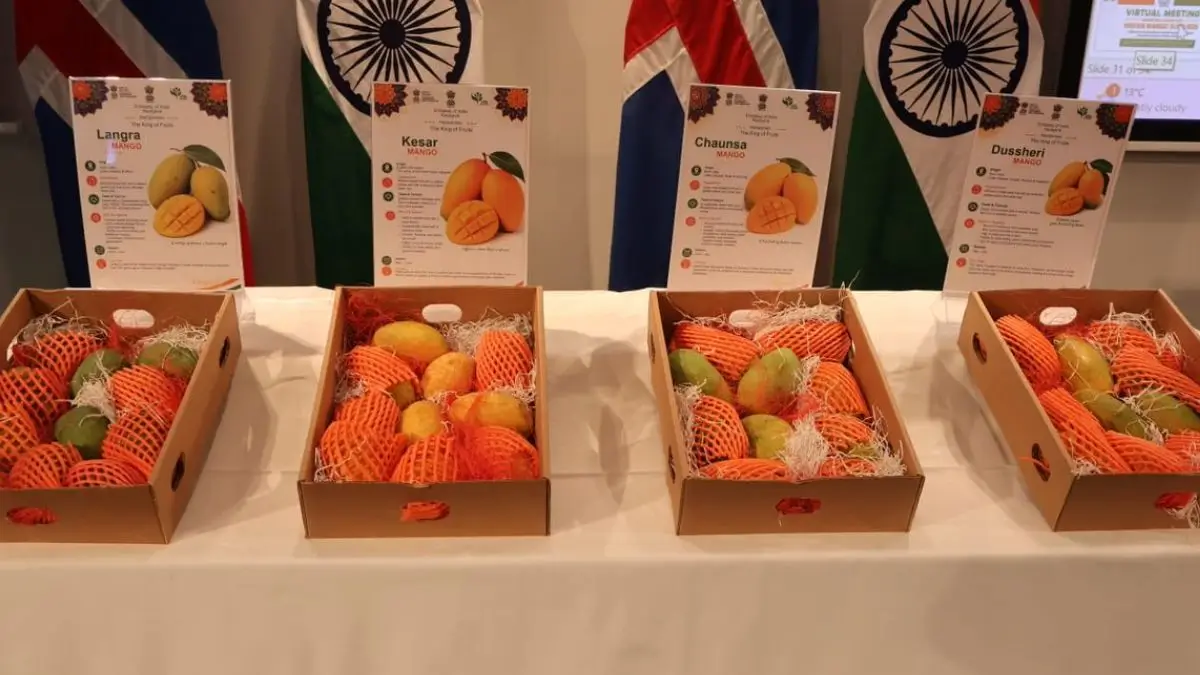
India premium mango exports Iceland gained momentum as APEDA and the Embassy of India organized the first-ever mango promotion event showcasing Dasheri, Chausa, Langra, and Kesar varieties. Learn its significance for UPSC, SSC, Banking, Railways, Defence, and State PSC exams.
India Expands Agricultural Diplomacy with Mango Promotion in Iceland
India has taken a significant step toward expanding its agricultural exports by organizing its first-ever Indian Mango Promotion Events in Iceland. The initiative was jointly conducted by the Embassy of India in Reykjavik and the Agricultural and Processed Food Products Export Development Authority (APEDA). The promotional events were held in Reykjavik and Akureyri, introducing Icelandic consumers and businesses to India’s world-famous premium mangoes. The initiative reflects India’s broader strategy of diversifying export destinations and strengthening its agri-export sector.
Premium Indian Mango Varieties on Display
The promotion showcased four premium Indian mango varieties—Dasheri, Chausa, Langra, and Kesar. These varieties are renowned for their unique flavor, aroma, sweetness, and quality. During the events, participants experienced mango tasting sessions and learned about India’s vast horticultural diversity.
India is the world’s largest producer of mangoes, contributing nearly half of global mango production. However, only a small percentage of its production is exported. By promoting premium varieties in emerging markets such as Iceland, India aims to improve export earnings while creating new opportunities for farmers and exporters.
Role of APEDA in Boosting Agricultural Exports
The Agricultural and Processed Food Products Export Development Authority (APEDA), functioning under the Ministry of Commerce and Industry, plays a crucial role in promoting India’s agricultural and processed food exports. APEDA supports exporters by facilitating quality certification, market access, branding, and participation in international trade fairs.
Its collaboration with the Embassy of India in Iceland demonstrates India’s coordinated approach toward agricultural diplomacy and export promotion. Similar promotional campaigns have previously been organized in the UAE, Europe, and other international markets to increase awareness of Indian agricultural products.
Strengthening India-Iceland Trade Relations
The event also highlighted the growing economic relationship between India and Iceland. Officials from both countries discussed opportunities for expanding bilateral agricultural trade.
Representatives from Iceland emphasized that the India-European Free Trade Association (EFTA) Trade and Economic Partnership Agreement (TEPA) could facilitate greater imports of Indian mangoes into Iceland. Increased market access would benefit Indian exporters while providing Icelandic consumers with high-quality tropical fruits.
Importance of Export Market Diversification
India has traditionally exported mangoes to countries such as the United Arab Emirates, the United States, the United Kingdom, Saudi Arabia, Bangladesh, and Nepal. However, fluctuations in demand and trade barriers have encouraged India to explore premium niche markets in Europe and other regions.
Promotional campaigns in countries like Iceland help diversify export destinations, reduce dependence on traditional markets, and improve resilience against global market uncertainties. The strategy also aligns with India’s objective of increasing agricultural exports and farmers’ incomes.
Economic Benefits for Farmers
Expanding exports of premium mangoes can significantly benefit Indian farmers by increasing demand for high-quality produce. Better international market access encourages adoption of improved cultivation practices, quality standards, and post-harvest management techniques.
Higher export realization also supports farmer incomes, strengthens rural livelihoods, and contributes to India’s agricultural economy. Government agencies continue to encourage Farmer Producer Organizations (FPOs), exporters, and agribusinesses to participate in international promotional activities.
India’s Growing Agri-Export Strategy
India has increasingly focused on promoting high-value agricultural products globally. Along with mangoes, products such as grapes, pomegranates, bananas, basmati rice, spices, tea, coffee, and processed foods are receiving greater international promotion.
Government initiatives emphasize quality certification, traceability, cold-chain infrastructure, and branding to improve India’s competitiveness in global agricultural markets.
Conclusion
The first-ever Indian Mango Promotion Events in Iceland represent an important milestone in India’s agricultural export strategy. By showcasing premium mango varieties and strengthening trade partnerships, India is expanding its presence in new international markets. Such initiatives not only enhance export opportunities but also contribute to higher farmer incomes, improved agricultural branding, and stronger bilateral economic relations. For government examination aspirants, this development is important from the perspectives of agriculture, international trade, exports, APEDA, economic diplomacy, and India’s efforts to diversify global markets.

Why This News is Important
Important from the Economy and Agriculture Perspective
This development highlights India’s efforts to increase agricultural exports and improve farmers’ income. Agriculture remains one of the largest contributors to employment in India, and expanding exports of premium agricultural products strengthens the rural economy.
Important for International Relations
The promotion event reflects India’s use of agricultural diplomacy to strengthen bilateral ties with Iceland. Trade promotion initiatives help deepen economic cooperation and open new opportunities under agreements such as the India-EFTA Trade and Economic Partnership Agreement (TEPA).
Important for Government Exam Preparation
Questions related to APEDA, India’s agricultural exports, horticulture, export promotion, free trade agreements, and international organizations are frequently asked in UPSC, State PSC, SSC, Banking, NABARD, and Agriculture-related examinations. Aspirants should remember India’s position as the world’s largest mango producer and the role of APEDA in export promotion.
Important for Economic Diversification
By targeting premium markets instead of depending only on traditional buyers, India is reducing export risks and increasing competitiveness. This strategy supports long-term export growth and contributes to India’s vision of becoming a leading global supplier of high-quality agricultural products.
Historical Context
India’s Leadership in Mango Production
India has cultivated mangoes for more than 4,000 years and is considered the birthplace of several globally famous mango varieties. The country produces nearly 45% of the world’s mangoes, with major producing states including Uttar Pradesh, Andhra Pradesh, Karnataka, Bihar, Gujarat, Maharashtra, Telangana, and West Bengal.
Establishment of APEDA
APEDA was established in 1986 under the APEDA Act to promote exports of agricultural and processed food products. Since its formation, the organization has played a key role in improving quality standards, export infrastructure, branding, and international market access for Indian agricultural products.
India’s Agricultural Export Policy
In recent years, India has adopted a focused strategy to diversify agricultural export destinations, improve logistics, strengthen quality certification, and promote value-added agricultural products through trade fairs and international promotional campaigns.
Key Takeaways from This News
| S. No. | Key Takeaway |
|---|---|
| 1 | India organized its first-ever Indian Mango Promotion Events in Iceland. |
| 2 | The initiative was jointly organized by the Embassy of India in Reykjavik and APEDA. |
| 3 | Four premium varieties—Dasheri, Chausa, Langra, and Kesar—were showcased. |
| 4 | The initiative aims to expand India’s agricultural exports and strengthen bilateral trade with Iceland. |
| 5 | The event supports India’s strategy of diversifying export markets and increasing farmers’ income through high-value agricultural exports. |
Frequently Asked Questions (FAQs)
1. Why did India organize its first-ever Mango Promotion Events in Iceland?
India organized the promotion events to introduce premium Indian mangoes to Icelandic consumers and businesses, expand agricultural exports, and strengthen bilateral trade relations.
2. Which organization conducted the mango promotion events?
The events were jointly organized by the Embassy of India in Reykjavik and the Agricultural and Processed Food Products Export Development Authority (APEDA).
3. What is APEDA?
APEDA (Agricultural and Processed Food Products Export Development Authority) is a statutory body under the Ministry of Commerce and Industry that promotes the export of agricultural and processed food products from India.
4. Which premium Indian mango varieties were showcased in Iceland?
The four premium mango varieties showcased were:
- Dasheri
- Chausa
- Langra
- Kesar
5. Why are Indian mango exports important?
Indian mango exports help increase farmers’ income, diversify export markets, earn foreign exchange, and strengthen India’s position in global agricultural trade.
6. Which ministry does APEDA function under?
APEDA functions under the Ministry of Commerce and Industry, Government of India.
7. Is India the largest producer of mangoes in the world?
Yes. India is the world’s largest producer of mangoes, contributing nearly 45% of global mango production.
8. What is the significance of the India-EFTA Trade and Economic Partnership Agreement (TEPA)?
The agreement is expected to enhance trade and investment between India and EFTA member countries, including Iceland, by improving market access and reducing trade barriers.
9. Which states are the major mango-producing states in India?
Major mango-producing states include Uttar Pradesh, Andhra Pradesh, Telangana, Karnataka, Bihar, Maharashtra, Gujarat, Tamil Nadu, and West Bengal.
10. Why is this topic important for competitive examinations?
The topic is important because it covers agriculture, horticulture, export promotion, APEDA, international trade, India-EFTA relations, economic diplomacy, and current affairs—all frequently asked in UPSC, State PSCs, SSC, Banking, Railways, Defence, and other government examinations.
Some Important Current Affairs Links