



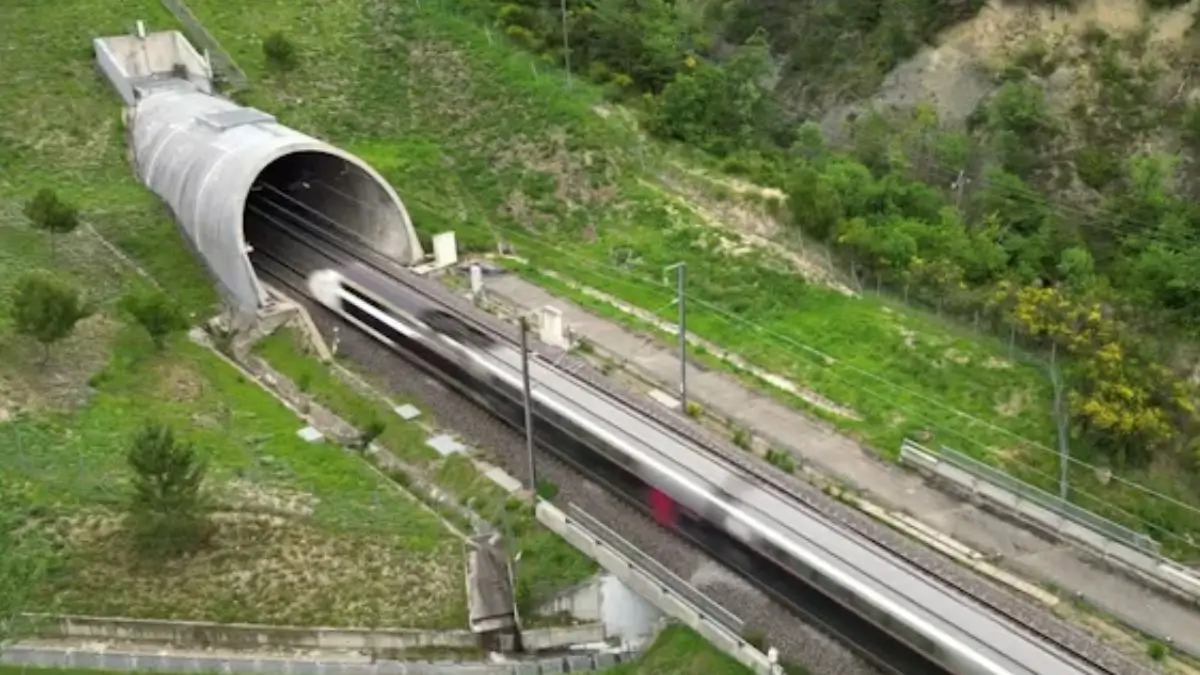
India first tunnel hood technology marks a major breakthrough in the Mumbai-Ahmedabad Bullet Train Project. Learn about tunnel hoods, their significance, benefits, NHSRCL’s role, and key facts for UPSC, SSC, Banking, Railways, Defence, and State PSC exams.
Introduction
India’s ambitious Mumbai-Ahmedabad High-Speed Rail (MAHSR) Project, commonly known as the Bullet Train Project, has achieved another significant engineering milestone with the deployment of tunnel hood technology for the first time in the country. The National High Speed Rail Corporation Limited (NHSRCL) has introduced tunnel hoods at mountain tunnels along the corridor, marking a major advancement in India’s railway infrastructure and aligning the project with global high-speed rail standards.
What Are Tunnel Hoods?
Tunnel hoods are specially designed structures installed at the entrance and exit points of railway tunnels. These cylindrical extensions contain pressure-relief openings and act as a transition zone between the open environment and the confined tunnel space. They are widely used in countries operating high-speed trains such as Japan, France, and China.
The technology is particularly important for trains traveling at speeds exceeding 300 km/h, where sudden pressure changes can create operational and environmental challenges.
Why Tunnel Hoods Are Needed
When a high-speed train enters a tunnel, it pushes a large volume of air ahead of it, similar to a piston moving inside a cylinder. This generates pressure waves that travel through the tunnel. Upon exiting, these waves can create a phenomenon known as “tunnel boom,” producing loud noise and vibrations.
Tunnel hoods help dissipate these pressure waves gradually. As a result, they significantly reduce noise pollution, improve passenger comfort, minimize structural stress on tunnels, and enhance operational safety.
Features of the Mumbai-Ahmedabad Bullet Train Corridor
The Mumbai-Ahmedabad Bullet Train corridor stretches approximately 508 kilometers and passes through Maharashtra, Gujarat, and Dadra and Nagar Haveli. The route includes seven mountain tunnels in Maharashtra and one mountain tunnel in Gujarat. Tunnel hoods are being installed at both ends of these mountain tunnels.
The project is India’s first high-speed rail corridor and is being developed with technical cooperation from Japan using Shinkansen technology. The corridor is expected to transform intercity travel by significantly reducing travel time between Mumbai and Ahmedabad.
Engineering Significance of the Innovation
The introduction of tunnel hoods demonstrates India’s growing capability to adopt advanced transportation technologies. High-speed rail systems require precise engineering because even small aerodynamic effects become significant at speeds above 300 km/h.
By incorporating tunnel hoods, engineers can better manage air pressure fluctuations and ensure smoother train operations. The innovation also reduces environmental impacts on nearby communities by lowering noise levels around tunnel exits.
Global Practices and India’s Adoption
Tunnel hood technology has been successfully used in several countries operating bullet trains. Japan’s Shinkansen network, often regarded as the benchmark for high-speed rail systems, extensively uses such structures to manage pressure waves and maintain passenger comfort.
India’s adoption of this technology highlights the country’s commitment to incorporating international best practices in large-scale infrastructure projects. The move is expected to improve the overall efficiency, safety, and sustainability of the Mumbai-Ahmedabad High-Speed Rail corridor.
Impact on India’s Transportation Future
The successful deployment of tunnel hoods is more than just a technical achievement. It reflects India’s broader vision of modernizing transportation infrastructure and developing world-class mobility solutions.
As the Bullet Train Project progresses, innovations such as tunnel hoods, undersea tunnels, and advanced track systems will help create a robust high-speed rail ecosystem. The experience gained from this project could also support future high-speed rail corridors planned across the country.
Conclusion
The deployment of India’s first tunnel hoods in the Mumbai-Ahmedabad Bullet Train Project represents a landmark achievement in railway engineering. By addressing pressure-wave effects, reducing noise pollution, and improving passenger comfort, the technology brings India closer to global high-speed rail standards. For competitive examination aspirants, this development is important as it showcases technological innovation, infrastructure modernization, and India’s progress toward advanced transportation systems.

Why This News Is Important
Importance for Infrastructure Development
The deployment of tunnel hood technology demonstrates India’s commitment to building world-class transportation infrastructure. It reflects the adoption of advanced engineering solutions that are commonly used in developed high-speed rail networks worldwide.
Relevance for Government Examinations
Questions related to major infrastructure projects, technological innovations, transportation systems, and railway modernization frequently appear in UPSC, State PSC, SSC, Railways, Banking, Defence, and other competitive examinations. The Mumbai-Ahmedabad Bullet Train Project is one of India’s most significant infrastructure initiatives and remains an important current affairs topic.
Significance for Technological Advancement
Tunnel hood technology helps control pressure waves, reduce tunnel boom effects, and improve passenger comfort. The adoption of such technology highlights India’s increasing focus on innovation-driven infrastructure development and engineering excellence.
Contribution to Sustainable Development
Reducing noise pollution and minimizing environmental impacts are key objectives of modern infrastructure projects. Tunnel hoods contribute to sustainable transport development by mitigating adverse effects on nearby communities and ecosystems.
Historical Context
Origin of India’s Bullet Train Project
The Mumbai-Ahmedabad High-Speed Rail Project is India’s first bullet train corridor. It was launched with technical and financial assistance from Japan and is based on the renowned Shinkansen high-speed rail system. The project aims to revolutionize intercity transportation by providing safe, fast, and efficient travel.
Evolution of High-Speed Rail Technology
Countries such as Japan, France, China, and Spain pioneered high-speed rail technology over the past several decades. These nations introduced innovations like aerodynamic train designs, noise-reduction systems, and tunnel hood technology to improve operational efficiency and passenger comfort.
India’s Infrastructure Modernization Journey
Over the last decade, India has invested heavily in modern transportation projects, including dedicated freight corridors, metro rail systems, semi-high-speed trains, and high-speed rail initiatives. The introduction of tunnel hoods is another step in this broader modernization effort.
Key Takeaways from This News
India Deploys First Tunnel Hoods for Mumbai-Ahmedabad Bullet Train Project
| S. No. | Key Takeaway |
|---|---|
| 1 | India has introduced tunnel hood technology for railway tunnels for the first time. |
| 2 | Tunnel hoods are being installed on the Mumbai-Ahmedabad Bullet Train corridor. |
| 3 | The technology reduces pressure waves, tunnel boom effects, noise, and vibrations. |
| 4 | The 508-km bullet train corridor includes seven mountain tunnels in Maharashtra and one in Gujarat. |
| 5 | The innovation aligns India’s high-speed rail project with international standards followed in Japan and other advanced rail networks. |
FAQs: India Deploys First Tunnel Hoods for Mumbai-Ahmedabad Bullet Train Project
1. What are tunnel hoods in railway infrastructure?
Tunnel hoods are special structures installed at the entrances and exits of railway tunnels to reduce air pressure waves generated by high-speed trains.
2. Why are tunnel hoods important for bullet trains?
They help reduce tunnel boom effects, noise pollution, vibrations, and sudden pressure changes, thereby improving passenger comfort and operational safety.
3. Which project has introduced tunnel hoods in India for the first time?
The Mumbai-Ahmedabad High-Speed Rail (Bullet Train) Project has introduced tunnel hood technology for the first time in India.
4. What is the total length of the Mumbai-Ahmedabad Bullet Train corridor?
The corridor is approximately 508 kilometers long.
5. Which organization is implementing the Mumbai-Ahmedabad Bullet Train Project?
The National High Speed Rail Corporation Limited (NHSRCL) is implementing the project.
6. Which country’s technology is being used for the Bullet Train Project?
The project is being developed with technical assistance from Japan and is based on Shinkansen technology.
7. What is the expected top speed of trains on the corridor?
The bullet trains are expected to operate at speeds of up to 320 km/h.
8. How many mountain tunnels are included in the project?
The project includes seven mountain tunnels in Maharashtra and one mountain tunnel in Gujarat.
9. What is meant by the “tunnel boom” phenomenon?
Tunnel boom refers to the loud sound and pressure wave generated when a high-speed train enters or exits a tunnel.
10. Why is this topic important for competitive examinations?
It is important because questions related to infrastructure development, transportation technology, railways, government projects, and current affairs frequently appear in UPSC, State PSC, SSC, Banking, Railways, Defence, and other competitive exams.
Some Important Current Affairs Links