








Samrat Samprati Museum inauguration 2026 highlights PM Narendra Modi’s initiative to preserve Jain heritage on Mahavir Jayanti. Know key facts, features, and exam relevance.
PM Modi Inaugurates Samrat Samprati Museum on Mahavir Jayanti: A Major Step in Preserving Jain Heritage
🏛️ Introduction to the Historic Inauguration
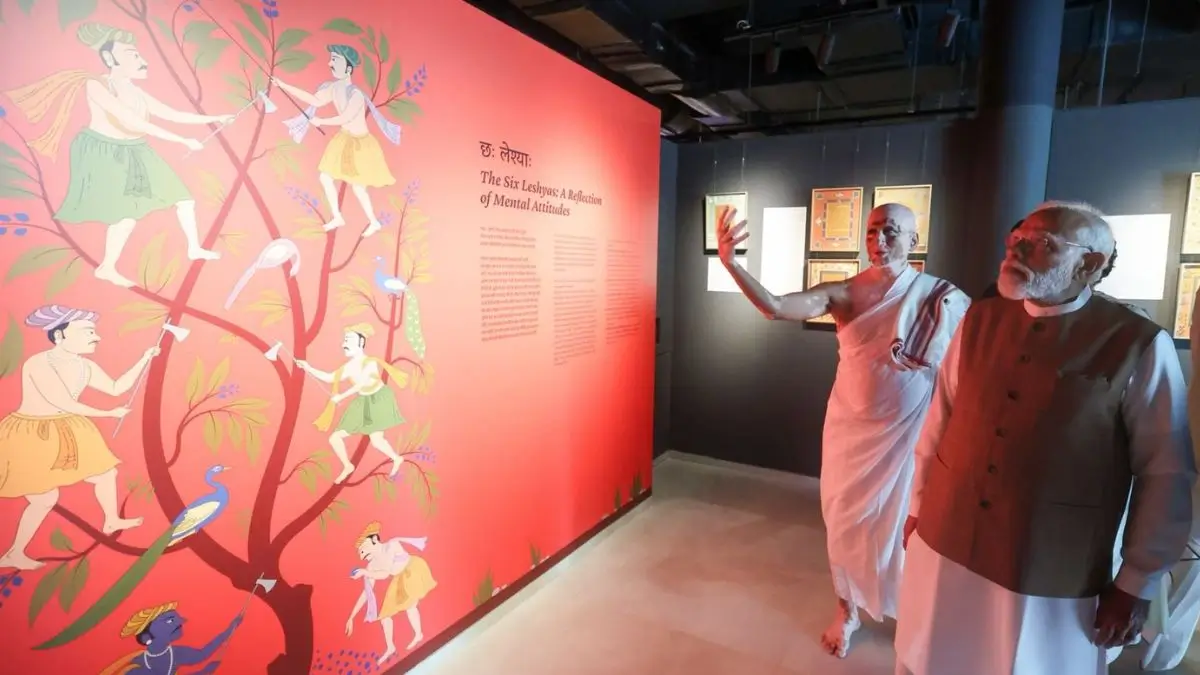
On the auspicious occasion of Mahavir Jayanti, Narendra Modi inaugurated the Samrat Samprati Museum at Koba Tirth in Gandhinagar, Gujarat. This newly developed museum is dedicated to showcasing the rich heritage, philosophy, and cultural traditions of Jainism. The inauguration highlights India’s continued efforts to preserve its ancient spiritual and intellectual legacy.
🏛️ About Samrat Samprati Museum
The Samrat Samprati Museum is located within the Mahavir Jain Aradhana Kendra campus and is named after Samrat Samprati, a revered Jain ruler known for promoting non-violence and spreading Jain teachings. The museum serves as a repository of Jain culture, offering insights into centuries-old traditions and values.
🖼️ Unique Features and Exhibits
The museum consists of seven galleries, each presenting different aspects of Jain philosophy, including the teachings of Tirthankaras, ethical values, and spiritual practices. It houses more than 2,000 rare artefacts, such as ancient manuscripts, sculptures, coins, and paintings. Modern audio-visual technology has been integrated to create an immersive learning experience for visitors, researchers, and students.
🌍 Cultural and Spiritual Significance
During the inauguration, the Prime Minister emphasized that the museum represents India’s civilizational strength and unity in diversity. It not only highlights Jain traditions but also reflects broader Indian philosophies, including Vedic and Buddhist traditions. The museum promotes values like Ahimsa (non-violence), Satya (truth), Asteya (non-stealing), and Aparigraha (non-possessiveness), which are highly relevant in today’s global context.
📚 Role in Knowledge Preservation
The initiative aligns with the government’s vision to preserve ancient knowledge systems. The Prime Minister highlighted efforts like digitizing manuscripts and reviving India’s intellectual heritage, which was historically affected due to invasions and neglect. The museum is expected to become a global center for learning and research on Jain philosophy.

📌 Why This News is Important
🎯 Importance for Competitive Exams
This news is highly relevant for aspirants preparing for UPSC, State PSCs, SSC, Banking, Railways, and Defence exams. Questions related to culture, heritage, government initiatives, and religious philosophy are frequently asked in prelims and mains examinations. The inauguration of the Samrat Samprati Museum connects directly with topics like Indian culture, Jainism, and government efforts in heritage conservation.
🌏 Relevance in Modern Context
The museum promotes universal values such as non-violence and compassion, which are increasingly significant in a world facing conflicts and ethical challenges. The emphasis on “Ahimsa” aligns with India’s soft power diplomacy and global cultural influence.
📊 Government Initiatives Angle
From a governance perspective, the event highlights the government’s push toward preserving ancient manuscripts, cultural institutions, and digital archiving. Such initiatives are often linked to policy questions in exams.
🧠 Analytical Importance
For mains and interview preparation, this topic can be used to discuss India’s cultural diplomacy, knowledge systems, and heritage preservation policies. It also provides examples for ethics papers, especially relating to non-violence and moral values.
📜 Historical Context
🏺 Who was Samrat Samprati?
Samrat Samprati was a Mauryan ruler (224–215 BCE) and the grandson of Ashoka. He is widely regarded as one of the greatest patrons of Jainism. Like Ashoka promoted Buddhism, Samprati played a key role in spreading Jain philosophy across his empire.
🧘 Growth of Jainism in India
Jainism is one of the oldest religions in India, founded by the teachings of Tirthankaras, particularly Mahavira. It emphasizes non-violence, truth, and self-discipline. Over centuries, Jainism contributed significantly to Indian philosophy, art, architecture, and literature.
🏛️ Heritage Preservation Efforts
India has a long tradition of preserving knowledge through manuscripts, temples, and oral traditions. However, historical invasions and colonial neglect led to the loss of several ancient institutions like Nalanda. Modern initiatives, such as museums and digital archives, aim to restore this legacy.
📊 Key Takeaways from This News
| S.No. | Key Takeaway |
|---|---|
| 1 | PM Narendra Modi inaugurated Samrat Samprati Museum in Gandhinagar on Mahavir Jayanti |
| 2 | The museum is dedicated to Jain heritage and named after Samrat Samprati |
| 3 | It features seven galleries and over 2,000 rare artefacts |
| 4 | Promotes values like Ahimsa, Satya, Asteya, and Aparigraha |
| 5 | Supports preservation and digitization of India’s ancient knowledge systems |
FAQs for Competitive Exams
1. Who inaugurated the Samrat Samprati Museum?
The museum was inaugurated by Narendra Modi on the occasion of Mahavir Jayanti.
2. Where is the Samrat Samprati Museum located?
The museum is located at Koba Tirth in Gandhinagar, Gujarat.
3. Who was Samrat Samprati?
Samrat Samprati was a Mauryan ruler and grandson of Ashoka, known for promoting Jainism across his empire.
4. How many galleries are there in the museum?
The museum consists of seven galleries showcasing different aspects of Jain philosophy and heritage.
5. What are the core principles highlighted in the museum?
The museum emphasizes Jain values such as Ahimsa (non-violence), Satya (truth), Asteya (non-stealing), and Aparigraha (non-possessiveness).
6. Why is Mahavir Jayanti significant?
Mahavir Jayanti marks the birth anniversary of Lord Mahavira, the 24th Tirthankara of Jainism.
7. How many artefacts are displayed in the museum?
The museum houses more than 2,000 rare artefacts including manuscripts, sculptures, and paintings.
8. What is the relevance of this news for UPSC and other exams?
It is important for topics like Indian culture, religion, heritage conservation, and government initiatives.
Some Important Current Affairs Links




