






CBDC Food Subsidy Pilot under PMGKAY launched in Puducherry integrates digital rupee with welfare delivery. Know key facts, objectives, exam relevance, and important takeaways for UPSC, SSC, Banking and PSC exams.
Govt Launches CBDC-Based Food Subsidy Pilot under PMGKAY in Puducherry
The Government of India has initiated a significant pilot project that integrates Central Bank Digital Currency (CBDC) with welfare delivery under the Pradhan Mantri Garib Kalyan Anna Yojana (PMGKAY). The digital food subsidy pilot was officially launched on 26 February 2026 in Puducherry with the aim of transforming how food subsidies are delivered across the nation.
Union Minister Pralhad Joshi inaugurated the programme in the presence of key dignitaries including the Lieutenant Governor of Puducherry, K. Kailashnathan, and Chief Minister N. Rangasamy. The launch marks an important milestone in the Government’s digital transformation efforts by including CBDC (Digital Rupee) within the Direct Benefit Transfer (DBT) framework for welfare schemes.
What Is the CBDC Food Subsidy Pilot?
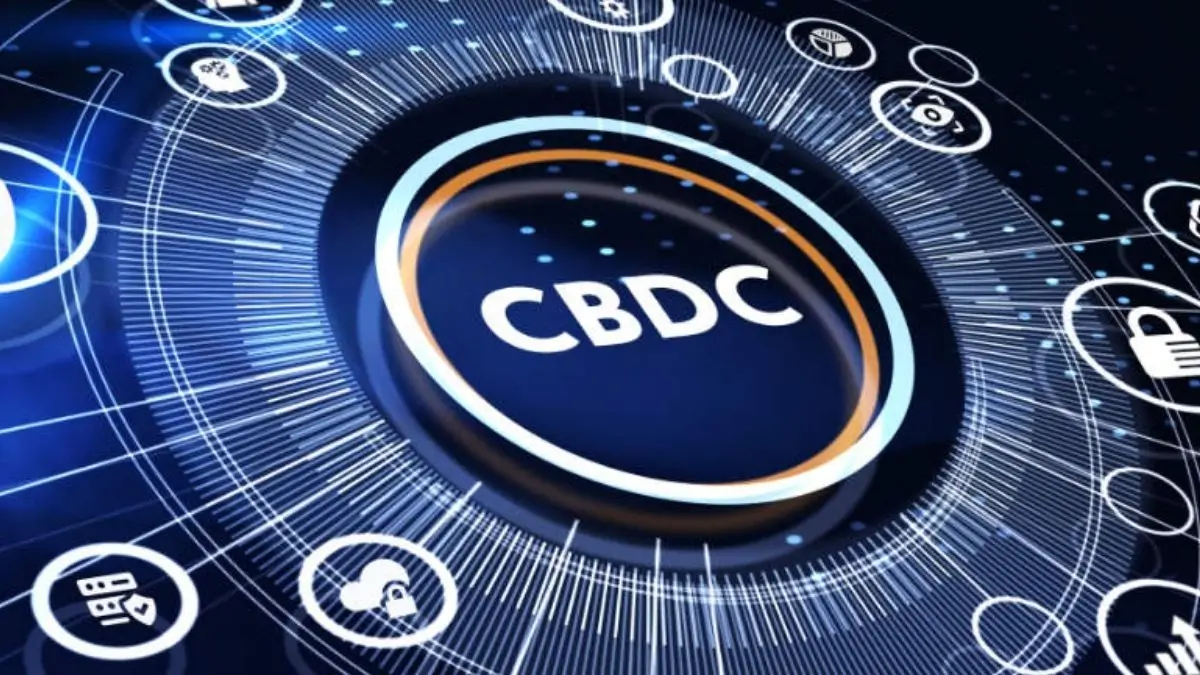
Under this innovative pilot, the Government will use the Central Bank Digital Currency, commonly referred to as the e-rupee, to transfer food subsidy amounts directly into digital wallets of identified beneficiaries. These digital tokens can then be used exclusively at authorised Fair Price Shops (FPS) to procure essential foodgrains.
Traditionally, food subsidy transfers were credited to beneficiaries’ bank accounts; however, this pilot replaces that conventional process with programmable CBDC tokens to ensure better tracking and purpose-bound usage.
Objectives of the Pilot Programme
The primary objectives of launching the CBDC-based food subsidy pilot include:
- Improving transparency in subsidy delivery.
- Reducing leakages and misuse in the Public Distribution System (PDS).
- Enhancing traceability of funds from Government to end users.
- Strengthening India’s Digital Public Infrastructure (DPI).
This approach not only modernises the DBT model but also lays the foundation for an accountable, secure, and real-time digital welfare ecosystem.
Roles of Implementing Agencies
The pilot will be executed in close coordination with the following stakeholders:
- Government of India (policy and oversight),
- Government of Puducherry (local execution),
- Reserve Bank of India (RBI) (CBDC issuance),
- Public Financial Management System (PFMS) (financial integration),
- Canara Bank (banking partner).
Such multi-agency collaboration is crucial for the success of this digital public infrastructure project.
Impact on Beneficiaries
For beneficiaries, the new system simplifies access to entitled foodgrains while ensuring that subsidies reach them more efficiently. Real-time traceability will help curb diversion of funds and improve service delivery at the ground level.
This pilot, if successful, could pave the way for broader roll-out across other states and union territories, potentially reshaping how welfare subsidies are delivered nationwide.

Why This News Is Important
Understanding this news is crucial for competitive exam aspirants because it intersects economy, governance, technology and public policy — topics that frequently appear in UPSC, SSC, Banking and State PSC exams.
Firstly, this pilot illustrates how the government is leveraging digital payments and blockchain-type technologies to strengthen public welfare systems. CBDC or e-rupee is a relatively new topic in Indian polity and economy, and its use in essential services like food subsidy showcases a real-world application of digital currency beyond abstract theory.
Secondly, since welfare schemes like PMGKAY are major parts of India’s social safety net, changes in their implementation directly affect socio-economic governance. Exam questions often require knowledge of such reforms that enhance transparency, accountability and efficiency in public distribution mechanisms.
Lastly, integration of CBDC with public welfare illustrates the Government’s broader thrust on Digital India, DBT reforms, and financial inclusion. Such developments reflect policy directions and future trends — essential for essay writing, economy policy analysis, and current affairs sections in exams.
Historical Context — CBDC and Welfare Reforms in India
The concept of Central Bank Digital Currency (CBDC) in India was first initiated by the Reserve Bank of India (RBI) to pilot digital versions of the Indian rupee known as the e-rupee. The idea gained momentum as the Government pushed for digital payments to increase financial inclusion and reduce dependency on cash. Early pilots began in select regions to test wholesale and retail use cases of CBDC.
Separately, the Pradhan Mantri Garib Kalyan Anna Yojana (PMGKAY) was launched in 2020 as part of India’s response to the COVID-19 pandemic. Under PMGKAY, free foodgrains are provided to eligible groups through the Public Distribution System (PDS), benefiting millions of beneficiaries. Traditional DBT for food subsidies involved bank accounts and Aadhaar-linked transfers.
As India’s digital payment ecosystem expanded — with UPI leading mobile and QR-based payments — policymakers started exploring how digital fiat currency could further improve welfare delivery. The integration of CBDC with PMGKAY represents a convergence of digital finance and social sector reforms, making India one of the early major economies experimenting with CBDC for welfare distribution.
Key Takeaways from “CBDC-Based Food Subsidy Pilot under PMGKAY”
| S.No | Key Takeaway |
|---|---|
| 1. | Government of India launched a CBDC-based digital food subsidy pilot in Puducherry under PMGKAY on 26 Feb 2026. |
| 2. | The pilot uses the e-rupee (CBDC) to directly credit food subsidies into beneficiaries’ digital wallets. |
| 3. | These digital tokens can be used only at authorised Fair Price Shops (FPS) to ensure focused utilisation. |
| 4. | The initiative aims to enhance transparency, traceability and efficiency in welfare subsidy delivery. |
| 5. | The project is implemented with collaboration from RBI, PFMS, Canara Bank and Puducherry Government. |
FAQs – CBDC-Based Food Subsidy Pilot under PMGKAY
1. What is the CBDC-based food subsidy pilot launched by the Government of India?
The CBDC-based food subsidy pilot is an initiative to distribute food subsidies under the Pradhan Mantri Garib Kalyan Anna Yojana using the digital rupee (CBDC) instead of traditional bank transfers. The pilot has been launched in Puducherry.
2. What is CBDC in the Indian context?
CBDC (Central Bank Digital Currency) is the digital form of sovereign currency issued by the Reserve Bank of India. In India, it is commonly known as the e-rupee.
3. How does the CBDC-based subsidy differ from traditional DBT?
Unlike traditional Direct Benefit Transfer (DBT), where funds are transferred to bank accounts, the CBDC model credits digital tokens into beneficiaries’ digital wallets. These tokens are programmable and can be used only for purchasing foodgrains at authorised Fair Price Shops.
4. Which ministry is responsible for implementing PMGKAY?
PMGKAY is implemented by the Ministry of Consumer Affairs, Food and Public Distribution under the Government of India.
5. When was PMGKAY originally launched?
PMGKAY was launched in 2020 during the COVID-19 pandemic to provide free foodgrains to eligible beneficiaries.
6. Why was Puducherry selected for the pilot project?
Puducherry was selected as a controlled testing region to evaluate the operational feasibility, transparency, and technological efficiency of CBDC-based welfare distribution before nationwide expansion.
7. What are the main objectives of this pilot?
The key objectives include:
- Reducing leakages in subsidy delivery
- Enhancing transparency and traceability
- Promoting digital financial inclusion
- Strengthening India’s digital public infrastructure
8. Which bank is associated with the implementation of the pilot?
Canara Bank is one of the banking partners in the implementation of this pilot.
9. How is this news relevant for competitive exams?
This topic is important for UPSC, State PSC, Banking, SSC, and other government exams under sections related to:
- Indian Economy
- Digital Currency
- Financial Inclusion
- Government Schemes
- Public Distribution System (PDS)
10. Can CBDC replace physical currency entirely?
Currently, CBDC complements physical currency and digital payment systems. It is not intended to immediately replace cash but to provide a secure and traceable digital alternative.
Some Important Current Affairs Links