





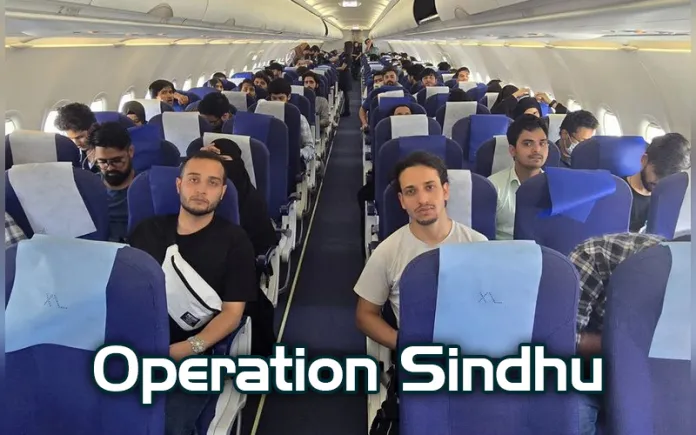
Operation Sindhu marks India’s bold evacuation of 827 nationals from conflict-hit Iran, showcasing diplomatic crisis management and foreign policy priorities.
Operation Sindhu: India’s Strategic Evacuation from Iran
India launched Operation Sindhu on June 18, 2025, spearheaded by the Ministry of External Affairs (MEA) to evacuate its citizens stranded amid escalating hostilities between Iran and Israel The operation mirrors past successful missions like Operation Ganga, Kaveri, and Ajay, reinforcing the government’s “No Indian Left Behind” doctrine
Genesis and Execution
- Triggered by missile and drone strikes across Iran, civilian areas and infrastructure became unsafe, igniting urgent diplomatic action
- Embassies in Tehran, Armenia, and Turkmenistan coordinated multi-leg evacuations involving land routes and charter flights
Phase One & Two Highlights
- Phase 1: 110 students from northern Iran were escorted to Armenia, then flown from Yerevan to Delhi on June 19
- Phase 2: Multiple flights from Mashhad (Iran) and Ashgabat (Turkmenistan) have brought back 517, then 827 Indians—including students, pilgrims, and medical professionals—as of June 21
Diplomatic Dynamics
- Iran’s temporary airspace opening was vital for humanitarian corridors, showing cooperation
- India expanded assistance to citizens of Nepal and Sri Lanka following diplomatic requests, reflecting regional solidarity
Human Stories & Emotional Reunions
- Students described terrifying scenes like missiles falling and internet blackouts, expressing deep relief at arriving home
- At Delhi airport, many tearfully greeted by chants of “Vande Mataram,” with notable representation from Jammu & Kashmir
Strategic Impact & Global Messaging
- Operation Sindhu underscores India’s diplomatic maturity and rapid crisis-response capabilities
- The inclusion of foreign nationals signals India’s leadership and commitment to regional humanitarian coordination .

Why This News Matters for Aspirants
Enhances Understanding of Foreign Policy
Operation Sindhu is a clear illustration of citizen-centric diplomacy—an important concept in UPSC and PSC exams—demonstrating how India prioritizes safety and security for its diaspora
Highlights Crisis Management Capabilities
This mission, akin to earlier evacuations (Operation Ganga, Raahat), showcases India’s effective execution of foreign policy, civil-military coordination, and logistical planning under pressure
Insights into Geopolitical Dynamics
The India–Iran coordination despite broader Iran–Israel tensions reflects nuanced diplomacy—essential knowledge for exams focused on international relations and strategic affairs
Regional Leadership in Humanitarian Aid
By assisting Nepalese and Sri Lankan nationals, India conveys its role in South Asian regional leadership, an aspect relevant to questions on India’s global image and partnerships
Develops Answerable Case Studies
Operation Sindhu offers a rich case study on India’s foreign policy/ diaspora safeguarding policy that aspirants can reference in essays, interviews, and dynamic GA answers.
Historical Context: Evolution of “No Indian Left Behind”
Early Evacuations: Gulf War & Raahat
- 1990 Kuwait: Over 170,000 Indians airlifted during the Gulf crisis—a benchmark in large-scale evacuation
- 2015 Operation Raahat: 4,600 Indians rescued from Yemen’s civil war.
Pandemic and Disaster Response
- 2020 Samudra Setu: COVID-era maritime rescue.
- 2018 Maitri & Operation Devi Shakti (2021): Response to Nepal earthquakes and Afghanistan crisis
Conflict-zone Evacuations
- 2022 Ganga: 25,000+ Indians evacuated from Ukraine.
- 2023 Kaveri & Ajay: Missions in Sudan and during Israel–Hamas conflict
Operation Sindhu in Continuum
- It continues India’s evolving strategy—mixing diplomacy, military support, and quick mobilization to ensure citizen safety abroad .
Key Takeaways from Operation Sindhu 🧠
| # | Key Takeaway |
|---|---|
| 1 | Initiation: Launched June 18, 2025 by India’s MEA to evacuate citizens from conflict-hit Iran amid Iran–Israel war |
| 2 | Scale & Reach: 827 Indians evacuated—including students, pilgrims—from Iran via Armenia and Turkmenistan routes . |
| 3 | Diplomatic Collaboration: Iran opened airspace; India assisted Nepal and Sri Lanka nationals, showing regional partnership . |
| 4 | Operational Complexity: Coordination across MEA control rooms, embassies, charter flights, land routes, and diplomatic clearances . |
| 5 | Strategic Significance: Reinforces India’s global image of humanitarian leadership and effective diaspora protection . |
Frequently Asked Questions (FAQs)
1. What is Operation Sindhu?
Operation Sindhu is a humanitarian evacuation mission launched by the Indian government in June 2025 to rescue Indian nationals stranded in conflict-affected Iran, particularly due to escalating tensions between Iran and Israel.
2. Why was Operation Sindhu necessary?
The operation was launched due to intensified missile and drone attacks across Iranian regions, endangering the lives of foreign nationals, including Indian students, pilgrims, and workers.
3. How many Indian citizens have been evacuated so far under Operation Sindhu?
As of June 21, 2025, approximately 827 Indian nationals have been evacuated through various phases of the operation using air and land routes.
4. What routes and countries were involved in the evacuation process?
Evacuation efforts included land routes through Armenia and Turkmenistan, with flights arranged from Yerevan and Ashgabat to India.
5. Has India evacuated nationals from other countries as well?
Yes, India extended assistance to Nepalese and Sri Lankan citizens, reflecting its commitment to regional humanitarian leadership.
6. What makes Operation Sindhu significant in India’s foreign policy?
The operation reinforces India’s “No Indian Left Behind” doctrine, exemplifies strategic diplomacy during conflict, and highlights India’s proactive stance in citizen safety during international crises.
7. How does this operation relate to earlier evacuation missions?
Operation Sindhu follows a series of similar missions like Operation Ganga (Ukraine), Operation Kaveri (Sudan), and Operation Ajay (Israel), showcasing India’s consistent crisis-response strategy.
8. What government bodies coordinated the operation?
The Ministry of External Affairs, Indian Embassies in Iran, Armenia, and Turkmenistan, along with control rooms and diplomatic staff, played a crucial role in executing the operation.
Some Important Current Affairs Links