






Ministry of Tourism Google India MoU aims to strengthen the digital promotion of Indian tourism through AI, travel analytics, and digital marketing. Learn key facts, objectives, exam highlights, FAQs, and MCQs for UPSC, SSC, Banking, Railways, Defence, and State PSC examinations.
Introduction
The Government of India has taken another significant step towards strengthening the country’s tourism sector by signing a Memorandum of Understanding (MoU) with Google India. The partnership aims to improve the digital promotion of Indian tourist destinations through advanced technologies such as Artificial Intelligence (AI), data-driven insights, digital marketing, and capacity-building initiatives. The agreement is expected to make India’s tourism ecosystem more visible, accessible, and competitive in the global market while supporting the flagship Incredible India campaign.
Objective of the MoU
The primary objective of the MoU is to enhance the digital presence of India’s tourism destinations and improve destination discoverability among domestic and international travellers. By combining the Ministry of Tourism’s policy initiatives with Google’s technological expertise, the collaboration seeks to promote Indian culture, heritage, and natural attractions through innovative digital platforms.
Key Features of the Partnership
The MoU establishes a collaborative framework covering several strategic areas:
- Digital promotion of tourism destinations.
- Use of Artificial Intelligence and emerging technologies.
- Data-driven analysis of travel trends and visitor behaviour.
- Knowledge sharing between the Ministry and Google India.
- Capacity-building and training programmes for Ministry officials.
- Improved digital marketing campaigns for the Incredible India initiative.
Role of Google India
Google India will contribute its expertise in digital technologies to strengthen India’s tourism ecosystem. The company will:
- Provide insights into global travel trends.
- Analyse traveller behaviour and digital engagement patterns.
- Help improve destination discoverability.
- Support content creation and campaign optimisation.
- Conduct training programmes on digital marketing, AI, and content strategies for tourism officials.
Government’s Vision
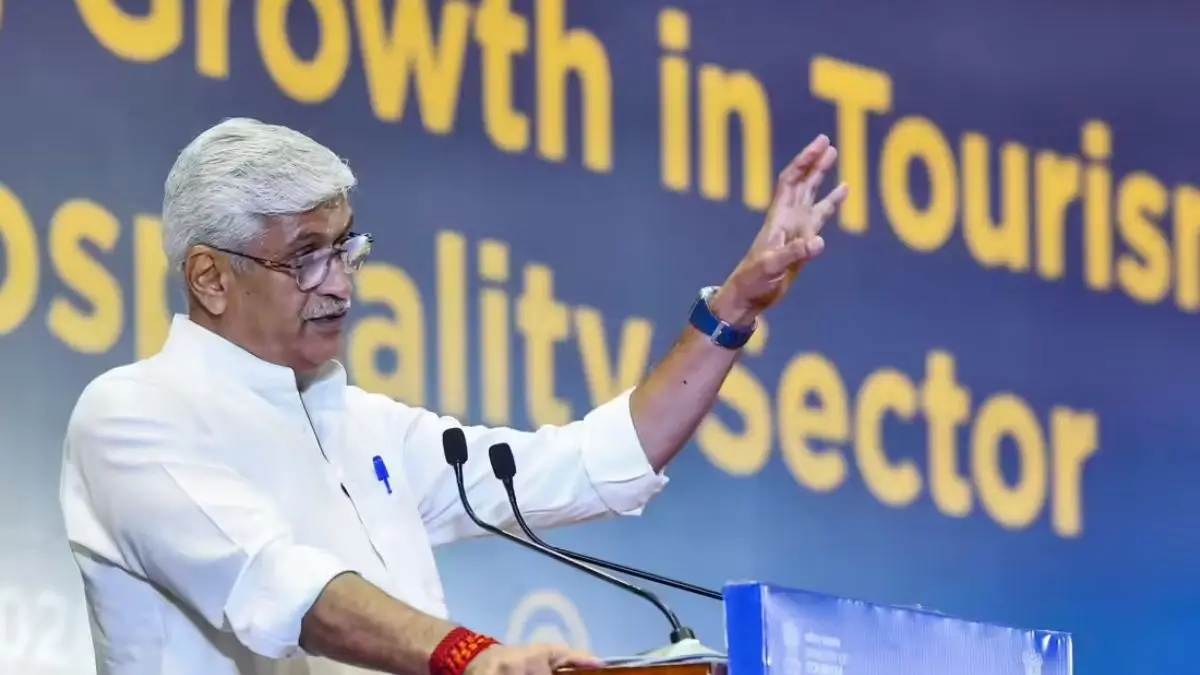
Speaking during the MoU signing ceremony, Union Minister for Tourism and Culture Gajendra Singh Shekhawat highlighted that digital technologies have the ability to create immersive experiences showcasing India’s rich cultural heritage. According to him, technology-driven promotion will strengthen India’s global tourism presence and attract more international visitors under the Incredible India campaign.
Benefits for India’s Tourism Sector
The partnership is expected to generate several long-term benefits:
- Greater international visibility for Indian tourist destinations.
- Better understanding of traveller preferences through analytics.
- Evidence-based tourism promotion strategies.
- Improved visitor engagement using AI-enabled technologies.
- Stronger digital marketing capabilities within the Ministry.
- Enhanced global competitiveness of India’s tourism industry.
Capacity Building for Officials
An important component of the agreement is training government officials in modern digital tools. Google India will organize programmes focusing on:
- Digital marketing techniques.
- Campaign optimisation.
- AI applications.
- Content development.
- Performance monitoring.
These initiatives are expected to improve institutional capacity and make tourism promotion more efficient.
Nature of the Agreement
The Ministry clarified that the collaboration is non-commercial, non-binding, and non-exclusive. It does not involve any financial commitment from either the Government of India or Google India. Instead, it serves as a framework for collaboration, innovation, and knowledge exchange.
Significance for Competitive Examinations
The agreement is important from the perspective of UPSC, State PSCs, SSC, Banking, Railways, Defence, and Teaching examinations because it highlights:
- Government initiatives for digital governance.
- Use of Artificial Intelligence in public administration.
- Public-private partnerships.
- Tourism sector reforms.
- Digital India and Incredible India campaigns.
- Application of data analytics in policymaking.

Why this News is Important
Promoting Digital Governance
The collaboration reflects the Government’s commitment to integrating digital technologies into governance. It demonstrates how Artificial Intelligence and data analytics are increasingly becoming tools for improving public services and policymaking.
Boosting India’s Tourism Economy
Tourism contributes significantly to employment generation and economic growth. Improved digital promotion can attract more domestic and international tourists, increasing revenue and supporting local businesses across the country.
Strengthening Public-Private Partnerships
The MoU represents an important example of cooperation between the Government of India and a leading global technology company. Such partnerships help bring innovation, technical expertise, and modern digital solutions into public administration.
Relevance for Government Exams
Questions related to government initiatives, tourism policies, Artificial Intelligence, Digital India, and public-private partnerships frequently appear in competitive examinations. Candidates should understand both the factual details and broader policy implications of this initiative.
Historical Context
Evolution of Tourism Promotion in India
India has long promoted tourism through the Incredible India campaign, launched in 2002 to showcase the country’s cultural diversity, heritage, spirituality, wildlife, and natural beauty. Over the years, digital platforms have become increasingly important in attracting international travellers.
Growing Role of Technology
In recent years, Artificial Intelligence, digital mapping, online search platforms, virtual experiences, and data analytics have transformed the global tourism industry. Governments worldwide now rely on digital marketing to improve destination visibility and visitor engagement.
Digital India Initiative
The Government of India’s Digital India programme has encouraged the adoption of technology across sectors, including tourism. The latest MoU aligns with this broader objective by leveraging Google’s technological expertise to modernize tourism promotion and improve evidence-based decision-making.
Key Takeaways from This News
| S. No. | Key Takeaway |
|---|---|
| 1 | The Ministry of Tourism signed an MoU with Google India to strengthen digital promotion of Indian tourism. |
| 2 | The partnership focuses on AI, digital marketing, data-driven insights, and capacity building. |
| 3 | Google India will help analyse global travel trends and improve destination discoverability. |
| 4 | The collaboration supports the Government’s Incredible India initiative and digital governance goals. |
| 5 | The MoU is non-commercial, non-binding, and aims to enhance India’s global tourism competitiveness. |
FAQs: Frequently Asked Questions
1. Which ministry signed the MoU with Google India?
The Ministry of Tourism, Government of India, signed the Memorandum of Understanding (MoU) with Google India to strengthen the digital promotion of Indian tourism.
2. What is the main objective of the MoU between the Ministry of Tourism and Google India?
The primary objective is to enhance the digital visibility of Indian tourist destinations using Artificial Intelligence (AI), digital marketing, travel analytics, and data-driven insights to attract more domestic and international tourists.
3. Which flagship tourism campaign of India will benefit from this partnership?
The collaboration will strengthen the Incredible India campaign by improving online discoverability and promoting India’s cultural, historical, and natural attractions.
4. What technologies will be used under this partnership?
The MoU focuses on:
- Artificial Intelligence (AI)
- Data Analytics
- Digital Marketing
- Search and Travel Insights
- Capacity Building
- Emerging Digital Technologies
5. Does the MoU involve any financial commitment?
No. The agreement is non-commercial, non-binding, and non-exclusive, and does not involve any financial obligation for either the Ministry of Tourism or Google India.
6. How will Google India support the Ministry of Tourism?
Google India will provide:
- Travel trend analysis
- Destination discoverability solutions
- AI-powered digital promotion
- Capacity-building programmes
- Digital marketing expertise
- Data-driven tourism insights
7. Why is this news important for competitive examinations?
This news is important because it covers:
- Government schemes
- Digital India initiatives
- Artificial Intelligence applications
- Public-Private Partnerships (PPP)
- Tourism development
- Economy and Governance
8. Which Union Minister highlighted the importance of this collaboration?
The initiative was highlighted by Union Minister for Tourism and Culture, Gajendra Singh Shekhawat.
9. What is the significance of Artificial Intelligence in the tourism sector?
AI helps improve:
- Personalized travel recommendations
- Destination promotion
- Visitor analytics
- Smart tourism planning
- Digital customer engagement
- Evidence-based policymaking
10. Which competitive examinations may ask questions from this topic?
The topic is relevant for:
Teaching Exams (CTET, UGC NET, State TET)
UPSC Civil Services
State PSC Examinations
SSC CGL & CHSL
Banking Exams (IBPS, SBI, RBI)
Railways (RRB)
Defence Exams (CDS, AFCAT, NDA)
Some Important Current Affairs Links