








e-crop registration offline facility in Maharashtra allows farmers to capture crop photos without internet and upload later. Learn about the Digital Crop Survey system, benefits, and key facts for competitive exams.
Maharashtra Enables Offline e-Crop Registration for Farmers
Introduction: A Major Step Toward Farmer-Friendly Digital Governance
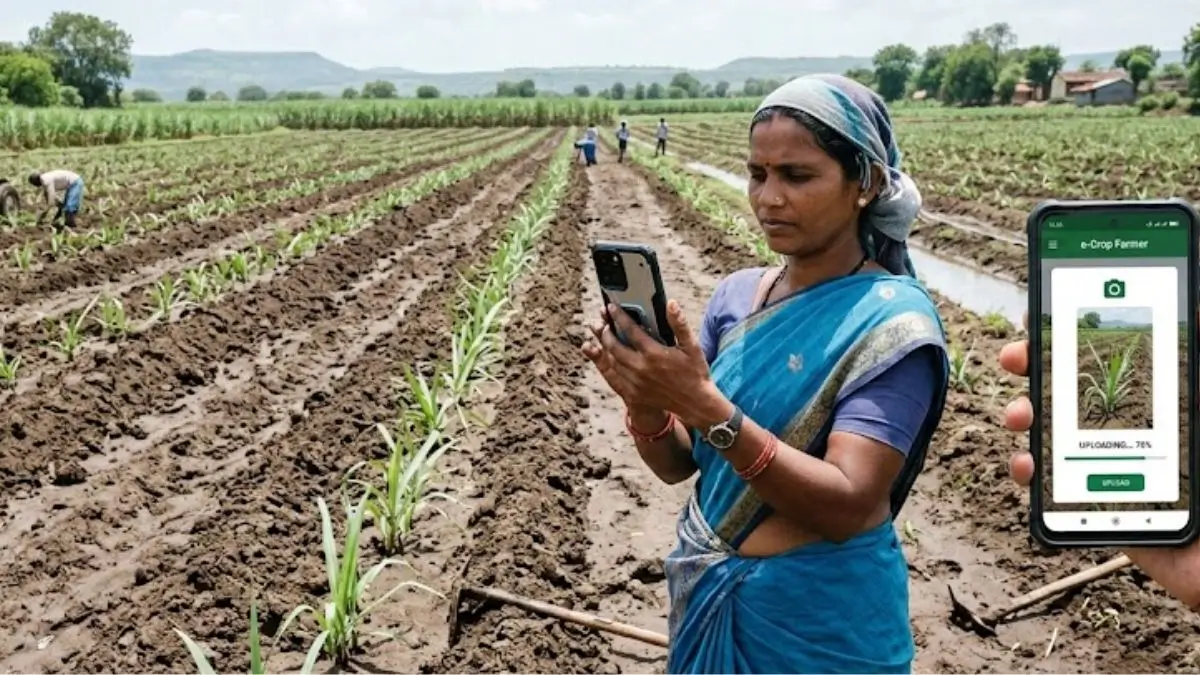
The government of Maharashtra has introduced a new offline facility in its e-crop registration system to help farmers complete crop registration even in areas with weak internet connectivity. The initiative was announced during the state assembly’s budget session by Revenue Minister Chandrashekhar Bawankule. The new feature allows farmers to capture photographs of their crops offline through mobile phones and upload them automatically when network connectivity becomes available.
This reform is part of the state’s broader push toward digitising agricultural records and ensuring that farmers across rural regions can access government schemes without facing technological barriers.
Offline Photo Upload Feature Simplifies Crop Registration
Under the new system, farmers no longer need continuous internet connectivity to complete e-crop registration. They can take photos of standing crops offline using their mobile phones, and once the device reconnects to the internet, the images are automatically uploaded to the system.
This feature aims to address common challenges faced by farmers in remote regions such as poor network coverage, server downtime, and GPS-related technical errors. By allowing offline functionality, the government seeks to make the digital registration process more accessible and efficient for rural farming communities.
Strengthening the Digital Crop Survey System
The e-crop registration process is part of the Digital Crop Survey (DCS) system, which collects field-level agricultural data across the state. This platform records information about crop patterns, cultivation areas, and seasonal agricultural activities, enabling authorities to plan agricultural policies more effectively.
The system has been operational since 2021 and has become mandatory for farmers from the 2025–26 agricultural season. Accurate crop data helps the government implement subsidy programmes, crop insurance schemes, and disaster relief measures in a more targeted and transparent manner.
Role of Local Officials in Assisting Farmers
While the government aims for farmers themselves to complete most registrations using mobile devices, village-level officials also play an important role in the process. Officials such as Talathis (village revenue officers) and revenue assistants help farmers who face technical or procedural difficulties during the registration process.
Farmers are required to complete e-crop registration within 55 days of sowing their crops. If the registration is not completed within this period, the revenue department may carry out the remaining process to ensure timely data collection.
Improving Agricultural Data and Policy Planning
The introduction of the offline registration feature is expected to improve the accuracy and completeness of agricultural data across Maharashtra. Reliable crop information allows the government to plan procurement policies, distribute subsidies efficiently, and respond quickly during natural disasters such as floods or droughts.
Furthermore, better data collection helps policymakers understand crop patterns and regional agricultural trends, which is essential for developing long-term agricultural strategies and supporting farmers’ livelihoods.

Why This News is Important
Improving Digital Access for Farmers
The introduction of offline e-crop registration addresses a major challenge faced by farmers in rural areas—poor internet connectivity. Many farmers in remote villages are unable to complete online processes due to weak mobile networks. By enabling offline photo capture and automatic upload later, the government has made the system more inclusive and accessible.
Strengthening Agricultural Governance
Accurate crop data is essential for effective agricultural governance. Through digital crop surveys, the government can gather reliable information about cultivation patterns, crop types, and production areas. This data helps authorities design better agricultural policies and support systems.
Ensuring Farmers Receive Government Benefits
Crop registration plays a crucial role in determining eligibility for government schemes such as crop insurance, disaster compensation, and agricultural subsidies. If crops are not registered properly, farmers may miss out on these benefits. The offline facility ensures that connectivity issues do not prevent farmers from receiving financial support.
Promoting Digital Transformation in Agriculture
The initiative also reflects the broader push toward digital transformation in India’s agricultural sector. By integrating technology into farming administration, governments can streamline processes, reduce bureaucratic delays, and improve transparency in welfare distribution.
Historical Context: Digitalisation of Agricultural Data in India
India has been gradually adopting digital technologies to modernise agricultural governance. Over the past decade, both central and state governments have launched several initiatives to digitise farm records, improve data collection, and provide technology-based services to farmers.
In Maharashtra, the Digital Crop Survey system was introduced in 2021 to create a reliable database of crop patterns and cultivation areas. This system allows farmers to self-report crop details through mobile applications and supports government planning and policy formulation.
Earlier initiatives such as digital land records and mobile-based agricultural applications have also played a significant role in improving transparency and efficiency in rural administration. The latest offline e-crop registration feature represents another step toward making agricultural technology more farmer-friendly and inclusive.
Key Takeaways from “Offline e-Crop Registration Facility for Farmers”
| S.No | Key Takeaway |
|---|---|
| 1 | Maharashtra introduced an offline photo upload feature for e-crop registration to help farmers in areas with poor internet connectivity. |
| 2 | Farmers can capture crop photos offline and the images automatically upload once internet access becomes available. |
| 3 | The initiative was announced by Revenue Minister Chandrashekhar Bawankule during the state assembly’s budget session. |
| 4 | The Digital Crop Survey system, operational since 2021, became mandatory from the 2025–26 agricultural season. |
| 5 | Farmers must complete crop registration within 55 days of sowing to ensure eligibility for subsidies, crop insurance, and disaster compensation. |
FAQs: Frequently Asked Questions
1. What is e-Crop Registration in Maharashtra?
e-Crop Registration is a digital system used by the Maharashtra government to record details about crops grown by farmers. It collects information such as crop type, cultivation area, and sowing period to create an accurate agricultural database. This information helps the government provide benefits like crop insurance, subsidies, and disaster relief.
2. What new feature has Maharashtra introduced in the e-Crop registration system?
The Maharashtra government has introduced an offline photo capture and upload facility. Farmers can now take photos of their crops even without internet connectivity. Once the mobile device reconnects to the internet, the photos are automatically uploaded to the digital crop survey system.
3. Why was the offline e-Crop registration feature introduced?
The feature was introduced to address the problem of poor internet connectivity in rural areas. Many farmers could not complete the online registration process due to network issues. The offline feature ensures that connectivity problems do not stop farmers from registering their crops.
4. When was the Digital Crop Survey system introduced in Maharashtra?
The Digital Crop Survey (DCS) system was introduced in Maharashtra in 2021 to digitise crop data collection across the state.
5. From which agricultural season did e-Crop registration become mandatory in Maharashtra?
The e-Crop registration system became mandatory from the 2025–26 agricultural season in Maharashtra to ensure accurate agricultural data.
6. Who announced the offline facility for e-Crop registration?
The offline facility for e-Crop registration was announced by Revenue Minister Chandrashekhar Bawankule during the Maharashtra Assembly’s budget session.
7. How many days do farmers have to complete e-Crop registration after sowing?
Farmers must complete e-Crop registration within 55 days of sowing their crops.
8. Why is e-Crop registration important for farmers?
The registration helps farmers receive benefits such as crop insurance, government subsidies, and disaster compensation. It also helps the government maintain accurate agricultural data.
Some Important Current Affairs Links