








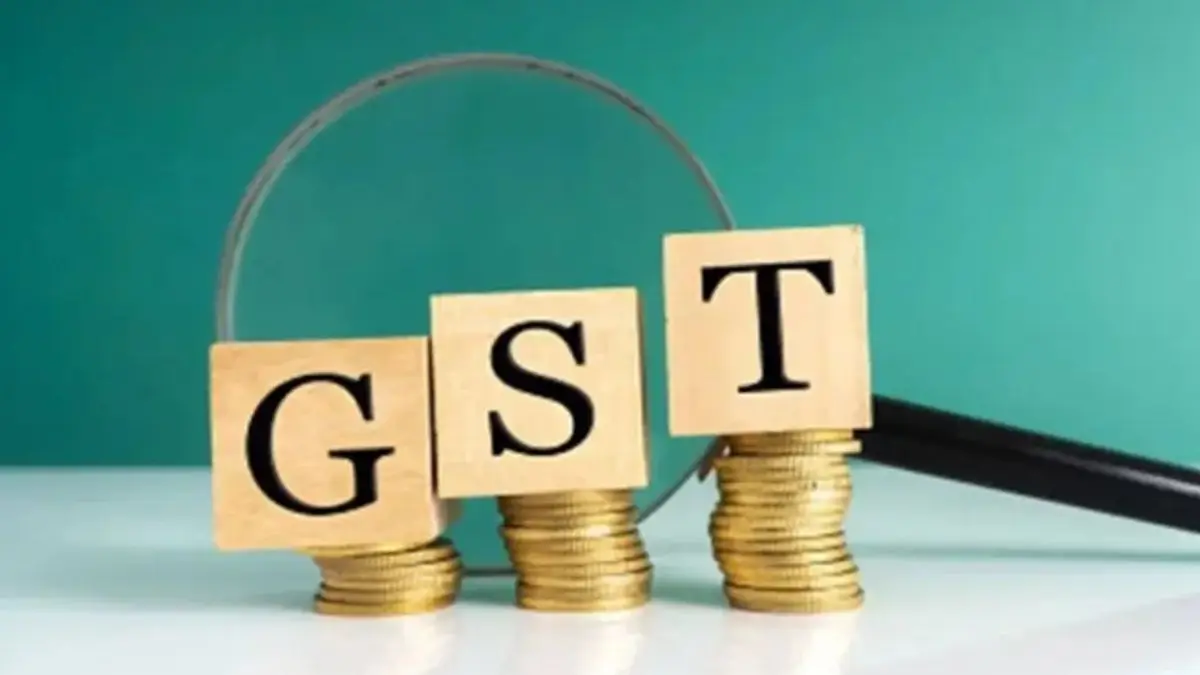
India GST Collections July 2026 recorded a 15.4% increase to ₹2.11 lakh crore. Learn the reasons behind the growth, key highlights, historical background, exam-oriented facts, FAQs, and MCQs for UPSC, SSC, Banking, Railways, Defence, and PCS aspirants.
India Records Strong GST Revenue Growth
India’s Gross Goods and Services Tax (GST) collections reached ₹2.11 lakh crore in July 2026, registering a 15.4% year-on-year growth compared to July 2025. The robust tax collection reflects strong domestic economic activity, improved tax compliance, higher consumption, and a significant rise in GST collections from imports. It also marks another month in which GST revenues remained above the ₹2 lakh crore mark, indicating sustained momentum in the Indian economy.
Domestic Demand and Imports Fuel Revenue
The impressive growth in GST collections was driven by healthy domestic transactions as well as a sharp increase in Integrated GST (IGST) collected on imports. Higher manufacturing activity, increased consumer spending, digital compliance measures, and better tax administration contributed significantly to the rise in collections.
The July 2026 GST revenue comprised Central GST (CGST), State GST (SGST), Integrated GST (IGST), and GST Compensation Cess. The substantial increase in IGST collections highlights the growth in imports and interstate trade.
Improved Tax Compliance Strengthens Revenue
One of the major reasons behind the consistent increase in GST collections has been the government’s continuous efforts to improve tax compliance. Measures such as e-invoicing, data analytics, digital monitoring, and strict action against fake invoicing have significantly reduced tax evasion.
The GST Network (GSTN) has also enhanced transparency by enabling real-time invoice matching and better return filing systems, thereby increasing voluntary compliance among businesses.
Positive Sign for India’s Economy
Higher GST collections generally indicate increased production, consumption, and business activity across various sectors of the economy. Strong tax revenues provide the government with greater fiscal resources to invest in infrastructure, social welfare programmes, healthcare, education, and capital expenditure.
The consistent rise in GST collections also reflects resilience in India’s economic growth despite global uncertainties and external challenges.
Impact on Government Finances
Strong GST revenues improve both Central and State Government finances because GST is a shared tax. Higher collections enhance fiscal stability, reduce dependence on borrowing, and provide additional funds for developmental projects.
The steady growth in GST collections also supports India’s fiscal consolidation efforts and strengthens investor confidence in the country’s economy.
Significance for Government Exam Aspirants
GST collections remain an important topic for competitive examinations because they indicate the country’s economic health. Questions related to taxation, government revenue, fiscal policy, economic growth, and public finance are frequently asked in UPSC, State PCS, SSC, Banking, Railways, Defence, and other government examinations.
Candidates should remember the latest GST collection figures, growth rate, reasons for increase, and their economic implications.

Why this News is Important
Indicator of Economic Growth
The increase in GST collections to ₹2.11 lakh crore demonstrates strong economic performance. Higher tax collections generally indicate increased production, rising consumption, expanding trade, and better business activity across sectors.
Important for Fiscal Management
GST is one of the largest sources of indirect tax revenue for both the Central and State Governments. Higher collections improve fiscal health, enabling governments to increase expenditure on infrastructure, education, healthcare, defence, and welfare schemes without significantly increasing borrowing.
Frequently Asked in Competitive Exams
Economic indicators such as GST collections, inflation, GDP growth, fiscal deficit, and tax reforms are important topics in UPSC Civil Services, State PCS, SSC CGL, Banking, RBI Grade B, NABARD, Railways, and Defence examinations.
Students should remember that July 2026 GST collections stood at ₹2.11 lakh crore, registering a 15.4% annual increase, mainly due to improved compliance, stronger domestic demand, and higher import-related tax collections.
Historical Context
Introduction of GST
The Goods and Services Tax (GST) was introduced in India on 1 July 2017 as one of the country’s biggest indirect tax reforms. It replaced multiple indirect taxes such as VAT, Excise Duty, Service Tax, Entry Tax, and several state-level taxes with a unified tax system.
Objective of GST
The primary objective of GST was to create “One Nation, One Tax, One Market.” It simplified India’s indirect taxation system by eliminating cascading taxes, improving transparency, reducing compliance costs, and promoting ease of doing business.
Continuous Improvement
Since its implementation, the government has introduced several reforms including e-way bills, e-invoicing, improved return filing systems, digital verification, and anti-tax evasion measures. These reforms have significantly enhanced tax compliance and contributed to the steady rise in GST collections over the years.
Key Takeaways from This News
| S. No. | Key Takeaway |
|---|---|
| 1 | India’s gross GST collections reached ₹2.11 lakh crore in July 2026. |
| 2 | GST collections increased 15.4% year-on-year compared to July 2025. |
| 3 | Higher domestic consumption, better compliance, and increased import taxes drove the growth. |
| 4 | Strong GST collections indicate robust economic activity and improved fiscal health. |
| 5 | GST remains one of the most important economic topics for UPSC, PCS, Banking, SSC, Railways, and Defence examinations. |
FAQs: Frequently Asked Questions (FAQs)
1. What were India’s gross GST collections in July 2026?
India’s gross GST collections stood at ₹2.11 lakh crore in July 2026, registering a 15.4% year-on-year increase over July 2025.
2. What does GST stand for?
GST stands for Goods and Services Tax, a comprehensive indirect tax levied on the supply of goods and services across India.
3. When was GST introduced in India?
GST was introduced on 1 July 2017, replacing multiple indirect taxes such as VAT, Service Tax, Central Excise Duty, and Entry Tax.
4. What is the objective of GST?
The primary objective of GST is to create “One Nation, One Tax, One Market” by simplifying the indirect taxation system and eliminating the cascading effect of taxes.
5. What were the major reasons behind the increase in GST collections in July 2026?
The increase was driven by:
- Higher domestic consumption
- Improved tax compliance
- Increased imports
- Better GST administration
- Digital initiatives like e-invoicing and data analytics
6. Which economic indicator does higher GST collection reflect?
Higher GST collections indicate:
- Strong economic activity
- Increased consumption
- Higher production
- Improved business confidence
- Better tax compliance
7. What are the major components of GST?
GST consists of four components:
- CGST (Central Goods and Services Tax)
- SGST (State Goods and Services Tax)
- IGST (Integrated Goods and Services Tax)
- GST Compensation Cess
8. Why is GST important for competitive examinations?
GST is an important topic in UPSC, State PCS, SSC, Banking, Railways, Defence, RBI Grade B, and other government examinations because it is closely linked to taxation, public finance, fiscal policy, and economic development.
9. Which authority administers GST in India?
GST is administered jointly by the Central Board of Indirect Taxes and Customs (CBIC) and the respective State GST Departments under the guidance of the GST Council.
10. Which Constitutional Amendment paved the way for GST?
The 101st Constitutional Amendment Act, 2016 enabled the implementation of the Goods and Services Tax in India.
Some Important Current Affairs Links