





Earth Prize 2026 Indian winners developed Plas-Stick innovation using tamarind seeds to remove microplastics from water, offering a low-cost sustainable solution for global water pollution challenges.
Indian Students Win Earth Prize 2026 for Plas-Stick Innovation to Remove Microplastics from Water
🌍 Introduction to Earth Prize 2026 Breakthrough
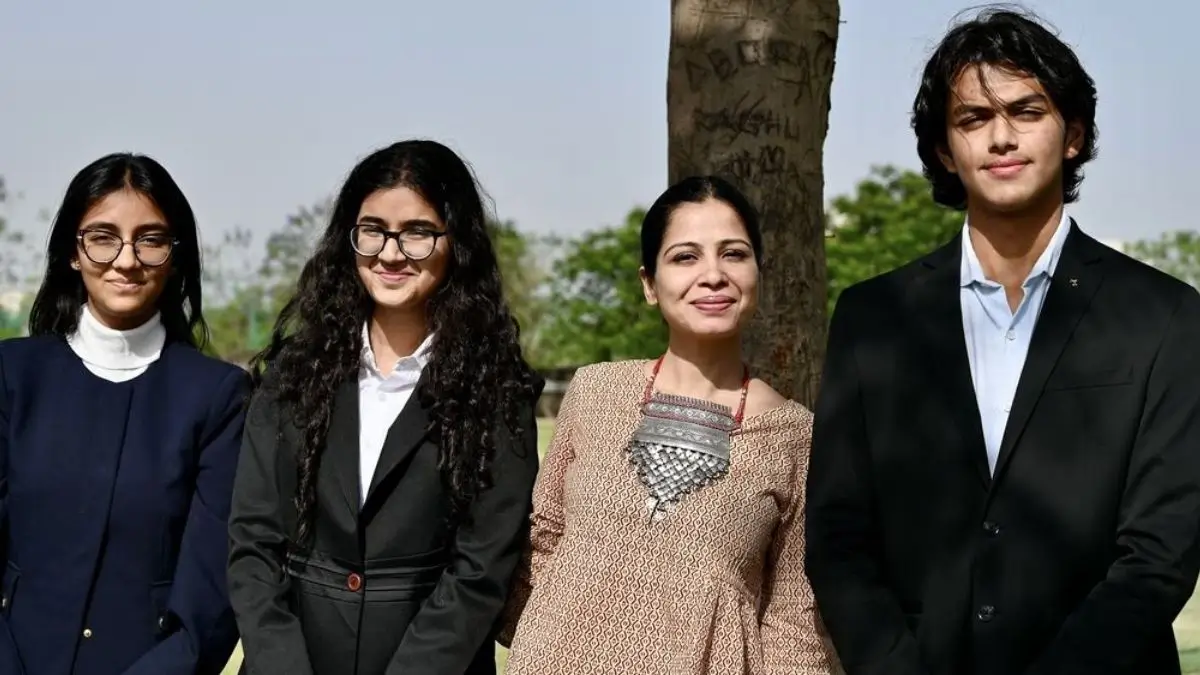
Three Indian teenagers—Vivaan Chhawchharia, Ariana Agarwal, and Avyana Mehta—have brought global recognition to India by winning the prestigious Earth Prize 2026 for their innovative environmental solution called “Plas-Stick.” Their invention addresses one of the most pressing environmental challenges of modern times—microplastic pollution in drinking water.
The team’s innovation uses a biodegradable material derived from tamarind seed waste to capture and remove microplastics from water, making it safer for human consumption. This breakthrough has been widely appreciated for being low-cost, scalable, and environmentally sustainable, making it suitable for rural and urban communities alike.
🌱 Innovation Behind Plas-Stick Technology
Biodegradable Solution for Clean Water
The core idea of Plas-Stick is based on converting tamarind seed powder into a natural binding agent. When added to contaminated water, it attracts microplastic particles and binds them together.
Magnetic Separation Process
Once microplastics form clumps, they can be easily removed using a simple magnetic process, eliminating the need for complex filtration systems or electricity.
Sustainable and Rural-Friendly Approach
The innovation is particularly significant for rural and low-resource regions, where advanced water purification systems are often unavailable. By using agricultural waste, the solution also promotes waste recycling and circular economy principles.
🏆 Global Recognition at Earth Prize 2026
The Earth Prize is an international environmental competition that recognizes young innovators developing solutions for global sustainability challenges.
The Indian team emerged as global winners among seven regional finalists, selected through public voting involving thousands of participants worldwide. Their success highlights India’s growing leadership in youth-driven environmental innovation.
🌍 Collaboration and Real-World Impact
The project was developed with support from researchers at the Indian Institute of Technology (IIT) Guwahati, which helped refine and test the innovation.
So far, the project has already reached thousands of students and educators, raising awareness about microplastic pollution and sustainable water solutions. The initiative also aims to scale production through decentralized models to expand access across rural India.

📌 Why this News is Important
🌏 Environmental Significance
Microplastic pollution is now considered a global environmental crisis. These tiny plastic particles are found in rivers, oceans, and even drinking water. The Plas-Stick innovation provides a practical and affordable solution to tackle this invisible threat, making it highly relevant for environmental studies and competitive exams.
🎓 Relevance for Government Exams
For aspirants of UPSC, SSC, Banking, Railways, and State PCS exams, this news is important because it covers:
- Environmental sustainability innovations
- International awards and recognitions
- India’s contribution to global science and technology
- Role of youth in environmental problem-solving
🌐 Global Innovation Perspective
The recognition of Indian students at an international platform like Earth Prize reflects India’s increasing presence in global sustainability and climate innovation ecosystems.
📚 Historical Context
🌿 Evolution of Earth Prize
The Earth Prize is a global environmental competition launched to empower young innovators aged 13–19 to develop solutions for climate and sustainability challenges. It has become one of the world’s leading platforms for youth-led environmental innovation.
🧪 Growing Concern of Microplastics
Microplastics, defined as plastic particles smaller than 5 millimeters, have become a major environmental concern in recent decades. They originate from plastic waste breakdown, synthetic textiles, and industrial processes.
Scientific studies have found microplastics in human blood, lungs, and water sources, raising concerns about long-term health impacts. This has led to increased global research into eco-friendly filtration and removal technologies.
📊 Key Takeaways from “Plas-Stick Innovation Earth Prize 2026”
| S.No. | Key Takeaway |
|---|---|
| 1 | Three Indian students won Earth Prize 2026 for environmental innovation “Plas-Stick.” |
| 2 | Plas-Stick is made using tamarind seed powder to remove microplastics from water. |
| 3 | The innovation works by binding microplastics into clumps for easy removal. |
| 4 | The project was supported by IIT Guwahati researchers for development and testing. |
| 5 | The solution is low-cost, scalable, and designed for rural and urban communities. |
Frequently Asked Questions (FAQs)
Q1. What is the Earth Prize 2026?
The Earth Prize 2026 is an international environmental innovation competition that recognizes young innovators who develop sustainable solutions to global environmental challenges such as climate change, pollution, and biodiversity loss.
Q2. Who are the Indian students who won the Earth Prize 2026?
The winners are Vivaan Chhawchharia, Ariana Agarwal, and Avyana Mehta, who developed the innovative microplastic removal solution called Plas-Stick.
Q3. What is Plas-Stick innovation?
Plas-Stick is an eco-friendly solution that uses tamarind seed-based biodegradable material to bind microplastics in water, making them easier to remove through a simple separation process.
Q4. Why is Plas-Stick important for India?
It is especially important for India because it offers a low-cost and scalable water purification method suitable for rural and semi-urban areas where advanced filtration systems are limited.
Q5. What problem does Plas-Stick solve?
It addresses the growing global issue of microplastic pollution in drinking water, which is a major environmental and health concern worldwide.
Some Important Current Affairs Links