








Asia Power Index India 2025: India ranks 3rd among Asia’s strongest nations with improved economic, military, and diplomatic strength. Know key insights and exam-relevant facts.
Asia Power Index 2025: India Ranks 3rd Among Asia’s Strongest Nations
Introduction to Asia Power Index 2025
The Asia Power Index 2025, compiled annually by the Australia‑based Lowy Institute, is one of the most comprehensive assessments of national power in the Indo‑Pacific region. It measures how countries influence others and shape outcomes in international affairs. The latest 2025 edition ranked 27 countries and territories across 131 indicators spanning eight thematic areas such as military strength, economic capability, diplomatic influence, cultural influence and future resources.
India’s Historic Rise in the Rankings
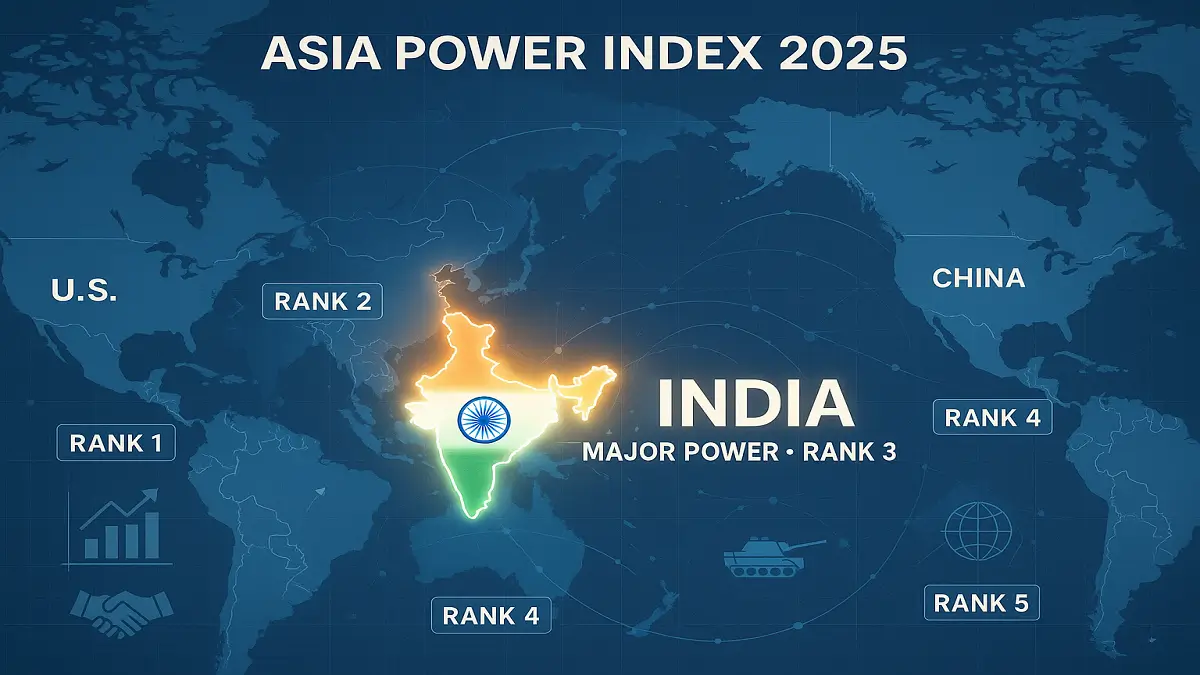
In the 2025 edition of the Asia Power Index, India secured the 3rd position with a comprehensive power score of 40.0 out of 100. This score marks a 2 % increase compared to the previous year. Only the United States (81.7) and China (73.7) ranked higher than India
According to the report, India crossed the threshold to be classified as a “major power” for the first time, surpassing the 40‑point benchmark set by the think tank. This achievement reflects steady growth in India’s economic and military capabilities
Key Factors Behind India’s Power Surge
Economic Capability
India’s economy has continued its strong post‑COVID recovery, contributing significantly to its improved ranking. The nation also overtook Japan in economic capability and future resources, moving up to 3rd place in those measures.
Furthermore, inward investment in India increased, helping it rise to ninth place in economic relationships — an important indicator of international economic linkages and attractiveness as a destination for foreign capital.
Military Improvements and Strategic Influence
The Index noted steady increases in India’s military capability. Expert assessments were likely influenced by recent operational experiences such as Operation Sindoor, which enhanced India’s combat credentials in May 2025.
However, India’s defence networks — which measure bilateral and multilateral military partnerships — remain relatively weak, ranking 11th, lower than several Southeast Asian nations.
Diplomatic and Cultural Influence
While India’s diplomatic reach and cultural influence continue to grow, the Index suggests that its Power Gap score — the difference between India’s potential resources and its actual influence — remains substantial. This indicates that India still has space to expand its geopolitical presence, particularly when compared with China.
Comparison with Other Asian Powers
The Asia Power Index 2025 places India well ahead of regional peers such as Japan (4th) and Russia (5th), demonstrating India’s rising stature in Asia. Yet, the gap between India and the two leaders — the United States and China — remains wide, showing continued strategic challenges ahead.
Conclusion
India’s 3rd rank in the Asia Power Index 2025 marks a significant milestone in its journey toward greater regional and global influence. With improvements across economic, military and diplomatic measures, India has solidified its status as a major power. However, expanding defence partnerships and influence remain key areas to boost further progress.

Why This News Is Important
Implications for Government Exams
Understanding India’s position in the Asia Power Index 2025 is crucial for students preparing for government exams (SSC, UPSC, banking, railways, defence, police, teaching and civil services like PCS/IAS). This index reflects real‑world geopolitical dynamics, showcasing how nations compete for influence through economy, defence, diplomacy and future preparedness.
Relevance to Syllabus
Current affairs questions on international relations, India’s global standing, strategic affairs, and geopolitics are commonly asked in exams. Being able to explain why India’s 3rd place ranking matters shows an understanding of both quantitative rankings and qualitative implications for India’s diplomatic and strategic priorities.
Broader Exam Context
This news intersects with key UPSC and state PCS topics including:
- India’s foreign policy and regional influence
- Defence and military preparedness
- Economic diplomacy and inward investment trends
- Strategic rankings and indices used in academic and policy analysi
Mastering this will help in essay writing, general studies papers, and interview stages as candidates can discuss India’s strengths, challenges, and future prospects in the global order.
Historical Context
Asia Power Index: Background
The Asia Power Index was first introduced by the Lowy Institute in 2018 to assess the relative power and influence of countries across the Indo‑Pacific. It goes beyond GDP to include military strength, economic relationships, diplomatic influence, cultural impact, and future resources — offering a multidimensional view of state power
India’s Rise Over the Years
In earlier editions (e.g., 2024), India was rated a middle power, but consistent growth in economic capability and strategic reach helped it ascend to major power status in 2025. India’s climb reflects decades of economic reforms, strategic diplomacy, defence modernisation, and demographic advantage.
Asia’s Strategic Landscape
Asia’s power structure has been historically dominated by China and the United States. India’s rise signals a shift toward a more multipolar region, where regional powers exert influence through alliances, investment, and military capability.
Key Takeaways from “Asia Power Index 2025: India Ranked 3rd”
| S. No. | Key Takeaway |
|---|---|
| 1 | India ranked 3rd in the Asia Power Index 2025, with a score of 40.0/100. |
| 2 | The index is published by the Lowy Institute, an Australian think tank, assessing 27 countries. |
| 3 | India achieved “major power” status by crossing the 40‑point benchmark. |
| 4 | India’s economic and military capabilities both improved, aiding its rank. |
| 5 | India still faces challenges in defence networks and influence gap compared to China and the US. |
FAQs: Frequently Asked Questions
1. What is the Asia Power Index?
The Asia Power Index, published by the Australia-based Lowy Institute, is an annual report that ranks countries in the Indo-Pacific region based on military, economic, diplomatic, and cultural influence, as well as future resources.
2. What rank did India achieve in the Asia Power Index 2025?
India secured the 3rd position in 2025 with a power score of 40.0, entering the category of major powers.
3. Which countries ranked above India in 2025?
Only the United States (81.7) and China (73.7) ranked higher than India in the Asia Power Index 2025.
4. What factors contributed to India’s rise in the ranking?
India’s rise is attributed to improvements in economic capability, military strength, and future resources, along with increasing inward investment and strategic influence.
5. What are India’s challenges according to the Index?
Despite its rise, India’s defence networks and diplomatic influence still lag behind China and the US, showing room for further enhancement.
6. How does this news relate to government exams?
Current affairs questions often cover India’s global ranking, strategic power, defence capability, economic influence, and international relations, making this news important for exams like UPSC, SSC, banking, railways, defence, police, and teaching posts.
7. What is the significance of India achieving “major power” status?
Crossing the 40-point threshold demonstrates India’s enhanced international presence and capability, marking it as a key player in Asia’s geopolitical landscape.
8. Which sectors contributed most to India’s power score?
Economic capability and military strength were the primary contributors, followed by cultural influence and future resources.
9. How often is the Asia Power Index published?
The Asia Power Index is published annually by the Lowy Institute.
10. How can students use this information for exams?
Students can answer current affairs questions, write essays on India’s global standing, and analyze geopolitical trends in Asia using the insights from the Index.
Some Important Current Affairs Links