






US Saudi MNNA status brings advanced defence ties, F-35 jets, nuclear energy cooperation and major geopolitical shifts. Learn key points for competitive exams.
Saudi Arabia Becomes a Major Non-NATO Ally of the U.S.
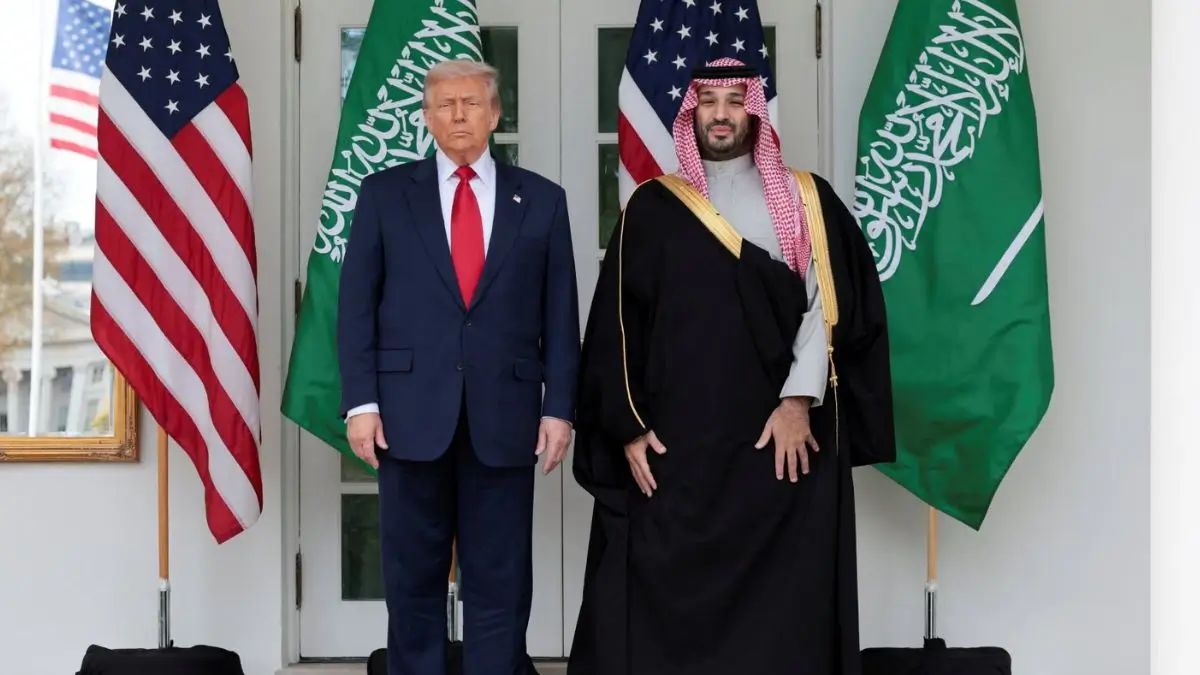
In a landmark move, the United States has formally designated Saudi Arabia as a Major Non-NATO Ally (MNNA). This upgrade marks a significant deepening of the bilateral relationship, especially in areas of defense, technology, and energy.
Elevated Military Ties
Alongside the MNNA designation, the U.S. has approved a major arms deal with Saudi Arabia. The deal is expected to include F-35 Lightning II stealth fighter jets—the first such sale in the Arab world—as well as nearly 300 advanced U.S. tanks. Furthermore, the two nations will jointly engage in defense manufacturing, technology transfer, and enhanced military cooperation in the Gulf, including improved logistics infrastructure.
Broad Strategic Cooperation
The partnership goes beyond traditional arms sales. Saudi Arabia and the U.S. have signed a sweeping strategic cooperation agreement covering civil nuclear energy, artificial intelligence, and critical minerals. Under this agreement, Saudi Arabia will receive U.S. support for peaceful nuclear technology, aligned with non-proliferation norms. Simultaneously, both countries will deepen collaboration in AI research and development, and jointly develop mineral supply chains that are vital for future technology and defense sectors. This aligns closely with Saudi Arabia’s Vision 2030, which emphasizes economic diversification.
What Does MNNA Status Actually Mean?
Being designated as a Major Non-NATO Ally provides Saudi Arabia with several significant benefits, though it does not grant a mutual defense guarantee like NATO membership. Some of the privileges include:
- Access to U.S. defense technologies and training programs.
- Eligibility to participate in joint military exercises with the U.S.
- Priority in acquiring excess U.S. defense materials and articles.
- Participation in joint R&D initiatives.
- Permission to stockpile U.S. military equipment on Saudi territory.
However, as noted, MNNA status does not equate to a formal defense pact where the U.S. is treaty-bound to defend Saudi Arabia.

Why This News Is Important
Strategic Shift in Middle East Security
This designation reflects a major strategic shift in U.S.-Saudi relations. By upgrading Saudi Arabia’s status, the U.S. is signaling deeper security cooperation in a region that remains vital for global energy supply and geopolitical balance.
Technology and Economic Implications
The cooperation in civil nuclear energy and artificial intelligence shows that this partnership is not just militaristic. It’s also about long-term economic and technological collaboration. For Saudi Arabia, this boost contributes to its Vision 2030 goals of reducing oil dependence.
Impact on Regional Power Dynamics
Selling F-35 jets and enabling Saudi Arabia to stockpile U.S. equipment may significantly alter the regional military balance. For instance, Israel’s qualitative military edge is a central concern in Middle East geopolitics
Relevance for Competitive Exams
For students preparing for government exams (like civil services, defense, banking), this news is extremely relevant for sections covering current international relations, defense strategy, and geopolitics of the Middle East. Knowing about MNNA status, its benefits, and its implications can be directly useful in essay-writing and general awareness.
Historical Context
Origins of MNNA Status
The concept of a Major Non-NATO Ally (MNNA) was introduced by the U.S. Congress in 1987 under Section 22 of U.S. law. It allows non-NATO countries to enjoy certain defense and security benefits without being bound by NATO’s mutual defense clause.
Evolution of U.S.–Saudi Relations
The U.S. and Saudi Arabia have had a long, complex relationship, primarily centered on energy (oil) and security. Over decades, this relationship has seen ups and downs — from Cold War-era strategic cooperation to tensions over human rights and differing geopolitical priorities.
Recent Developments
In recent years, Saudi Arabia has actively pursued diversification under its Vision 2030, seeking to reduce dependence on oil by investing in high-tech sectors like AI, nuclear energy, and critical minerals. The new agreement with the U.S. builds directly on these ambitions. Moreover, prior to this MNNA designation, Saudi Arabia did not have access to top-tier U.S. defense technology like the F-35, which makes this a historic policy pivot.
Key Takeaways from This News
| S. No. | Key Takeaway |
|---|---|
| 1 | The U.S. has officially designated Saudi Arabia as a Major Non-NATO Ally (MNNA). |
| 2 | Saudi Arabia secured a deal for F-35 stealth jets and nearly 300 U.S. tanks. |
| 3 | Strategic cooperation includes civil nuclear energy, AI research, and critical minerals. |
| 4 | MNNA status gives Saudi access to U.S. military tech and logistics, but no mutual defense guarantee. |
| 5 | This development may significantly change the Middle East’s military balance, especially with implications for Israel’s security. |
FAQs: Frequently Asked Questions
1. What is Major Non-NATO Ally (MNNA) status?
MNNA is a designation by the United States that provides selected countries with strategic military and economic privileges without granting full NATO membership or a mutual defense treaty. Countries with MNNA status get access to advanced military technology, training programs, joint exercises, and certain defense cooperation benefits.
2. Does MNNA status mean the U.S. will militarily defend Saudi Arabia?
No. MNNA status does not guarantee military protection or a defense pact. It only enhances security cooperation and offers benefits related to defense trade, logistics, and joint security efforts.
3. Why did the U.S. give Saudi Arabia MNNA status?
The U.S. aims to strengthen defense ties, enhance security cooperation, support technological partnerships, and ensure stability in the Middle East. The designation also aligns with shared goals in energy security, counterterrorism, and economic modernization.
4. What military equipment is included in the U.S.–Saudi deal?
Saudi Arabia will receive F-35 stealth fighter jets and nearly 300 U.S. tanks, along with other defense support. The agreement includes joint defense manufacturing and enhanced logistics infrastructure.
5. How does this decision affect Middle East geopolitics?
The move may shift the regional military balance. Saudi Arabia’s access to advanced U.S. technologies strengthens its strategic position, potentially impacting relations with Iran, Israel, and Gulf neighbors.
6. How is this relevant for government exam aspirants?
This topic is important for international relations, defense, geopolitics, foreign policy, Middle East politics, and India–Middle East relations sections across UPSC, State PCS, SSC, banking, railways, and defense exams.
7. What other nations are MNNAs?
Some MNNA countries include Japan, South Korea, Australia, Israel, Egypt, Jordan, Pakistan, and Argentina. Each receives varying levels of U.S. cooperation in defense and strategic affairs.
8. How does this deal support Saudi Arabia’s Vision 2030?
Through technological cooperation—especially in AI, civil nuclear energy, and critical minerals—Saudi Arabia aims to diversify its economy beyond oil. MNNA status accelerates this transition.
9. What benefits will Saudi Arabia receive beyond defense?
Saudi Arabia will get U.S. support for peaceful nuclear energy, AI development, supply-chain resilience, and economic transformation—opening doors for advanced technology transfer.
10. Will F-35 sales to Saudi Arabia impact Israel?
Yes, Israel’s Qualitative Military Edge (QME) is a key U.S. defense principle. F-35 sales to Saudi Arabia may lead to recalibrations in U.S. policy to maintain Israel’s regional military superiority.
Some Important Current Affairs Links