





India-America Relations During Trump’s Tenure
Introduction to India-America Relations
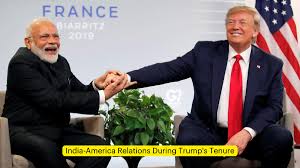
India and the United States share a deep and multifaceted relationship, spanning a range of political, economic, and strategic interests. Over the years, the two nations have collaborated on several fronts, including trade, defense, and counterterrorism. The relationship underwent several transformations during Donald Trump’s presidency, with moments of tension as well as cooperation. This article aims to explore the key highlights of India-America relations during Trump’s tenure, focusing on the developments that shaped the bilateral relationship.
Key Areas of India-America Cooperation
One of the most notable areas of collaboration between India and the United States during Trump’s tenure was defense and strategic partnership. The signing of agreements like the Comprehensive Economic Partnership Agreement (CEPA) and Defense Technology and Trade Initiative (DTTI) elevated their defense and security cooperation. These agreements provided a framework for greater military-to-military exchanges, joint exercises, and intelligence sharing. The two nations also continued to engage in counterterrorism efforts, with both sides committed to combating radical terrorism, particularly from Pakistan-based groups.
In the economic sphere, trade between India and the U.S. grew significantly during Trump’s term. The U.S.-India Trade Policy Forum helped resolve key trade disputes, focusing on issues like tariffs, agricultural exports, and market access. While some trade frictions emerged, the economic ties remained robust, with significant investments in sectors such as information technology, pharmaceuticals, and energy.
Challenges in India-America Relations
Despite the positive strides, there were several challenges during Trump’s time in office. One of the most significant issues was the trade imbalance, with India expressing concerns about the imposition of tariffs on steel and aluminum. Another contentious issue was the U.S. withdrawal from the Paris Climate Agreement, which created tensions with India, given its significant role in the global climate discussion. Additionally, the Trump administration’s stance on the Kashmir issue—especially after the revocation of Article 370 in Jammu and Kashmir—was a point of friction, with India urging the U.S. to respect its sovereignty on the matter.
Conclusion and Future Outlook
The relationship between India and the United States under Donald Trump’s leadership was marked by both collaboration and discord. While areas such as defense, trade, and security flourished, disagreements, particularly on trade policies and international agreements, presented challenges. Moving forward, India and the U.S. are expected to continue building on the foundations laid during this period, addressing emerging global issues and strengthening their strategic partnership.

Why This News Is Important
Significance of India-U.S. Relations
The relationship between India and the United States is one of the most important global partnerships in contemporary geopolitics. For students preparing for government exams, understanding the dynamics of this bilateral relationship is crucial, as it impacts global security, economic trends, and international diplomacy. The evolving nature of the India-U.S. relationship, particularly during President Trump’s administration, helps illustrate the shifting power balances in global politics and the strategic choices made by both countries.
Impact on India’s Global Positioning
India’s growing stature on the global stage is closely tied to its relations with the U.S. As the world’s largest democracy and a rapidly rising economic power, India plays a key role in global affairs. Its partnership with the U.S. under Trump helped solidify India’s position as a key player in the Indo-Pacific region, offering insights into international trade, defense strategy, and diplomatic engagement.
Strategic and Economic Implications
The U.S. remains one of India’s largest trade partners and a crucial player in global defense initiatives. By studying the developments in the relationship during Trump’s tenure, students can grasp the economic and strategic advantages that both countries sought to derive from the partnership, alongside the challenges they faced in maintaining a smooth bilateral relationship.
Future Implications for Policy
India-U.S. relations under Trump set a precedent for future diplomatic engagement between the two countries. Understanding the challenges and areas of cooperation will help students contextualize India’s foreign policy approach and its role in global multilateral organizations. Moreover, the strategic outcomes of this relationship will be vital for India’s future geopolitical strategies, especially with the increasing influence of China in global affairs.
Historical Context: Background Information on India-U.S. Relations
Early Diplomatic Engagement
India and the U.S. established formal diplomatic ties in 1947, following India’s independence. However, the relationship was slow to develop during the Cold War era due to differing ideologies, with India following a non-aligned policy and the U.S. aligned with Pakistan during the early years of the Kashmir conflict.
Post-Cold War Relations
The 1990s marked a significant shift in India-U.S. relations, particularly after the end of the Cold War. The nuclear tests conducted by India in 1998 were a pivotal moment, but the subsequent signing of the U.S.-India Civil Nuclear Agreement in 2005 helped to reset the bilateral relationship, culminating in stronger diplomatic and economic ties in the 21st century.
Trump’s Presidency and the ‘Make America Great Again’ Doctrine
Under Trump’s presidency, U.S. foreign policy was more unilateral and transactional, emphasizing ‘America First.’ While this stance brought both opportunities and challenges for India, it also aligned with India’s need for strategic partnerships to counterbalance China’s growing influence. The robust defense ties and the growing importance of trade during this period reflected the evolution of a pragmatic and strong bilateral relationship, even amid global uncertainties.
Key Takeaways from India-America Relations During Trump’s Tenure
| S.No. | Key Takeaway |
|---|---|
| 1 | Strategic Partnership: India and the U.S. signed key defense agreements, enhancing military cooperation and intelligence sharing. |
| 2 | Trade Growth: Trade relations expanded, with the U.S. emerging as one of India’s largest trade partners during Trump’s term. |
| 3 | Kashmir and Global Diplomacy: India and the U.S. had differing views on the Kashmir issue, with Trump’s stance leading to diplomatic discussions. |
| 4 | Global Climate Dynamics: The U.S. withdrawal from the Paris Agreement impacted India’s global climate policy and cooperation with the U.S. |
| 5 | Future Bilateral Engagement: The groundwork laid during Trump’s tenure continues to shape the strategic and economic ties between the two nations. |
Important FAQs for Students from this News
1. What were the key areas of cooperation between India and the U.S. during Trump’s tenure?
The key areas of cooperation included defense and security, trade relations, counterterrorism efforts, and global strategic alliances. Notable agreements like the Comprehensive Economic Partnership Agreement (CEPA) and Defense Technology and Trade Initiative (DTTI) were significant milestones in strengthening bilateral ties.
2. How did Donald Trump’s presidency impact India’s trade relations with the U.S.?
Trade between India and the U.S. expanded significantly during Trump’s presidency. While trade disputes, such as tariff impositions, arose, both nations continued to engage diplomatically through platforms like the U.S.-India Trade Policy Forum to resolve these issues and promote economic growth.
3. What were some of the challenges in India-U.S. relations during Trump’s time in office?
hallenges included trade imbalances, U.S. tariffs on Indian steel and aluminum, the U.S. withdrawal from the Paris Climate Agreement, and differing stances on issues like the Kashmir conflict. Despite these challenges, both nations maintained a pragmatic approach to their relationship.
4. Why is India-U.S. relations important for India’s foreign policy?
The India-U.S. relationship is critical for India’s economic, defense, and strategic positioning globally. The partnership enhances India’s security in the Indo-Pacific region and provides economic benefits through trade, investments, and technological exchanges.
5. What future opportunities exist for India and the U.S. to strengthen their relationship?
Future opportunities include deeper defense cooperation, collaboration on climate change, expanding trade ties, and addressing global challenges such as the rise of China. Both countries can continue to build on their shared democratic values and global leadership roles.
Some Important Current Affairs Links