







Philippines Pax Silica initiative, US semiconductor alliance news, Luzon industrial hub development, global AI supply chain, critical minerals strategy Asia
Philippines Joins US-Led Pax Silica Initiative to Strengthen Semiconductor Supply Chains
🇵🇭 Philippines Becomes Part of Global Semiconductor Alliance
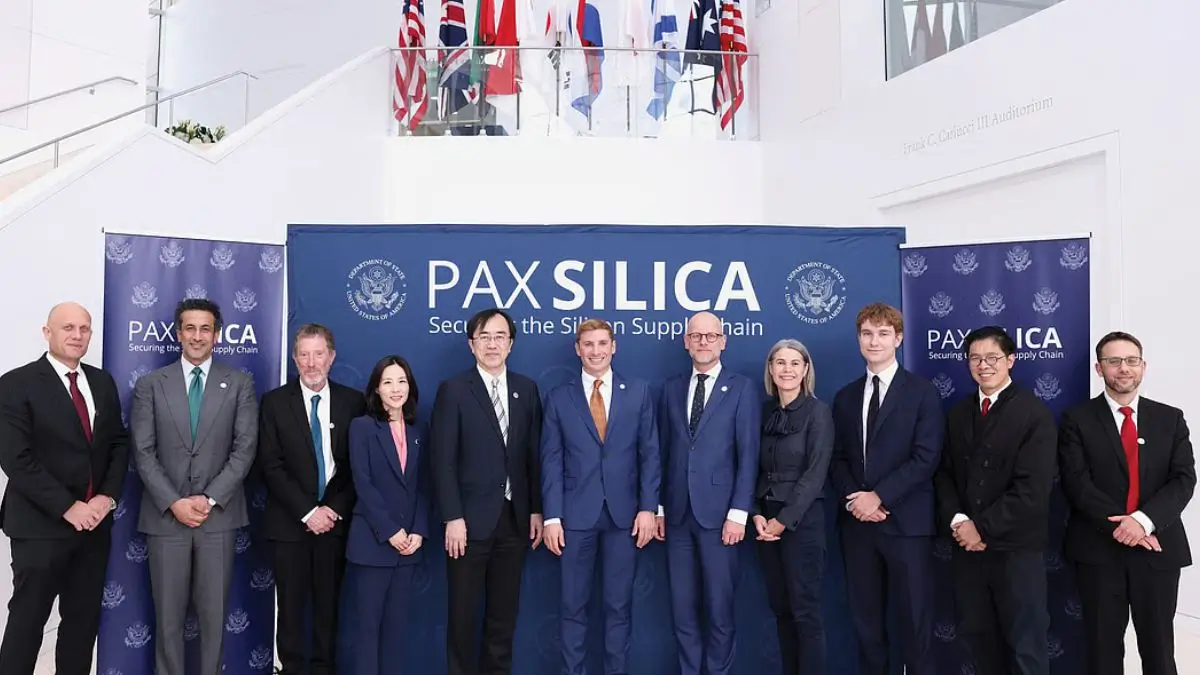
The Philippines has officially joined the United States-led Pax Silica initiative, marking a significant step in strengthening global semiconductor, artificial intelligence (AI), and critical minerals supply chains. The move places the country among key strategic partners working to secure and stabilise the global technology ecosystem amid rising geopolitical competition.
Launched in December 2025, the Pax Silica initiative focuses on building a resilient and secure supply chain for advanced technologies, including semiconductors, AI infrastructure, and digital manufacturing systems.
With its entry, the Philippines becomes the 13th nation to join the alliance, further expanding its role in the global technology value chain.
🏭 Development of 4,000-Acre Industrial Hub in Luzon
As part of this agreement, the United States and the Philippines will jointly develop a 4,000-acre high-tech industrial zone in Luzon, located within the Luzon Economic Corridor.
This hub will function as a next-generation manufacturing and innovation center, focusing on:
- Semiconductor production
- Electronics manufacturing
- AI-driven industrial systems
- Critical minerals processing
According to official reports, this will be the first AI-native industrial acceleration hub under Pax Silica, designed to attract global investments and strengthen allied supply chains.
🔗 Strategic Focus on Critical Minerals and AI Infrastructure
The Pax Silica initiative is built on two major pillars:
- Secure supply of critical minerals and rare earth elements
- Development of AI and digital infrastructure ecosystems
These materials are essential for producing semiconductors, defence equipment, and advanced computing systems. The Philippines, being rich in mineral resources like nickel and copper, aims to move from raw material export to high-value technology processing.
This shift is expected to improve its position in global manufacturing networks and attract foreign direct investment.
🌏 Strengthening Global Tech Cooperation
The initiative reflects a broader effort by allied nations to reduce dependency on concentrated supply chains and ensure stability in high-tech industries.
Countries participating in Pax Silica include the United States, Japan, South Korea, India, Australia, Singapore, the United Kingdom, and others.
The Philippines’ participation is also expected to deepen its strategic and economic cooperation with the United States and other partner nations.

📌 Why This News is Important
🌍 Global Economic & Strategic Significance
The Philippines joining Pax Silica is important because it reflects the ongoing restructuring of global supply chains in critical technology sectors. Semiconductors and AI infrastructure are now central to economic growth, defence capabilities, and digital transformation.
This initiative strengthens alliances among technologically advanced and emerging economies to ensure secure, transparent, and resilient supply chains.
💡 Impact on Technology & Employment
The creation of the Luzon industrial hub will:
- Generate high-skilled jobs in semiconductor and AI sectors
- Attract foreign direct investment
- Enhance technology transfer and industrial upgrading
For students preparing for competitive exams, this highlights how technology diplomacy and economic security are shaping international relations.
🔐 Geopolitical Importance
The initiative also reflects strategic efforts to diversify supply chains away from over-dependence on a few dominant countries. It strengthens partnerships among democratic and allied nations in the global tech ecosystem.
📚 Historical Context
The Pax Silica initiative was launched in December 2025 by the United States as a global framework for securing advanced technology supply chains.
It emerged due to:
- Rising global semiconductor shortages
- Dependence on limited manufacturing hubs
- Geopolitical tensions affecting trade and technology flows
Earlier, countries like India, Japan, South Korea, and Australia joined the initiative, forming a strategic coalition for AI and semiconductor resilience.
The Philippines’ entry marks a continuation of this expanding alliance focused on technology security and industrial cooperation.
📊 Key Takeaways from Philippines Joins Pax Silica Initiative
| S.No. | Key Takeaway |
|---|---|
| 1 | Philippines joined the US-led Pax Silica initiative for semiconductor and AI supply chain security |
| 2 | It becomes the 13th country to join the global technology alliance |
| 3 | A 4,000-acre industrial hub will be developed in Luzon Economic Corridor |
| 4 | The initiative focuses on critical minerals, AI infrastructure, and semiconductor manufacturing |
| 5 | It aims to strengthen global tech cooperation and reduce supply chain vulnerabilities |
Frequently Asked Questions (FAQs)
1. What is the Pax Silica initiative?
The Pax Silica initiative is a US-led global framework launched in 2025 to strengthen semiconductor supply chains, AI infrastructure, and critical mineral security among allied countries.
2. Why did the Philippines join the Pax Silica initiative?
The Philippines joined to boost its role in global technology manufacturing, attract investment in semiconductors, and develop high-tech industrial zones like the Luzon Economic Corridor.
3. Which sectors will benefit from this initiative?
Key sectors include semiconductors, artificial intelligence, electronics manufacturing, digital infrastructure, and critical minerals processing.
4. How many countries are part of Pax Silica now?
With the inclusion of the Philippines, a total of 13 countries are part of the Pax Silica alliance.
5. What is the significance of the Luzon industrial hub?
The 4,000-acre hub in Luzon will serve as an AI-native industrial zone focused on semiconductor production and advanced technology manufacturing.
6. How is this news important for competitive exams?
It is important for topics like international organisations, global economic initiatives, semiconductor industry, and India’s role in global supply chains.
Some Important Current Affairs Links