






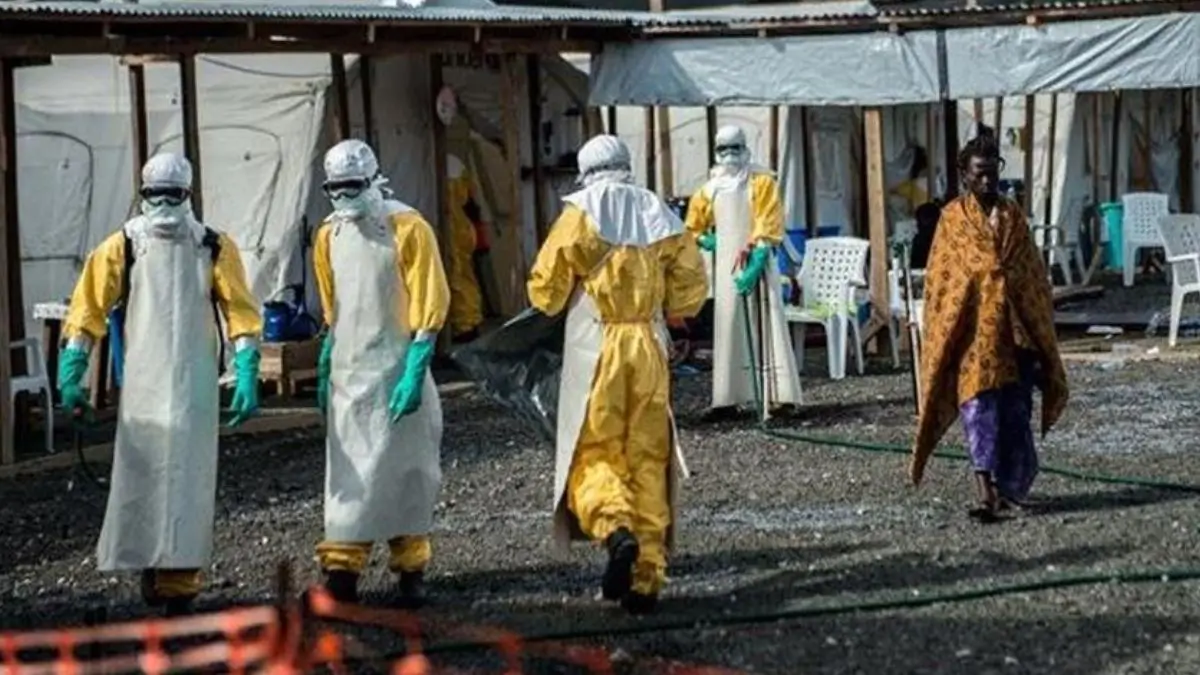
Ebola global health emergency explained with symptoms, spread, treatment, vaccine updates, WHO declaration, historical background, FAQs and MCQs for UPSC, SSC, Banking, Railways and PSC exams.
The current outbreak is especially concerning because it involves the rare Bundibugyo strain, for which there is no approved vaccine. This exposes the limitations of existing healthcare preparedness and underlines the need for greater investment in medical research and vaccine development.

Importance for Government Exam Preparation
Questions related to Ebola are highly relevant for competitive examinations such as UPSC, SSC, Banking, Railways, Defence and State PSC exams. Topics like international organisations, global health emergencies, infectious diseases, WHO declarations and public health infrastructure are frequently asked in current affairs sections.
Students should remember important facts such as:
- Ebola was first identified in 1976.
- WHO issues the PHEIC declaration.
- Fruit bats are natural hosts.
- The disease spreads through bodily fluids.
- Bundibugyo is a rare Ebola strain.
This topic is also important for essay writing, interview discussions and mains examination answers related to healthcare governance and international cooperation.
Historical Context
Origin and Discovery of Ebola
Ebola was first discovered in 1976 during simultaneous outbreaks in Sudan and the Democratic Republic of Congo. The disease received its name from the Ebola River located near the outbreak area in Congo. Since then, Ebola has caused repeated outbreaks in African nations with varying severity.
Major Ebola Outbreaks in History
The deadliest Ebola outbreak occurred between 2014 and 2016 in West Africa, mainly affecting Guinea, Liberia and Sierra Leone. More than 11,000 people died during that outbreak, making it the largest Ebola epidemic ever recorded.
Subsequent outbreaks occurred in Uganda and the Democratic Republic of Congo in later years. These outbreaks helped scientists improve diagnostic systems, vaccines and containment strategies. However, the emergence of new strains continues to pose serious global health risks.
Key Takeaways from This News
| S.No. | Key Takeaway |
|---|---|
| 1 | WHO declared the Ebola outbreak a Public Health Emergency of International Concern (PHEIC). |
| 2 | The outbreak involves the rare Bundibugyo strain, which currently lacks an approved vaccine. |
| 3 | Ebola spreads through direct contact with infected bodily fluids and contaminated materials. |
| 4 | Symptoms include fever, vomiting, diarrhoea, bleeding and organ failure. |
| 5 | The disease was first identified in 1976 near the Ebola River in Congo. |
FAQs Related to Ebola Global Health Emergency
1. What does PHEIC stand for?
PHEIC stands for Public Health Emergency of International Concern. It is declared by the World Health Organization when a disease outbreak poses a serious public health risk internationally.
2. Which organization declared Ebola a global health emergency?
The declaration was made by the World Health Organization.
3. In which year was Ebola first discovered?
Ebola was first discovered in 1976 in Sudan and the Democratic Republic of Congo.
4. Why is the disease called Ebola?
The disease was named after the Ebola River located near the outbreak region in Congo.
5. What is the natural host of the Ebola virus?
Fruit bats are considered the natural hosts of the Ebola virus.
6. How does Ebola spread?
Ebola spreads through direct contact with infected bodily fluids such as blood, saliva, sweat, vomit and contaminated surfaces.
7. Is Ebola an airborne disease?
No, Ebola is not considered an airborne disease like influenza or COVID-19.
8. What are the major symptoms of Ebola?
Major symptoms include fever, headache, muscle pain, vomiting, diarrhoea, bleeding and organ failure.
9. What is the incubation period of Ebola?
The incubation period ranges from 2 to 21 days.
10. Which Ebola strain is causing concern in the current outbreak?
The current outbreak involves the Bundibugyo strain of the Ebola virus.
11. Is there a vaccine available for all Ebola strains?
No, vaccines are available for some strains, but not for all Ebola variants such as the Bundibugyo strain.
12. Which continent is most affected by Ebola outbreaks?
Most Ebola outbreaks have occurred in African countries.
13. Which was the deadliest Ebola outbreak in history?
The 2014–2016 West Africa Ebola outbreak was the deadliest in history.
14. Which countries were severely affected during the 2014–16 outbreak?
Guinea, Liberia and Sierra Leone were the most affected countries.
15. Why is Ebola important for competitive exams?
Ebola-related topics are important for UPSC, SSC, Banking, Railways, Defence and State PSC exams because they involve international organizations, public health and current affairs.
Some Important Current Affairs Links