


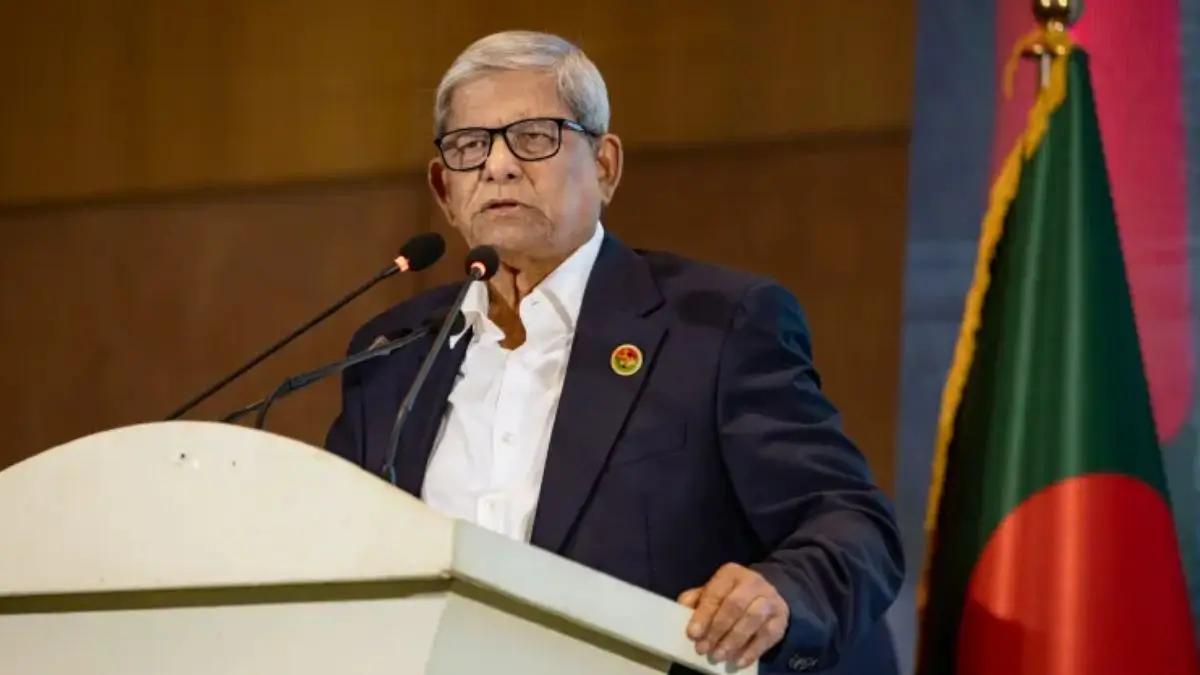
Bangladesh 23rd President 2026: Mirza Fakhrul Islam Alamgir has been elected as Bangladesh’s 23rd President. Know election results, votes, history and key exam facts.
Bangladesh Gets Its 23rd President
Mirza Fakhrul Islam Alamgir, a veteran leader of the Bangladesh Nationalist Party (BNP), has been elected as the 23rd President of Bangladesh. The election was held on August 20, 2026, at the Jatiya Sangsad, the Parliament of Bangladesh. His victory is an important development in the political history of Bangladesh and is particularly significant because the country witnessed a contested presidential election after a gap of 35 years.
Mirza Fakhrul Secures a Clear Victory
Mirza Fakhrul Islam Alamgir secured 255 votes in the presidential election. His rival, Colonel (Retd) Oli Ahmad, received 88 votes. A total of 343 members of Parliament participated in the voting, while six eligible members did not cast their votes. The results were announced by Chief Election Commissioner AMM Nasir Uddin, who also acted as the Returning Officer for the election.
First Contested Presidential Election in 35 Years
The election created history as it was the first time in 35 years that more than one candidate contested the presidential election in Bangladesh. In previous presidential elections, opposition parties had often not fielded candidates, resulting in uncontested or consensus-based outcomes. The 2026 election, therefore, marked an important moment for parliamentary democracy and political competition in Bangladesh.
BNP Nominated Its Veteran Leader
Before contesting the presidential election, Mirza Fakhrul Islam Alamgir served as the Secretary General of the Bangladesh Nationalist Party. Following his nomination as the BNP’s presidential candidate, he resigned from his party positions. His election reflects the strong position of the BNP in Bangladesh’s current Parliament, where the party and its allies hold a substantial majority.
Election Conducted in the Bangladesh Parliament
The President of Bangladesh is elected by the members of the Jatiya Sangsad rather than through a direct vote by the general public. Although the Parliament has 350 seats, the election in one constituency had been suspended, leaving 349 members eligible to vote. The presidential poll was conducted through a parliamentary voting process, and the candidate receiving the highest number of votes was declared elected.
Oli Ahmad Was the Opposition Candidate
Colonel (Retd) Oli Ahmad contested the presidential election against Mirza Fakhrul Islam Alamgir. He was backed by an 11-party opposition alliance led by Bangladesh Jamaat-e-Islami. Oli Ahmad secured 88 votes, while Mirza Fakhrul won 255 votes, giving the BNP candidate a decisive victory in the parliamentary contest.
Vacancy Created After Mohammed Shahabuddin’s Resignation
The presidential election became necessary after the resignation of Mohammed Shahabuddin, who had been elected President in 2023. Shahabuddin resigned before completing his five-year term, citing health reasons. Under Bangladesh’s constitutional framework, a new President must be elected after the office becomes vacant.
Significance of the Office of President
The President is the constitutional Head of State of Bangladesh. Although Bangladesh follows a parliamentary system in which the Prime Minister and Cabinet exercise the main executive authority, the President performs important constitutional and ceremonial functions. The President is also the Commander-in-Chief of the armed forces. Therefore, the election of a new President remains an important development in the constitutional and political system of Bangladesh.
Importance for Government Exam Aspirants
For students preparing for civil services, banking, defence, police, railway and other government examinations, this development is important from the perspective of international relations and current affairs. Questions may be asked about the name of Bangladesh’s new President, his political affiliation, the number of votes he received, the opposition candidate, the election venue and the significance of the election. India-Bangladesh relations also make political developments in Bangladesh relevant for competitive examinations in India.

Why This News is Important
A Major Current Affairs Development
The election of Mirza Fakhrul Islam Alamgir as Bangladesh’s 23rd President is an important international current affairs event. Bangladesh is one of India’s most significant neighbouring countries, and political developments there are relevant for examinations such as UPSC, State PSC, SSC, Banking, Defence and Railway examinations. Aspirants should remember that Bangladesh has a parliamentary system in which the President is the Head of State while the Prime Minister exercises major executive authority.
Historic Nature of the Election
The 2026 presidential election was significant because it was the first contested presidential election in Bangladesh in 35 years. Competitive examinations frequently ask questions about major political milestones, first occurrences and record-breaking events. Therefore, the phrase “first contested presidential election in 35 years” is an important fact for examination preparation.
Important Facts About the Electoral Process
The news also helps students understand the constitutional system of Bangladesh. The President is elected by the members of Parliament and not directly by the people. In this election, Mirza Fakhrul secured 255 votes against 88 votes received by his rival, Oli Ahmad. Chief Election Commissioner AMM Nasir Uddin announced the result.
Relevance to India-Bangladesh Relations
Bangladesh is strategically important to India because the two countries share a long international border and have strong economic, cultural and security connections. Changes in Bangladesh’s political leadership are therefore relevant to India’s foreign policy and neighbourhood diplomacy.
Exam-Oriented Facts
Students should remember Mirza Fakhrul Islam Alamgir’s name, his party affiliation with the BNP, his position as Bangladesh’s 23rd President, the year 2026, the 255-vote victory and the historic nature of the contest. These facts can be useful in one-liner questions, match-the-following exercises and current affairs sections of competitive examinations.
Historical Context: Background of the News
Bangladesh’s Parliamentary System
Bangladesh follows a parliamentary system of government. The Prime Minister is the head of government and exercises major executive powers, while the President is the constitutional Head of State. The President is elected by members of the Jatiya Sangsad, Bangladesh’s Parliament.
History of the Presidency in Bangladesh
Bangladesh became an independent country in 1971 following its Liberation War. Since independence, the country’s political system has experienced constitutional changes, periods of presidential and parliamentary governance, military interventions and democratic transitions. The role and powers of the President have also changed over time.
Bangladesh Nationalist Party
The Bangladesh Nationalist Party is one of the major political parties in Bangladesh. Mirza Fakhrul Islam Alamgir had been associated with the party’s senior leadership for many years and served as its Secretary General. His elevation to the presidency represents an important political development for the BNP and Bangladesh.
Mohammed Shahabuddin’s Resignation
Mohammed Shahabuddin had been elected President in 2023. His resignation before the completion of his five-year term created a vacancy in the office. This led to the 2026 presidential election in which Mirza Fakhrul Islam Alamgir defeated Oli Ahmad.
Return of a Competitive Presidential Contest
The 2026 election became historically important because it ended a long period in which presidential elections had not featured meaningful competition between multiple candidates. The contest between the BNP-backed candidate and the opposition alliance candidate highlighted a renewed phase of parliamentary political competition in Bangladesh.
Key Takeaways from Bangladesh’s New President Election
| S. No. | Key Takeaway |
|---|---|
| 1 | Mirza Fakhrul Islam Alamgir was elected as the 23rd President of Bangladesh on August 20, 2026. |
| 2 | He secured 255 votes in the presidential election. |
| 3 | His opponent, Colonel (Retd) Oli Ahmad, received 88 votes. |
| 4 | The election was Bangladesh’s first contested presidential election in 35 years. |
| 5 | The President of Bangladesh is elected by members of the Jatiya Sangsad, the country’s Parliament. |
FAQs
1. Who was elected as the 23rd President of Bangladesh?
Mirza Fakhrul Islam Alamgir was elected as the 23rd President of Bangladesh in August 2026.
2. Which political party was Mirza Fakhrul Islam Alamgir associated with?
Mirza Fakhrul Islam Alamgir was associated with the Bangladesh Nationalist Party (BNP), where he served as Secretary General before his presidential nomination.
3. When was Mirza Fakhrul Islam Alamgir elected President of Bangladesh?
He was elected President of Bangladesh on August 20, 2026.
4. How many votes did Mirza Fakhrul Islam Alamgir receive?
Mirza Fakhrul Islam Alamgir secured 255 votes in the presidential election.
5. Who contested against Mirza Fakhrul Islam Alamgir?
Colonel (Retd) Oli Ahmad contested against Mirza Fakhrul Islam Alamgir in the presidential election.
6. How many votes did Oli Ahmad receive?
Colonel (Retd) Oli Ahmad received 88 votes in the presidential election.
7. Where was the presidential election held?
The presidential election was conducted at the Jatiya Sangsad, the Parliament of Bangladesh.
8. Why was the 2026 presidential election historically significant?
The election was significant because it was reported as Bangladesh’s first contested presidential election in 35 years.
9. How is the President of Bangladesh elected?
The President of Bangladesh is elected by the members of the Jatiya Sangsad, the national Parliament, rather than through direct voting by the general public.
10. Who announced the results of the presidential election?
Chief Election Commissioner AMM Nasir Uddin announced the results and acted as the Returning Officer for the election.
Some Important Current Affairs Links