








Gujarat desert night safari: Learn about Asia’s first desert-themed night safari at Juna Deesa, Gujarat, including its cost, area, species, CZA approval and key exam facts.
Gujarat Announces Asia’s First Desert-Themed Night Safari
Gujarat is set to add a new attraction to India’s wildlife tourism landscape with the development of Asia’s first desert-themed drive-through night safari and zoological park. The project will come up at Juna Deesa in Banaskantha district and is designed around desert and arid ecosystems. The Central Zoo Authority (CZA) approved the project on August 12, 2026, clearing the way for its implementation by the Gujarat Forest Department.
Juna Deesa Selected for the Wildlife Project
The proposed Desert Zoological Park and Night Safari will be developed on approximately 103 hectares of government-owned land at Juna Deesa. The location in Banaskantha gives the project a strong connection with Gujarat’s dry and semi-arid ecological landscape. The project aims to combine wildlife conservation, public education and tourism within an ecosystem-based setting.
Central Zoo Authority Approval
A major milestone for the project came on August 12, 2026, when the Central Zoo Authority granted approval. CZA approval is particularly significant because zoos and zoological facilities in India operate within a regulated conservation framework. The approval allows the Gujarat Forest Department to proceed with the planned development while maintaining the required standards for animal facilities and management.
Drive-Through Night Safari Will Be the Main Attraction
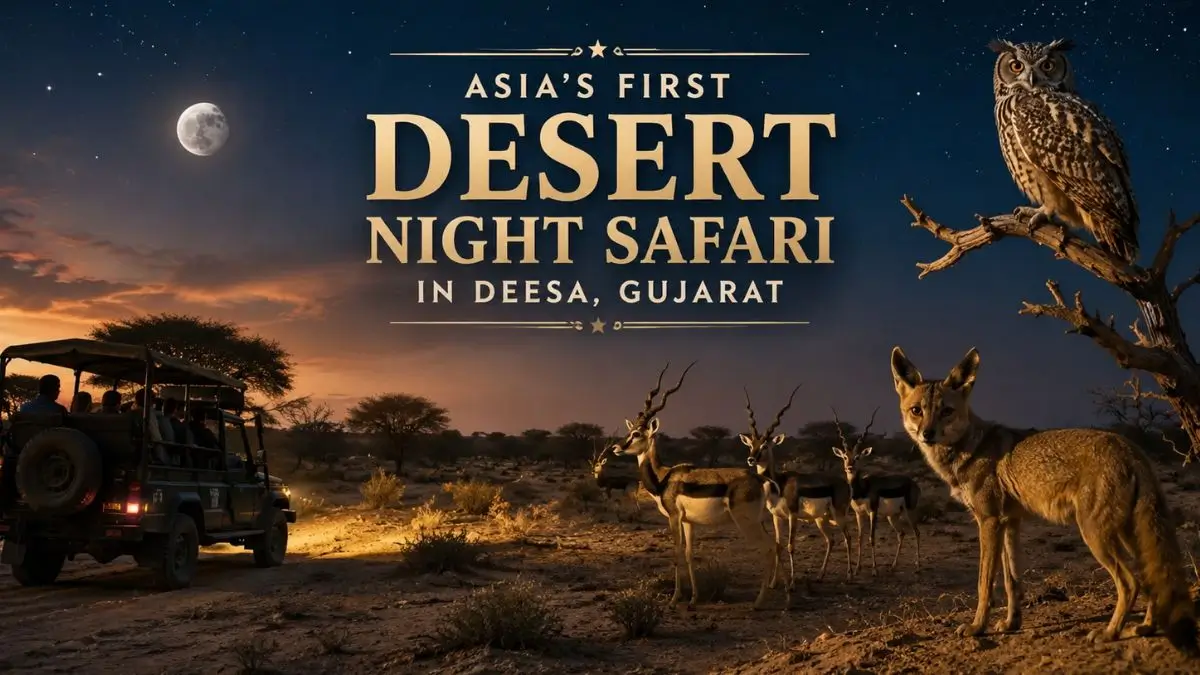
The most distinctive feature of the project will be its drive-through night safari. Visitors will be able to observe animals during nighttime, when many wildlife species are naturally active. The proposed facility will contain five dedicated night-safari enclosures, alongside a conventional day zoo. This combination is intended to provide visitors with different opportunities to understand wildlife behaviour and desert ecosystems.
Desert and Arid Ecosystem-Based Theme
Unlike a conventional zoological park, the proposed facility will focus on a desert and arid ecosystem theme. The concept is particularly relevant to Gujarat because the state contains distinctive dry landscapes, including the Rann of Kutch region. Gujarat’s desert and semi-desert environments support specialised flora and fauna adapted to conditions of limited rainfall, high temperatures and seasonal water availability.
Animals and Species Planned for the Safari
The proposed animal collection is expected to include approximately 2,700 animals and birds belonging to around 83 species. The planned collection includes species associated with India’s arid regions as well as selected exotic animals. Important names mentioned for the project include chinkara, blackbuck, Indian wild ass, cheetah, giraffe, zebra, kangaroo and emu.
Estimated Cost of the Gujarat Desert Safari
The project is estimated to cost approximately ₹542.14 crore. The expenditure will cover the development of the zoological park and construction of the night-safari enclosures and associated infrastructure. The investment reflects the project’s proposed scale and its objectives relating to wildlife awareness, tourism and conservation education.
Importance for Wildlife Tourism and Conservation
The proposed safari could strengthen Gujarat’s position as an important wildlife-tourism destination. Beyond tourism, a well-managed zoological facility can provide opportunities for environmental education and public awareness about species found in arid ecosystems. The project also highlights the growing use of tourism infrastructure to connect people with wildlife and conservation themes.
Why Government Exam Aspirants Should Remember This News
For students preparing for UPSC, State PSC, SSC, banking, railways, police, teaching and defence examinations, this development is relevant to current affairs, environment, geography and state-specific general knowledge. Important facts include the location of Juna Deesa, Banaskantha district, Gujarat; the approval date of August 12, 2026; the Central Zoo Authority; the 103-hectare area; the estimated ₹542.14-crore cost; and the planned 83 species and five night-safari enclosures.

Why This News Is Important
Significance for Wildlife Conservation
The proposed Gujarat Desert Night Safari is important because it links wildlife tourism with awareness about desert and arid ecosystems. Such ecosystems have distinctive environmental conditions and support animals that have evolved specialised adaptations. Presenting these ecosystems through a zoological park can help visitors better understand the importance of biodiversity and habitat conservation.
Importance for Gujarat’s Tourism Sector
The project is also expected to contribute to Gujarat’s wildlife and eco-tourism potential. Gujarat already has nationally important wildlife and landscape destinations, and a desert-themed night safari would introduce a different tourism experience. The proposed drive-through format and nighttime viewing could make the facility a distinctive attraction for domestic and international visitors.
Relevance to Environmental Studies
For competitive examinations, the project connects several important themes: biodiversity conservation, protected and arid ecosystems, wildlife management, zoological parks, eco-tourism and environmental education. Questions can be framed around the location, approving authority, project cost, number of species and ecological theme.
Importance of Central Zoo Authority Approval
The approval of the Central Zoo Authority is another important examination point. The CZA plays a key role in regulating zoological institutions in India. Therefore, the approval demonstrates the institutional and regulatory dimension of the project rather than being merely a tourism announcement.
Economic and Educational Dimensions
With an estimated investment of ₹542.14 crore, the project also has an economic dimension. It can potentially generate tourism-related activity while creating a platform for environmental education. The proposed facility is therefore significant from multiple perspectives—conservation, tourism, education and regional development.
Historical Context: Gujarat’s Desert and Wildlife Heritage
Gujarat’s Arid Landscape
Gujarat contains some of India’s most distinctive arid and semi-arid landscapes. The Rann of Kutch, for example, is a vast salt-marsh landscape associated with the Thar Desert system. Its seasonal transformation between wet and dry conditions creates a distinctive ecological environment.
Wildlife Adaptation in Dry Regions
Arid landscapes support species that are particularly adapted to harsh climatic conditions. Animals such as the chinkara and Indian wild ass are strongly associated with India’s dry ecosystems. The presence of such species makes Gujarat an important state for studying desert and semi-desert biodiversity.
Development of Wildlife Conservation Areas
Gujarat has also developed protected areas and wildlife facilities to conserve its distinctive biodiversity. The state’s conservation landscape includes areas such as the Kutch Desert Wildlife Sanctuary and Gir-related wildlife habitats. The Kutch Desert Wildlife Sanctuary is a major seasonal saline wetland that becomes increasingly desert-like as water evaporates after the monsoon.
Emergence of Wildlife Tourism
Wildlife tourism has increasingly become an important means of connecting conservation with public awareness. Safari-based tourism allows visitors to observe animals while also learning about habitats and biodiversity. Gujarat’s proposed desert-themed night safari represents a further expansion of this model into nighttime and arid-ecosystem experiences.
A New Chapter for Desert-Themed Wildlife Tourism
The Juna Deesa project combines the concepts of a zoological park and a drive-through night safari. Its proposed scale—103 hectares, an estimated ₹542.14-crore investment and around 2,700 animals and birds across nearly 83 species—makes it a significant upcoming wildlife-tourism project in Gujarat.
Key Takeaways from Gujarat’s Desert Night Safari
| S. No. | Key Takeaway |
|---|---|
| 1 | Location: Asia’s first desert-themed night safari and zoological park is planned at Juna Deesa in Banaskantha district, Gujarat. |
| 2 | Approval: The project received Central Zoo Authority (CZA) approval on August 12, 2026. |
| 3 | Area and Cost: The project will cover approximately 103 hectares and is estimated to cost ₹542.14 crore. |
| 4 | Wildlife Collection: Around 2,700 animals and birds representing nearly 83 species are planned for the facility. |
| 5 | Unique Feature: The project will include five dedicated night-safari enclosures and will focus on desert and arid ecosystems. |
FAQs
1. Where will Asia’s first desert-themed night safari be developed?
The proposed desert-themed night safari and zoological park will be developed at Juna Deesa in Banaskantha district, Gujarat.
2. What makes the Gujarat Desert Night Safari unique?
It is planned as Asia’s first desert-themed drive-through night safari and zoological park, combining a conventional day zoo with dedicated nighttime safari enclosures.
3. Which authority approved the Gujarat Desert Night Safari project?
The project received approval from the Central Zoo Authority (CZA) on August 12, 2026.
4. How much land has been proposed for the project?
The project is planned over approximately 103 hectares of government-owned land at Juna Deesa.
5. What is the estimated cost of the project?
The proposed Desert Zoological Park and Night Safari is estimated to cost approximately ₹542.14 crore.
6. How many species are expected to be included?
The proposed facility is expected to house approximately 2,700 animals and birds representing around 83 species.
7. How many night-safari enclosures are planned?
The project is expected to have five dedicated night-safari enclosures.
8. Which ecosystem will the safari primarily focus on?
The project will primarily focus on desert and arid ecosystems, highlighting wildlife adapted to dry and semi-arid environments.
9. Which animals are associated with the proposed safari?
The planned animal collection includes species such as chinkara, blackbuck, Indian wild ass, cheetah, giraffe, zebra, kangaroo and emu, among others.
10. Why is this project important for competitive examinations?
The project is relevant to environment, biodiversity, geography, wildlife conservation, tourism and Gujarat-specific current affairs. Questions may focus on its location, approving authority, cost, area, species and unique features.
Some Important Current Affairs Links